Define reverse osmosis in chemistry

Reverse osmosis (RO) is a process used in chemistry and other fields to separate solvents from solute particles by applying external pressure to overcome the osmotic pressure gradient. It is a technique that utilizes a semipermeable membrane to selectively allow the passage of solvent molecules while rejecting solute particles.

Here are the key points about reverse osmosis:

  1. Osmosis vs. Reverse Osmosis: Osmosis is the natural process by which solvent molecules move from an area of lower solute concentration to an area of higher solute concentration through a semipermeable membrane. Reverse osmosis, as the name implies, reverses this process by applying external pressure to force the solvent molecules to move from an area of higher solute concentration to an area of lower solute concentration.
  2. Semipermeable Membrane: Reverse osmosis employs a semipermeable membrane that allows the passage of solvent molecules (typically water) while blocking the majority of solute particles, such as dissolved salts, minerals, and other contaminants. The membrane has tiny pores or channels that only permit the passage of small solvent molecules, effectively separating them from larger solute particles.
  3. Pressure Application: To facilitate the reverse osmosis process, pressure is applied to the solution with a higher solute concentration, commonly referred to as the feed or influent stream. This pressure exceeds the osmotic pressure, which is the pressure required to prevent osmosis, and allows the solvent molecules to overcome the osmotic pressure and move through the membrane.
  4. Solvent Purification: Reverse osmosis is widely used for water purification and desalination, as it effectively removes various dissolved impurities, including salts, minerals, organic compounds, and contaminants. The result is purified water with reduced levels of dissolved solids and improved quality.
  5. Industrial Applications: Reverse osmosis has diverse applications in various industries, including water treatment, food and beverage processing, pharmaceutical production, chemical purification, and wastewater treatment. It provides an efficient and economical means of separating solvents from solutes, improving the quality and purity of the desired products.
  6. Limitations: While reverse osmosis is effective in removing many solutes, it may not completely eliminate all dissolved substances. Some small molecules or ions can still pass through the membrane, and specific membranes may have different rejection capabilities for different solutes. Additionally, the process requires energy input due to the pressure needed to drive the solvent flow.

Reverse osmosis is a valuable technique for separating solvents from solutes and has wide-ranging applications in water treatment, purification, and other industries. It enables the production of purified water and the concentration or removal of solutes, contributing to various technological advancements and improving the quality of numerous products.

Define isotonic hypotonic and hypertonic solutions

Isotonic, hypotonic, and hypertonic are terms used to describe the relative concentrations of solutes in solutions and their effects on cells:

  1. Isotonic Solution: An isotonic solution is one in which the concentration of solutes is equal inside and outside the cell or across a semipermeable membrane. In an isotonic solution, there is no net movement of water across the membrane, and the cell maintains its normal shape and size. The osmotic pressure inside the cell is balanced by the osmotic pressure outside the cell. Isotonic solutions are typically used in medical applications, such as intravenous fluids and eye drops, to maintain proper fluid balance.
  2. Hypotonic Solution: A hypotonic solution has a lower concentration of solutes compared to the cell or the surrounding medium. When a cell is placed in a hypotonic solution, water moves into the cell by osmosis, causing the cell to swell and potentially burst. This is because the osmotic pressure inside the cell is higher than the osmotic pressure outside the cell. Hypotonic solutions are used to provide hydration and to replenish fluids in cases of dehydration.
  3. Hypertonic Solution: A hypertonic solution has a higher concentration of solutes compared to the cell or the surrounding medium. When a cell is placed in a hypertonic solution, water moves out of the cell by osmosis, causing the cell to shrink or undergo plasmolysis. This occurs because the osmotic pressure outside the cell is higher than the osmotic pressure inside the cell. Hypertonic solutions are used to draw out excess fluid from swollen tissues, such as in certain wound dressings or in the treatment of edema.

It’s important to note that the terms isotonic, hypotonic, and hypertonic are relative and depend on the specific context or reference point. For example, a solution may be hypertonic compared to one cell type but isotonic compared to another. The effects of these solutions on cells and organisms can vary depending on their osmotic characteristics and the specific cell or tissue involved.

On the basis of osmosis explain the condition edema

Edema is a condition characterized by the abnormal accumulation of fluid in the interstitial spaces of tissues, leading to swelling. The underlying mechanism of edema can be explained based on the principles of osmosis.

Osmosis plays a crucial role in maintaining fluid balance in the body. It involves the movement of water across cell membranes, particularly through semipermeable membranes that allow water but not solutes to pass. The movement of water occurs from an area of lower solute concentration to an area of higher solute concentration, seeking to equalize the concentration on both sides of the membrane.

In the case of edema, there are a few possible factors that disrupt the normal osmotic balance and lead to fluid accumulation:

  1. Increased Capillary Hydrostatic Pressure: When the hydrostatic pressure within the capillaries, which are small blood vessels, becomes elevated, it can impede the return of fluid to the venous circulation. This can occur due to conditions like heart failure, where the heart’s pumping ability is compromised, resulting in increased pressure within the blood vessels.
  2. Decreased Plasma Oncotic Pressure: Oncotic pressure, also known as colloid osmotic pressure, is the osmotic pressure exerted by proteins, such as albumin, present in the blood plasma. These proteins help maintain the fluid balance by attracting water back into the capillaries. If the level of plasma proteins decreases, as seen in conditions like liver disease or malnutrition, the oncotic pressure reduces, resulting in less water being drawn back into the capillaries, thereby contributing to edema formation.
  3. Increased Capillary Permeability: Inflammation or injury to tissues can lead to increased permeability of the capillary walls. This allows more fluid and proteins to leak out into the interstitial spaces, overwhelming the lymphatic system’s capacity to remove the excess fluid. Inflammatory conditions, such as certain allergic reactions or burns, can trigger this response.
  4. Lymphatic Obstruction: The lymphatic system plays a crucial role in draining excess fluid from tissues. When there is an obstruction or impairment in the lymphatic vessels, the removal of fluid becomes less efficient. This can result from conditions like lymphedema, where lymphatic drainage is impaired, leading to the accumulation of fluid in the affected area.

In summary, edema occurs when there is an imbalance in the forces governing fluid movement across cell membranes, particularly in the context of osmosis. Factors such as increased hydrostatic pressure, decreased oncotic pressure, increased capillary permeability, or lymphatic obstruction can disrupt the normal fluid balance and result in the accumulation of fluid in the interstitial spaces, leading to edema.

Water movement from soil into plant roots and subsequently into upper portion of the plant explain

The movement of water from the soil into plant roots and subsequently into the upper portions of the plant is a vital process known as water uptake and transport in plants. This process primarily involves two mechanisms: absorption by roots and transport through the plant’s vascular system.

  1. Absorption by Roots: Plant roots have specialized structures called root hairs, which increase the surface area for water absorption. These root hairs are in close contact with the soil particles. The process of water uptake by roots occurs as follows: a. Root Pressure: The root cells actively transport mineral ions from the soil into their cytoplasm, creating a concentration gradient. This leads to the accumulation of solutes in the root cells, increasing the osmotic potential. b. Osmosis: Due to the higher solute concentration in the root cells, water from the soil moves into the root cells by osmosis. This creates a water potential gradient, with water moving from an area of lower solute concentration (soil) to an area of higher solute concentration (root cells).
  2. Transport through the Vascular System: Once water is absorbed by the root cells, it moves upward through the plant via two types of vascular tissues: xylem and phloem. a. Xylem Transport: The primary pathway for water movement is the xylem, a specialized tissue that transports water and minerals from the roots to the upper parts of the plant. Water is pulled upward through the xylem due to transpiration, which is the loss of water vapor from the leaves through stomata. As water evaporates from the leaves, it creates a negative pressure gradient, known as tension, which pulls water up from the roots. b. Cohesion-Tension Theory: According to the cohesion-tension theory, water molecules are cohesive (stick together) due to hydrogen bonding. As water evaporates from the leaves, it pulls on the adjacent water molecules, creating a continuous column of water from the roots to the leaves. This cohesion, combined with the tension generated by transpiration, enables the upward movement of water in the xylem.
  3. Water Distribution in the Plant: Once water reaches the leaves, it is used for various plant processes such as photosynthesis and cell expansion. Water molecules are continually evaporating from the leaf surfaces through stomata, creating a constant flow of water from the roots to the leaves. This process is called transpiration.

In summary, water is absorbed by the roots through osmosis, driven by the higher solute concentration in the root cells. The water then moves upward through the plant’s xylem tissue, primarily due to transpiration and the cohesive properties of water. This allows for the distribution of water and minerals to the upper portions of the plant, ensuring its growth, metabolism, and overall functioning.

A carrot that has become limp placed into the water making it firm once again explain

When a limp carrot is placed in water, it can become firm again due to the process of osmosis. Here’s a simple explanation of how this happens:

  1. Limp Carrot: When a carrot becomes limp, it typically means that it has lost water and is dehydrated. The loss of water causes the cells within the carrot to shrink and the overall structure to become soft and flaccid.
  2. Osmosis in Action: When the limp carrot is placed in water, osmosis comes into play. Water molecules naturally move from an area of higher water concentration (in this case, the water) to an area of lower water concentration (inside the carrot cells) through the semi-permeable membrane of the carrot’s cells.
  3. Rehydration Process: As the carrot is immersed in water, the water molecules move into the cells of the carrot through osmosis. This influx of water helps to rehydrate the cells, causing them to swell and regain their turgidity.
  4. Regained Firmness: As the carrot cells absorb water through osmosis, they expand and become turgid once again. This rehydration process leads to the restoration of the carrot’s firmness, making it crisp and rigid.

In summary, placing a limp carrot in water allows for the movement of water molecules into the carrot cells through osmosis. This rehydrates the cells, restores their turgidity, and ultimately makes the carrot firm again.

Osmosis simple definition

Osmosis is a biological and physical process that involves the spontaneous movement of solvent molecules (usually water) across a semi-permeable membrane from an area of lower solute concentration to an area of higher solute concentration. The goal of osmosis is to equalize the solute concentration on both sides of the membrane.

In simpler terms, osmosis can be defined as the movement of water from a region where there is more water (lower solute concentration) to a region where there is less water (higher solute concentration) through a selectively permeable membrane.

Osmosis is driven by the natural tendency of water molecules to move from an area of higher concentration (dilute solution) to an area of lower concentration (concentrated solution) in order to balance the concentrations on both sides of the membrane. The selectively permeable membrane allows water to pass through but restricts the movement of solute particles.

Osmosis plays a crucial role in various biological processes, such as the absorption of water by plant roots, the regulation of water content in animal cells, and the movement of fluids within living organisms. It also has practical applications, including water purification, preservation of food, and in medical contexts such as kidney function and dialysis.

Regenerate response

Define azeotropic mixture

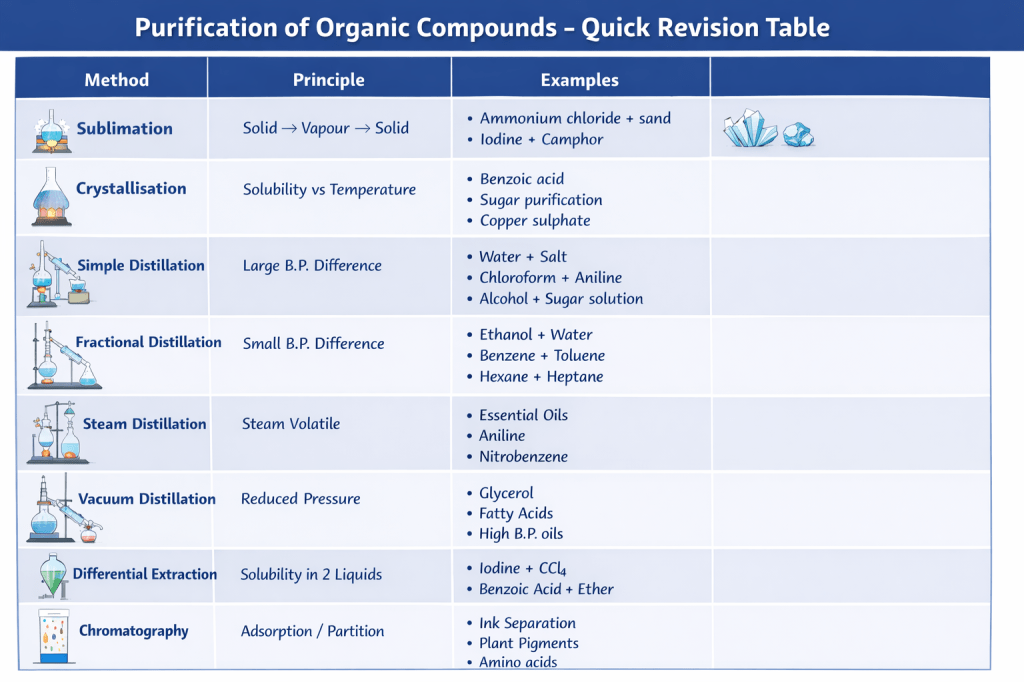
An azeotropic mixture, also known as an azeotrope, is a specific type of mixture of two or more components that exhibits a constant boiling point or boiling point range. In an azeotropic mixture, the vapor and liquid phases have the same composition, which makes it impossible to separate the components by simple distillation.

Key points about azeotropic mixtures include:

  1. Constant Boiling Point: Unlike most mixtures, which have a boiling point range where the temperature gradually increases as the more volatile component evaporates, an azeotropic mixture maintains a constant boiling point or boiling point range throughout the distillation process. This occurs because the vapor and liquid phases are in equilibrium with each other, maintaining a fixed composition.
  2. Immiscible Components: Azeotropic mixtures often involve two or more components that are immiscible or have limited miscibility with each other in the liquid phase. This limited miscibility leads to the formation of a stable azeotropic composition where the vapor and liquid phases have the same composition.
  3. Distillation Challenges: Due to the constant boiling point, traditional distillation techniques cannot be used to separate the components of an azeotropic mixture. The vapor produced during distillation will have the same composition as the liquid, making it impossible to achieve a pure separation of the components.
  4. Positive and Negative Azeotropes: Azeotropic mixtures can be categorized into positive azeotropes and negative azeotropes based on their behavior. Positive azeotropes exhibit a higher boiling point than any of the individual components, while negative azeotropes have a lower boiling point than the individual components.
  5. Azeotrope Breakers: In some cases, additional substances called “azeotrope breakers” can be added to an azeotropic mixture to disrupt the constant boiling point behavior and enable separation by distillation. Azeotrope breakers change the relative volatility of the components, allowing for the separation of the mixture into its individual components.

Azeotropic mixtures have important practical implications in various industries, such as in the production of fuels, chemicals, and pharmaceuticals. Understanding the behavior and characteristics of azeotropes is crucial for designing appropriate separation techniques and optimizing processes in these fields.

Describe four colligative properties of solutions

Colligative properties are properties of solutions that depend solely on the number of solute particles dissolved in the solvent, regardless of their chemical identity. Here are four important colligative properties of solutions:

  1. Boiling Point Elevation: Boiling point elevation refers to the increase in the boiling point of a solvent when a non-volatile solute is dissolved in it. The presence of solute particles disrupts the vapor pressure of the solvent, requiring a higher temperature to reach the vapor pressure equal to the atmospheric pressure. The magnitude of boiling point elevation depends on the concentration of the solute particles. This property is utilized in various applications such as antifreeze solutions in vehicles and in cooking processes like brining.
  2. Freezing Point Depression: Freezing point depression is the lowering of the freezing point of a solvent when a solute is dissolved in it. The solute particles interfere with the formation of the regular crystal lattice of the solvent, making it more difficult for the solvent to solidify. Consequently, the freezing point decreases. Freezing point depression is commonly observed in saltwater solutions used for de-icing roads and in antifreeze solutions to prevent engine coolant from freezing.
  3. Osmotic Pressure: Osmotic pressure is the pressure applied to prevent the flow of solvent molecules into a solution through a semi-permeable membrane. It is a colligative property dependent on the concentration of solute particles. When a solution with a higher solute concentration is separated from a solution with a lower solute concentration by a semi-permeable membrane, the solvent molecules tend to move from the region of lower solute concentration to the region of higher solute concentration, resulting in osmosis. Osmotic pressure has important biological implications, such as in cellular processes and osmoregulation.
  4. Vapor Pressure Lowering: Vapor pressure lowering refers to the reduction in the vapor pressure of a solvent when a non-volatile solute is added. The presence of solute particles on the liquid surface interferes with the escape of solvent molecules into the vapor phase, thus decreasing the vapor pressure. The extent of vapor pressure lowering is directly proportional to the concentration of solute particles in the solution. Vapor pressure lowering is used in applications such as in the preservation of food by canning.

These colligative properties provide valuable insights into the behavior of solutions and find applications in various fields such as chemistry, biology, medicine, and industry.

Boiling point definition in chemistry

In chemistry, boiling point refers to the temperature at which a substance changes from its liquid state to its gaseous state, under normal atmospheric pressure or at a specified pressure. It is the temperature at which the vapor pressure of a liquid becomes equal to the surrounding atmospheric pressure, allowing bubbles of vapor to form within the liquid and escape into the air as a gas.

Key points about boiling point in chemistry include:

  1. Definition: The boiling point is the temperature at which the liquid and vapor phases of a substance are in equilibrium. At this temperature, the vapor pressure of the liquid is equal to the atmospheric pressure or the pressure applied to the system.
  2. Vapor Pressure: The boiling point is determined by the vapor pressure of the liquid. As the temperature increases, the kinetic energy of the molecules also increases, leading to an increase in the vapor pressure. When the vapor pressure equals the external pressure, bubbles form and the liquid starts to boil.
  3. Normal Boiling Point: The normal boiling point is the boiling point of a substance at standard atmospheric pressure, which is usually taken as 1 atmosphere (atm) or 760 mmHg. It is a characteristic property of a substance and can be used for identification and comparison.
  4. Pressure and Boiling Point: The boiling point of a substance is influenced by the external pressure. At higher altitudes where the atmospheric pressure is lower, the boiling point of a substance decreases. Conversely, increasing the pressure above the liquid can elevate the boiling point.
  5. Boiling Point Elevation: Boiling point elevation refers to the increase in the boiling point of a solvent when a non-volatile solute is dissolved in it. This phenomenon is governed by the Raoult’s law and can be used to determine the molecular weight or concentration of the solute in a solution.
  6. Boiling Point Range: For pure substances, the boiling point occurs over a narrow temperature range. However, for mixtures or compounds with varying compositions, the boiling point may be spread over a range of temperatures due to the presence of different components.
  7. Boiling Point Determination: The boiling point of a substance can be determined experimentally using various techniques such as distillation, reflux, or the use of a thermometer immersed in the liquid.

The boiling point is an important physical property of a substance as it provides information about its volatility, intermolecular forces, and phase transitions. It has practical applications in various fields, including chemical synthesis, purification, and the design of industrial processes.

Difference between positive and negative deviation of non ideal solution

The key difference between positive and negative deviations in non-ideal solutions lies in how the observed vapor pressure of the components compares to the predictions based on Raoult’s law.

Positive Deviations:

  • Positive deviations occur when the observed vapor pressure of a component in a non-ideal solution is higher than predicted by Raoult’s law.
  • This deviation suggests that the intermolecular forces between the components in the mixture are weaker than the forces within the pure components.
  • Positive deviations often result in enhanced vapor pressure and increased volatility of the components compared to what would be expected in an ideal solution.
  • These mixtures tend to exhibit stronger interactions between different components, leading to increased molecular attractions and a tendency for the components to escape more easily into the vapor phase.

Negative Deviations:

  • Negative deviations occur when the observed vapor pressure of a component in a non-ideal solution is lower than predicted by Raoult’s law.
  • This deviation indicates that the intermolecular forces between the components in the mixture are stronger than the forces within the pure components.
  • Negative deviations typically result in reduced vapor pressure and lower volatility of the components compared to an ideal solution.
  • These mixtures often involve stronger interactions between the components, which can lead to increased molecular attractions and a tendency for the components to remain in the liquid phase rather than escaping into the vapor phase.

In summary, positive deviations in non-ideal solutions involve weaker intermolecular forces between the components, leading to higher observed vapor pressures and increased volatility. Negative deviations, on the other hand, arise from stronger intermolecular forces between the components, resulting in lower observed vapor pressures and reduced volatility. These deviations from Raoult’s law highlight the complex interactions and behaviors exhibited by non-ideal solutions.