Determine whether methanol is more acidic than water ?

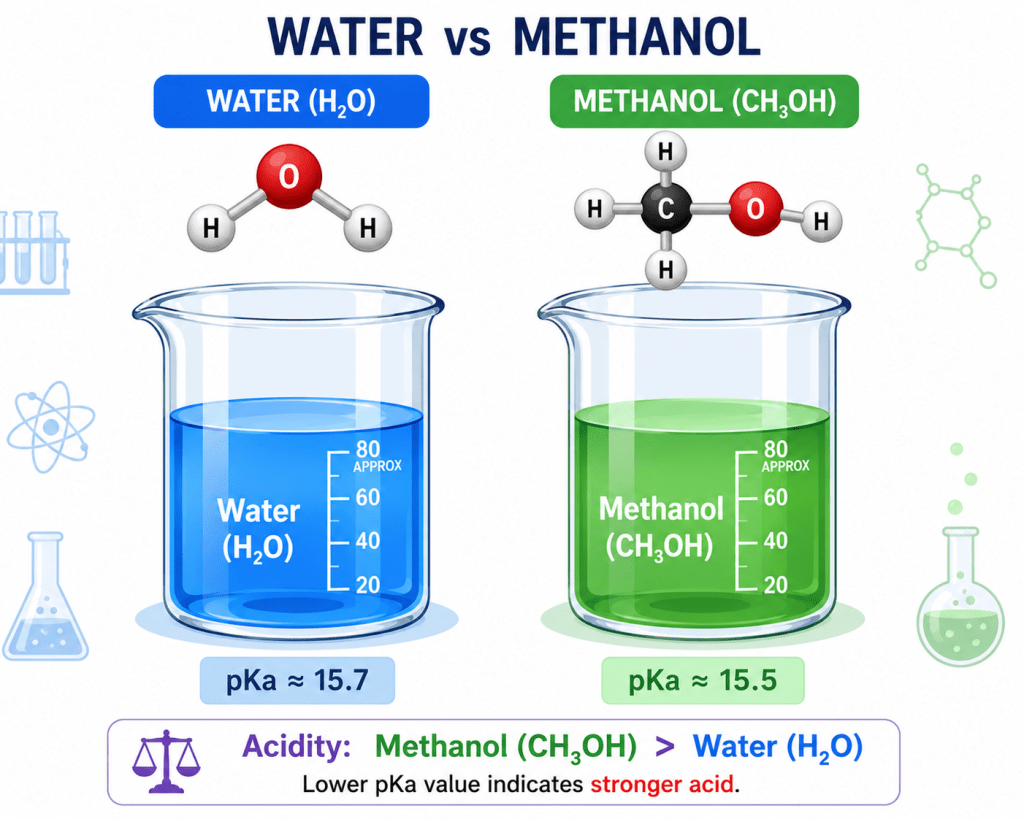
Methanol (CH₃OH) is actually slightly more acidic than water (H₂O), but the difference is relatively small.

The acidity of a substance is typically measured by its pKa value, which is a measure of the strength of an acid. A lower pKa value indicates a stronger acid. The pKa value of methanol is around 15.5, while the pKa value of water is around 15.7. This means that methanol is slightly more acidic than water, but the difference is relatively small.
The total number of isomers possible for the organic compounds JEE/NEET

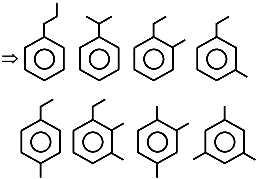
  1. The total number of structural isomers possible for the substituted benzene derivatives with the molecular formula C9 H12 is

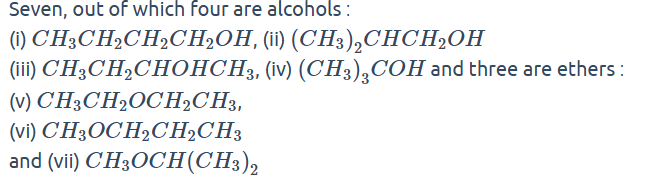
2. The total number of acyclic structural isomers possible for compound with molecular formula C4H10O is

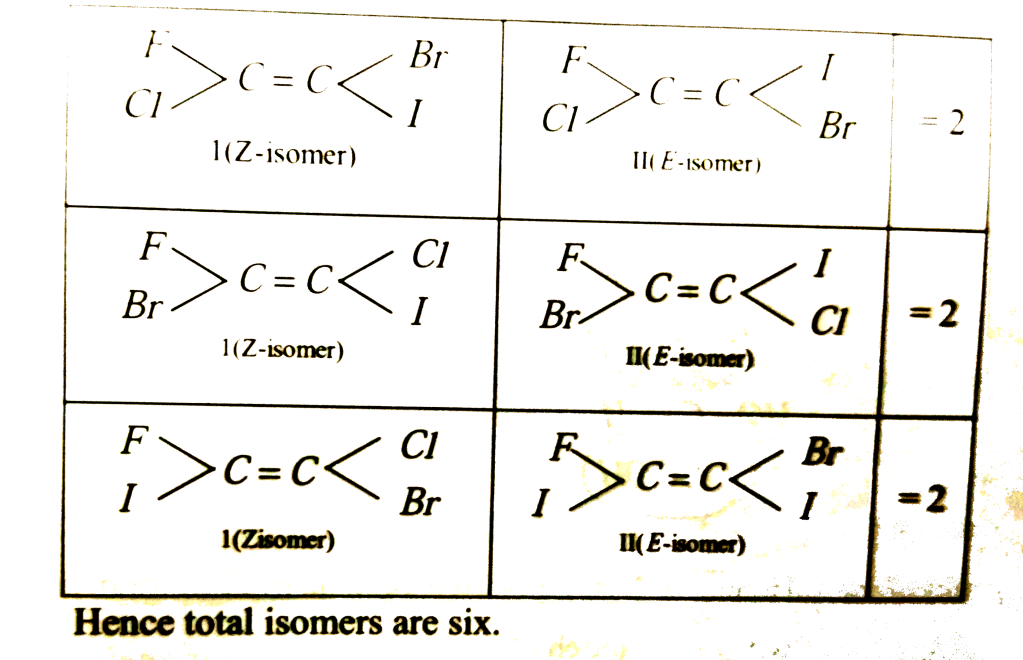
3. The number of isomers for the compound with molecular formula  is C2BrClFI

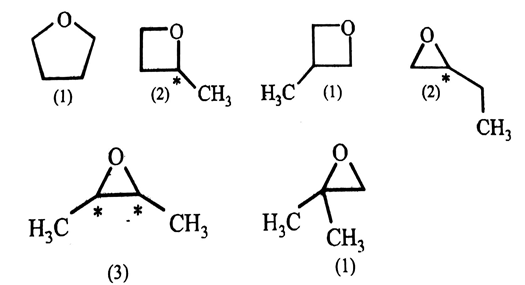
4. Total number of possible isomers (both structural as well as stereoisomers) of cyclic ethers of molecular formula  is :

The ether with 2 chiral carbons has a plane of symmetry in Cis-configuration. Therefore, it will have 3 stereo-isomers. Total isomers = 1+2+1+2+3+1=10

Actinoids (5f-Series) – Important Facts for JEE/NEET & NCERT

Structure & Physical Properties

  1. All actinoid metals are silvery in appearance.
  2. They show greater structural variability than lanthanoids.
  3. Their metallic radii vary irregularly, much more than in lanthanoids.
  4. They are generally dense metals with high melting points.

Chemical Reactivity

  1. Actinoids are highly reactive metals, especially in finely divided form.
  2. They react with boiling water to form a mixture of oxide and hydride.
  3. They combine readily with most non-metals at moderate temperatures.
  4. Hydrochloric acid (HCl) attacks all actinoid metals.
  5. Most actinoids are only slightly affected by nitric acid (HNO₃) due to formation of a protective oxide layer.
  6. Alkalies (NaOH, KOH) generally have no action on actinoids.

Magnetic Properties

  1. Magnetic properties of actinoids are more complex than those of lanthanoids.
  2. Magnetic susceptibility generally increases with the number of unpaired 5f electrons.
  3. For comparable electronic configurations, lanthanoids show higher magnetic susceptibility than actinoids.

Ionisation Enthalpy & Bonding

  1. Early actinoids have lower ionisation enthalpies than corresponding lanthanoids.
  2. 5f orbitals are less penetrating than 4f orbitals.
  3. 5f electrons are more effectively shielded from nuclear charge.
  4. Outer electrons are less firmly held and participate more readily in bonding.
  5. Therefore, actinoids show greater covalent character and variable oxidation states.

Comparison with Lanthanoids

  1. Early actinoids differ significantly from lanthanoids.
  2. Similarity with lanthanoids becomes more evident in the second half of the actinoid series.
  3. Like lanthanoids, actinoids show close similarities among themselves.
  4. Their properties change gradually across the series.

Actinoid Contraction

  1. Actinoids exhibit actinoid contraction (decrease in atomic/ionic radii across the series).
  2. Actinoid contraction affects the sizes and properties of succeeding elements.
  3. Similar to lanthanoid contraction, but its effects are less studied because heavier elements are less well known.
  4. Lanthanoid contraction is considered more important due to its greater impact on well-studied elements.

One-Line NCERT Facts

  • All actinoids are radioactive.
  • Actinoids show a wider range of oxidation states (+3 to +7) than lanthanoids.
  • Actinoids are more reactive than lanthanoids.
  • 5f electrons participate in bonding more readily than 4f electrons.
  • Actinoid contraction occurs due to poor shielding by 5f electrons

CBSE Class 12 Biology – Population Interactions & Predation (Point-wise Notes)

Life History Variation

  • Populations evolve to maximize reproductive fitness (Darwinian fitness).
  • Darwinian fitness is associated with a high intrinsic rate of increase (r).
  • Organisms evolve reproductive strategies according to habitat conditions.
  • Some organisms breed once in a lifetime (Semelparity):
    • Pacific salmon fish
    • Bamboo
  • Some organisms breed many times in a lifetime (Iteroparity):
    • Most birds
    • Most mammals
  • Some produce many small offspring:
    • Oysters
    • Pelagic fishes
  • Some produce few large offspring:
    • Birds
    • Mammals
  • Life-history traits evolve due to biotic and abiotic constraints of the habitat.

Population Interactions

  • Interaction between populations of different species is called interspecific interaction.
  • Interactions may be:
    • Beneficial (+)
    • Harmful (−)
    • Neutral (0)

Types of Population Interactions

InteractionEffect
Mutualism(+,+)
Competition(−,−)
Predation(+,−)
Parasitism(+,−)
Commensalism(+,0)
Amensalism(−,0)

Predation

  • Predation is an interaction where:
    • Predator benefits (+)
    • Prey is harmed (−)
  • Predators transfer energy from lower to higher trophic levels.
  • Herbivores are also considered predators in a broad ecological sense.

Ecological Importance of Predators

  • Control prey population size.
  • Prevent ecosystem instability.
  • Maintain species diversity.
  • Reduce competition among prey species.
  • Used in biological control of pests.

NCERT Examples

Prickly Pear Cactus

  • Introduced into Australia.
  • Became invasive and spread rapidly.
  • Controlled by introducing a cactus-feeding moth.

Starfish (Pisaster)

  • Important predator in rocky intertidal communities.
  • Removal led to extinction of more than 10 invertebrate species due to competition.

Prey Adaptations Against Predation

Camouflage

  • Insects and frogs use cryptic colouration.
  • Helps avoid detection by predators.

Chemical Defence

  • Some animals are poisonous.
  • Predators avoid them.

Monarch Butterfly

  • Distasteful to birds.
  • Obtains toxic chemicals during caterpillar stage from poisonous weeds.

Plant Defences Against Herbivores

Morphological Defence

  • Thorns in:
    • Acacia
    • Cactus

Chemical Defence

  • Toxic chemicals:
    • Inhibit feeding
    • Inhibit digestion
    • Disrupt reproduction
    • May kill herbivores

Calotropis

  • Produces poisonous cardiac glycosides.
  • Avoided by cattle and goats.

Important Plant Defence Chemicals

  • Nicotine
  • Caffeine
  • Quinine
  • Strychnine
  • Opium

CBSE Exam One-Liners

  • Darwinian fitness = Reproductive success of an organism.
  • Predation = (+,−) interaction.
  • Mutualism = (+,+) interaction.
  • Competition = (−,−) interaction.
  • Commensalism = (+,0) interaction.
  • Amensalism = (−,0) interaction.
  • Pisaster is a keystone predator.
  • Monarch butterfly is protected by toxic chemicals.
  • Calotropis contains cardiac glycosides.
  • Prickly pear cactus in Australia was controlled by a cactus-feeding moth.

Logistic Growth chemistry class 12 notes

Logistic Growth (English Notes)

Key Terms

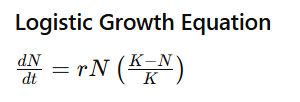
  • N = Population size (population density)
  • r = Intrinsic rate of natural increase
  • K = Carrying capacity (maximum population that a habitat can support)
  • dN/dt = Population growth rate

Characteristics of Logistic Growth

  1. Resources are limited.
  2. Individuals compete for food, water, space, etc.
  3. Population cannot grow indefinitely.
  4. Growth rate decreases as population approaches carrying capacity (K).
  5. Produces an S-shaped (Sigmoid) growth curve.
  6. Also called Verhulst–Pearl Logistic Growth.
  7. Considered a more realistic model than exponential growth.

Phases of Logistic Growth

  1. Lag Phase – Slow initial growth.
  2. Acceleration (Log/Exponential) Phase – Rapid increase in population.
  3. Deceleration Phase – Growth rate slows due to resource limitation.
  4. Stationary (Asymptote) Phase – Population reaches carrying capacity (K).


Important Conditions

  • N << K → Growth is nearly exponential.
  • N = K → Population growth rate = 0.
  • N > K → Population tends to decrease toward K.

NEET Important Points

  • Curve shape: Sigmoid (S-shaped)
  • Carrying capacity: K
  • Growth rate maximum at intermediate population size.
  • Most natural populations follow logistic growth.
  • Logistic growth occurs due to limited resources and competition.

Human Respiratory System Class 10

  • Air enters through nostrils.
  • Fine hairs and mucus filter dust particles.
  • Air passes through:
    • Nostrils → Throat → Lungs.
  • Cartilage rings in the trachea prevent collapse of air passage.

8. Alveoli

  • Lungs contain millions of alveoli.
  • Alveoli are balloon-like structures.
  • Provide large surface area for gas exchange.
  • Surrounded by a network of blood capillaries.

9. Breathing Mechanism

Inhalation

  • Ribs move upward and outward.
  • Diaphragm flattens.
  • Chest cavity expands.
  • Air enters lungs.

Exhalation

  • Ribs move downward.
  • Diaphragm becomes dome-shaped.
  • Chest cavity decreases.
  • Air is expelled.

10. Exchange of Gases in Alveoli

  • Oxygen diffuses from alveoli into blood.
  • Carbon dioxide diffuses from blood into alveoli.
  • Residual air always remains in lungs for continuous gas exchange.

11. Transport of Oxygen

  • Large animals cannot rely only on diffusion.
  • Haemoglobin transports oxygen.
  • Present in Red Blood Cells (RBCs).
  • Has high affinity for oxygen.

12. Transport of Carbon Dioxide

  • Carbon dioxide is more soluble in water than oxygen.
  • Most CO₂ is transported in dissolved form in blood.

Respiration and Breathing – Important Points

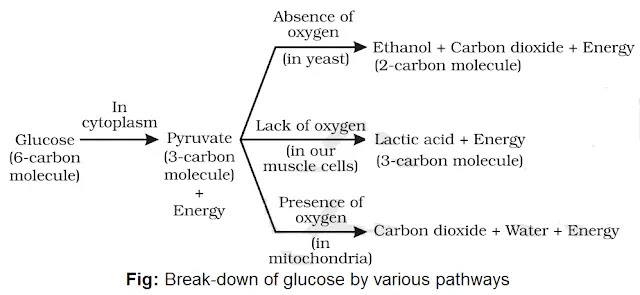
1. Breakdown of Glucose

  • Food is used by cells to release energy.
  • First step of respiration:
    • Glucose (6-carbon compound) → Pyruvate (3-carbon compound)
    • Occurs in the cytoplasm.

2. Fate of Pyruvate

(A) Aerobic Respiration (Presence of Oxygen)

  • Occurs in mitochondria.
  • Pyruvate → Carbon dioxide + Water + Large amount of energy.
  • More energy is released than in anaerobic respiration.

(B) Anaerobic Respiration in Yeast

  • Occurs in absence of oxygen.
  • Pyruvate → Ethanol + Carbon dioxide + Energy.
  • Process is called fermentation.

(C) Anaerobic Respiration in Muscles

  • Occurs during oxygen deficiency.
  • Pyruvate → Lactic acid + Energy.
  • Accumulation of lactic acid causes muscle cramps.

3. Gas Exchange in Plants

  • Takes place through stomata.
  • Large intercellular spaces help diffusion of gases.
  • Exchange occurs by diffusion.

At Night

  • Photosynthesis stops.
  • CO₂ release is the major activity.

During Day

  • CO₂ produced in respiration is used in photosynthesis.
  • Oxygen release becomes the major event.

4. Respiration in Animals

  • Animals have specialized organs for gas exchange.
  • Oxygen is taken in and carbon dioxide is removed.

5. Aquatic Animals

  • Use oxygen dissolved in water.
  • Dissolved oxygen is much less than atmospheric oxygen.
  • Therefore, breathing rate is faster.
  • Fishes take water through mouth and pass it over gills.

6. Terrestrial Animals

  • Use atmospheric oxygen.
  • Respiratory surfaces:
    • Have large surface area.
    • Are thin and delicate.
    • Are kept inside the body for protection.
  • Air passages carry air to respiratory surfaces.

How glucose reach into cytoplasm?

After sucrose is digested into glucose and fructose in the small intestine:

  1. Absorption into blood: Glucose is absorbed through the villi of the small intestine into the bloodstream.
  2. Transport to cells: Blood carries glucose to all body cells.
  3. Entry into cells: Glucose enters cells through the cell membrane using specific transport proteins (glucose transporters).
  4. Reaches the cytoplasm: Once it crosses the cell membrane, glucose is present in the cytoplasm (cytosol) of the cell.
  5. Glycolysis begins: In the cytoplasm, glucose is broken down to pyruvate during glycolysis.

Flow Chart

Sucrose → Glucose + Fructose (small intestine) → Blood → Body cells → Cytoplasm → Glycolysis → Pyruvate

For NEET, remember:

  • Digestion of sucrose: Small intestine
  • Absorption of glucose: Intestinal villi
  • Site of glycolysis: Cytoplasm
  • Site of aerobic respiration after glycolysis: Mitochondria

Where sucrose converts into glucose?

Sucrose is converted into glucose and fructose in the small intestine.

Process:

  • Sucrose (table sugar) is a disaccharide.
  • It cannot be absorbed directly into the blood.
  • The enzyme Sucrase (also called invertase), present in the intestinal juice of the small intestine, breaks:Sucrose → Glucose + Fructose
  • The resulting glucose and fructose are then absorbed through the intestinal villi into the bloodstream.

Quick Facts (NEET/CBSE)

  • Enzyme: Sucrase
  • Site of digestion: Small intestine (brush border of intestinal epithelial cells)
  • Products formed: Glucose + Fructose