Raoult’s law Class 12 Notes

Here are some key points about Raoult’s law that you may find helpful for your Class 12 chemistry notes:

  1. Raoult’s law is named after the French chemist François-Marie Raoult and is applicable to ideal solutions.
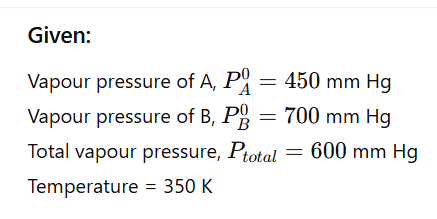
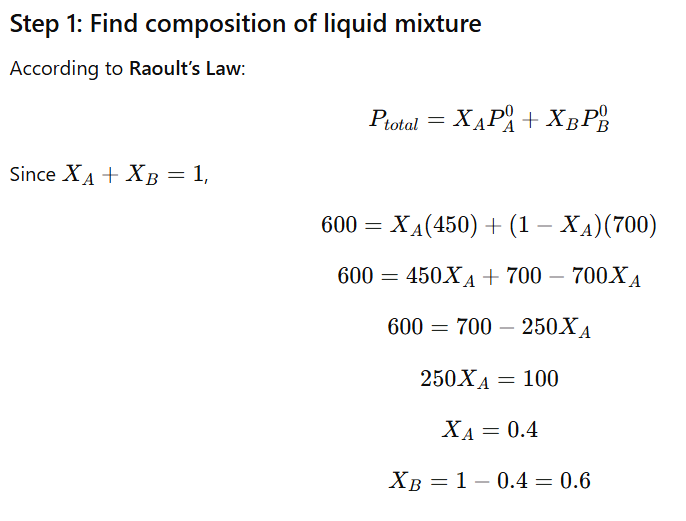
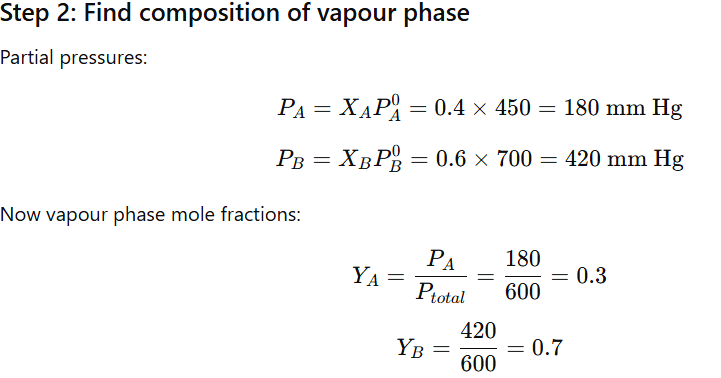
  2. Raoult’s law states that the partial vapor pressure of a component in an ideal solution is directly proportional to its mole fraction in the solution.Mathematically, it can be expressed as: P₁ = P₀₁ * X₁,where P₁ is the partial vapor pressure of component 1, P₀₁ is the vapor pressure of pure component 1, and X₁ is the mole fraction of component 1 in the solution.
  3. According to Raoult’s law, if the components in a solution exhibit ideal behavior, the total vapor pressure of the solution can be calculated as the sum of the partial vapor pressures of each component.Mathematically, it can be expressed as: P_total = P₁ + P₂ + …,where P_total is the total vapor pressure of the solution, P₁ and P₂ are the partial vapor pressures of component 1 and component 2, respectively.
  4. Raoult’s law is applicable when the intermolecular forces between the solute and solvent molecules are similar or identical to the intermolecular forces within the pure components.
  5. Raoult’s law is primarily valid for dilute solutions or solutions where the components are nonvolatile or weakly volatile.
  6. Deviations from Raoult’s law can occur in non-ideal solutions. In such cases, the observed vapor pressure may be higher or lower than predicted by Raoult’s law, depending on the nature of intermolecular forces between the components.
  7. When the observed vapor pressure is higher than predicted, positive deviations occur. This is usually observed in solutions where the intermolecular forces between the components are weaker than the forces within the pure components.
  8. When the observed vapor pressure is lower than predicted, negative deviations occur. This is usually observed in solutions where the intermolecular forces between the components are stronger than the forces within the pure components.
  9. Raoult’s law is commonly applied in various fields, including the study of colligative properties, determination of boiling point elevation, and calculation of vapor-liquid equilibrium in ideal solutions.

Remember to expand and elaborate on these points when creating your Class 12 chemistry notes, as this summary provides a basic understanding of Raoult’s law.

Define vapour pressure in chemistry

apor pressure is a term used in chemistry to describe the pressure exerted by the vapor phase of a substance in equilibrium with its liquid or solid phase at a given temperature. It is the pressure at which a substance transitions from its liquid or solid state to a gaseous state, or vice versa, in a closed system.

When a liquid or solid is exposed to a closed system, some of its molecules or atoms escape from the surface and enter the vapor phase. These molecules or atoms exert a certain pressure on the walls of the container, known as the vapor pressure. The higher the temperature, the more molecules or atoms have sufficient energy to overcome the intermolecular forces and escape into the vapor phase, resulting in an increased vapor pressure.

Vapor pressure is an important property of substances, as it affects various phenomena such as boiling point, evaporation rate, and condensation. It is often used to determine the volatility and purity of liquids, as well as to understand the behavior of substances in different conditions.

Vapor pressure can be measured experimentally using various techniques, such as the use of manometers or instruments specifically designed for this purpose. The results are typically presented in units of pressure, such as atmospheres (atm), millimeters of mercury (mmHg), or pascals (Pa).

Anoxia in chemistry definition

In chemistry, the term “anoxia” refers to a condition characterized by the absence or severe depletion of oxygen. Anoxia can occur in various environments, such as in biological systems, aquatic ecosystems, or chemical reactions.

In biological systems, anoxia occurs when there is a lack of oxygen supply to tissues or cells. Oxygen is essential for many cellular processes, including respiration, energy production, and metabolism. Without an adequate oxygen supply, cells are unable to function properly, leading to detrimental effects on physiological processes. Anoxia can result from factors such as respiratory disorders, reduced blood flow, or exposure to high altitudes.

In aquatic ecosystems, anoxia can occur when the dissolved oxygen levels in water become extremely low or completely depleted. This can happen due to factors such as excessive organic matter decomposition, algal blooms, or pollution. Anoxia in aquatic environments can have severe consequences for marine life, leading to fish kills and disrupting the balance of the ecosystem.

In chemical reactions, anoxia refers to a condition where oxygen is absent or intentionally excluded. Some chemical reactions require oxygen to proceed, while others are hindered or inhibited by its presence. Anoxia can be achieved by using specific reaction conditions, such as inert gas environments or oxygen scavengers, to create oxygen-free atmospheres. This is commonly employed in sensitive reactions or when working with reactive substances that may react with oxygen.

Overall, anoxia in chemistry refers to situations where there is a lack or absence of oxygen, whether in biological systems, aquatic environments, or specific chemical reactions. The consequences of anoxia can vary depending on the context and can have significant impacts on organisms, ecosystems, or reaction outcomes.

Define bends in chemistry


In chemistry, the term “bends” refers to a phenomenon known as the “gas bends” or “decompression sickness.” It is a condition that can occur when a person is exposed to a rapid decrease in pressure after being in a high-pressure environment, such as underwater diving or working in a pressurized chamber.

During exposure to high pressure, such as diving to significant depths, the body absorbs gases, particularly nitrogen, which dissolves into the bloodstream and tissues. When the pressure suddenly decreases during ascent or decompression, the dissolved gases can form bubbles, leading to various symptoms collectively known as the bends.

The bends can affect different parts of the body, including joints, muscles, bones, the nervous system, and even vital organs. Symptoms may include joint and muscle pain, fatigue, dizziness, shortness of breath, chest pain, skin rashes, and neurological symptoms like numbness or tingling. In severe cases, the bends can be life-threatening, causing paralysis, unconsciousness, or even death.

To prevent the bends, divers and individuals in pressurized environments must follow proper decompression procedures, allowing the body to gradually release the dissolved gases and adjust to the changing pressure. Additionally, safety limits and dive tables are used to calculate safe ascent rates and dive durations, reducing the risk of developing this condition.

Treatment for the bends typically involves administering 100% oxygen and transporting the affected person to a hyperbaric chamber. Hyperbaric oxygen therapy involves breathing pure oxygen at a higher pressure, which helps to reduce the size of the gas bubbles and accelerates their elimination from the body, alleviating the symptoms and preventing further complications.

State and explain Henry’s law

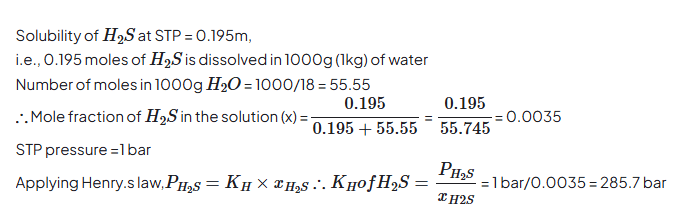
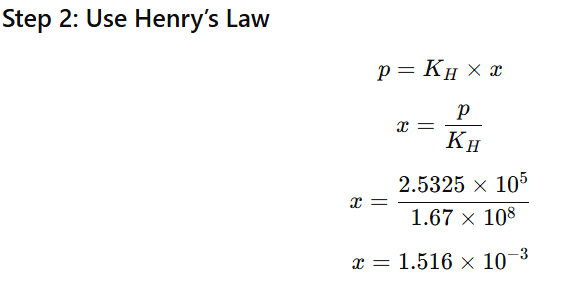
Henry’s law states that the concentration of a gas dissolved in a liquid is directly proportional to the partial pressure of the gas above the liquid, provided that the temperature remains constant. Mathematically, it can be expressed as:

C = k x P

Where: C is the concentration of the gas in the liquid, k is Henry’s law constant (specific to the solute-solvent system), P is the partial pressure of the gas above the liquid.

Explanation: Henry’s law is based on the concept of equilibrium between the gas phase and the liquid phase. When a gas comes into contact with a liquid, some of the gas molecules interact with the liquid molecules and dissolve into the liquid. At the same time, some of the dissolved gas molecules escape from the liquid and enter the gas phase.

According to Henry’s law, at a constant temperature, the concentration of the gas in the liquid is directly proportional to the partial pressure of the gas in the gas phase. This means that if the pressure of the gas above the liquid increases, the concentration of the gas dissolved in the liquid also increases, and vice versa, as long as the temperature remains constant.

The proportionality constant, k, in Henry’s law is specific to the particular solute-solvent system under consideration. It depends on factors such as the nature of the solute and solvent, temperature, and interactions between the gas and liquid molecules. The value of k can vary widely for different gas-liquid systems.

Henry’s law is applicable to dilute solutions and under conditions where the solute does not chemically react with the solvent. It is often used to describe the behavior of gases dissolved in liquids, such as the dissolution of gases in water, such as the dissolution of oxygen in water in aquatic environments or the solubility of carbon dioxide in carbonated beverages.

Overall, Henry’s law provides a fundamental relationship between the concentration of a gas dissolved in a liquid and the partial pressure of the gas, allowing for the prediction and understanding of gas solubility in various liquid systems.

Types of solution on the basis of physical states of solvent and solute

Based on the physical states of the solvent and solute, the nine types of solutions in chemistry are:

  1. Gas in Gas: A gaseous solute is dissolved in a gaseous solvent. An example is air, which is a mixture of different gases.
  2. Gas in Liquid: A gaseous solute is dissolved in a liquid solvent. An example is carbonated water, where carbon dioxide gas is dissolved in water.
  3. Gas in Solid: A gaseous solute is dissolved in a solid solvent. An example is hydrogen gas dissolved in palladium metal.
  4. Liquid in Gas: A liquid solute is dissolved in a gaseous solvent. An example is water vapor in air, such as humidity in the atmosphere.
  5. Liquid in Liquid: A liquid solute is dissolved in a liquid solvent. Examples include ethanol (liquid) dissolved in water (liquid) to form alcoholic beverages.
  6. Liquid in Solid: A liquid solute is dissolved in a solid solvent. An example is mercury (liquid) dissolved in silver (solid) to form dental amalgam.
  7. Solid in Gas: A solid solute is dissolved in a gaseous solvent. An example is smoke, where solid particles are dispersed in the air.
  8. Solid in Liquid: A solid solute is dissolved in a liquid solvent. Examples include sugar (solid) dissolved in water (liquid) or salt (solid) dissolved in water to form a saline solution.
  9. Solid in Solid: A solid solute is dissolved in a solid solvent. An example is alloys, such as brass (a mixture of copper and zinc).

These different types of solutions based on the physical states of the solvent and solute demonstrate the diverse ways in which substances can dissolve and interact with each other.

Properties of solution

A solution is a homogeneous mixture of two or more substances, where one substance (the solute) is dissolved in another substance (the solvent). Here are some key properties of solutions:

  1. Homogeneity: Solutions are uniform throughout, meaning that the solute particles are evenly distributed at the molecular or ionic level within the solvent. This results in a homogeneous appearance and consistent composition.
  2. Transparency: Most solutions are transparent, allowing light to pass through without scattering or significant absorption. This property is particularly evident in solutions with small solute particles and low concentrations.
  3. Phase: Solutions can exist in any state of matter (solid, liquid, or gas). For example, salt dissolved in water forms a liquid solution, while air (a mixture of gases) is a gaseous solution.
  4. Concentration: Concentration refers to the amount of solute dissolved in a given amount of solvent or solution. It can be expressed in various units, such as molarity (moles of solute per liter of solution), mass/volume percent, or parts per million (ppm). Concentration affects properties like density, boiling point, and freezing point of the solution.
  5. Solubility: Solubility is the ability of a solute to dissolve in a given solvent at a specific temperature and pressure. Solubility can vary widely, depending on the nature of the solute and solvent, temperature, and pressure conditions.
  6. Colligative Properties: Certain properties of a solution depend solely on the number of solute particles, rather than their nature. These are called colligative properties and include properties such as vapor pressure lowering, boiling point elevation, freezing point depression, and osmotic pressure.
  7. Conductivity: A solution’s ability to conduct electricity depends on the presence of ions. Ionic solutions, such as saltwater, are conductive because the dissociated ions can move and carry electric charge. Non-ionic solutions, such as sugar dissolved in water, are generally non-conductive.
  8. Solvent-Solute Interactions: The solute and solvent can interact with each other, affecting the physical and chemical properties of the solution. These interactions can be categorized as “like dissolves like,” where substances with similar polarity or intermolecular forces tend to dissolve in each other.
  9. Saturation: A solution can become saturated when the maximum amount of solute is dissolved in a given amount of solvent at a specific temperature and pressure. Further addition of solute does not lead to additional dissolution, and undissolved solute may settle at the bottom.
  10. Reaction Rates: In a solution, reactants are more likely to come into contact, leading to increased reaction rates compared to reactions in the solid or gaseous state.

These properties of solutions play a crucial role in various fields, including chemistry, biology, pharmacology, environmental science, and many industrial processes.

Which branch of chemistry has highest scope

It is challenging to determine which branch of chemistry has the highest scope as the scope and demand for different branches of chemistry can vary depending on several factors, such as technological advancements, societal needs, and economic trends. However, some branches of chemistry have been gaining significant attention and have a broad scope in recent years. Here are a few branches that are currently experiencing significant growth and offer substantial opportunities:

  1. Biochemistry: With the advancement of biotechnology, personalized medicine, and the increasing understanding of biological processes at the molecular level, the field of biochemistry has seen tremendous growth. It plays a vital role in areas like drug discovery, genetic engineering, medical diagnostics, and understanding diseases.
  2. Environmental Chemistry: As environmental concerns and sustainable practices gain importance, the field of environmental chemistry has a promising scope. Environmental chemists contribute to assessing and mitigating pollution, monitoring air and water quality, developing clean technologies, and addressing climate change issues.
  3. Materials Chemistry: Materials chemistry is an interdisciplinary field that focuses on the synthesis, characterization, and manipulation of materials to enhance their properties and develop new materials for various applications. It is essential for advancements in areas like nanotechnology, energy storage, catalysis, electronics, and biomaterials.
  4. Computational Chemistry: With the increasing computational power and availability of advanced modeling and simulation techniques, computational chemistry has become an indispensable tool for understanding complex chemical systems. It has applications in drug design, material discovery, reaction mechanisms, and the study of biomolecules.
  5. Medicinal Chemistry: The demand for new and effective drugs to treat diseases and improve healthcare continues to grow. Medicinal chemistry plays a crucial role in designing and synthesizing novel drug compounds, optimizing their properties, and understanding their interactions with biological targets.
  6. Nanotechnology: Nanotechnology involves manipulating and controlling matter at the nanoscale (1-100 nanometers). It has vast potential in various fields, including electronics, energy, medicine, materials science, and environmental remediation. Nanotechnology requires expertise from multiple branches of chemistry, physics, and engineering.

It’s important to note that the scope of these branches can change over time as new discoveries, technologies, and societal needs emerge. It is advisable to stay updated with current trends and developments in the field of chemistry to identify areas with promising opportunities.

Branches of chemistry

Chemistry is a broad field of science that encompasses various branches, each focusing on different aspects of matter, its properties, and interactions. Here are some major branches of chemistry:

  1. Organic Chemistry: Organic chemistry deals with the study of carbon-containing compounds, including their structure, properties, composition, reactions, and synthesis. It is crucial in understanding the chemistry of life, as organic compounds are the basis of living systems.
  2. Inorganic Chemistry: Inorganic chemistry focuses on the study of non-carbon-containing compounds, such as minerals, metals, and nonmetals. It involves the investigation of their properties, behavior, reactions, and their applications in different areas.
  3. Physical Chemistry: Physical chemistry combines principles of physics and chemistry to study the physical properties, behavior, and transformations of matter. It involves topics like thermodynamics, quantum mechanics, spectroscopy, kinetics, and computational chemistry.
  4. Analytical Chemistry: Analytical chemistry involves the development and application of techniques and methods to determine the composition, structure, and properties of matter. It includes qualitative and quantitative analysis, separations, spectroscopy, electrochemistry, and chromatography.
  5. Biochemistry: Biochemistry explores the chemical processes and substances that occur within living organisms. It focuses on the study of biological macromolecules, such as proteins, nucleic acids, carbohydrates, and lipids, as well as metabolic pathways, enzymology, and molecular biology.
  6. Environmental Chemistry: Environmental chemistry studies the chemical processes and phenomena occurring in the environment, including air, water, soil, and living organisms. It investigates the impact of human activities on the environment, pollution, and the development of sustainable practices.
  7. Theoretical Chemistry: Theoretical chemistry utilizes mathematical and computational methods to understand and predict the behavior of chemical systems. It involves developing models, simulations, and theories to explain chemical phenomena and aid in the interpretation of experimental results.
  8. Medicinal Chemistry: Medicinal chemistry focuses on the design, synthesis, and development of chemical compounds for use as pharmaceutical drugs. It combines principles of organic chemistry, biochemistry, and pharmacology to discover and optimize new drug candidates.
  9. Materials Chemistry: Materials chemistry explores the relationship between the structure, properties, and synthesis of materials. It involves the study of materials at the atomic and molecular levels, with applications in areas such as nanotechnology, polymers, ceramics, and metallurgy.
  10. Physical Organic Chemistry: Physical organic chemistry examines the relationship between the physical properties and reactivity of organic compounds. It investigates the mechanisms and rates of organic reactions, the effects of molecular structure on reactivity, and the use of spectroscopic techniques to study organic compounds.

These branches of chemistry are interconnected and often overlap, as they collectively contribute to a comprehensive understanding of the chemical world.

Aside

Importance of chemistry I Chemistry in everyday life


Chemistry is a fundamental science that plays a crucial role in our everyday lives and in advancing various fields of knowledge and technology. Here are some key reasons highlighting the importance of chemistry:

Importance of chemistry

Understanding Matter:

Chemistry helps us understand the composition, structure, properties, and behavior of matter at the atomic and molecular levels. This knowledge forms the basis for understanding the physical and chemical properties of substances, their transformations, and interactions.

Drug Discovery and Development:

Chemistry plays a vital role in the discovery, design, and development of new drugs. Chemists use their understanding of chemical reactions and molecular interactions to create new pharmaceutical compounds, analyze their efficacy, and optimize their properties.

Environmental Studies:

Chemistry is essential for studying and addressing environmental issues. Chemists contribute to pollution control, waste management, and the development of sustainable practices. They analyze pollutants, develop green technologies, and work towards mitigating the impact of human activities on the environment.

Energy Production and Storage:

Chemistry is critical for developing efficient and sustainable energy sources. It plays a key role in the design and improvement of batteries, fuel cells, solar panels, and other energy storage and conversion systems. Chemists are also involved in developing cleaner and more efficient methods of energy production, such as through catalysis and alternative fuel sources.

Materials Science and Engineering:

Chemistry is fundamental to the development and understanding of materials. Chemists contribute to the synthesis, characterization, and modification of materials with desired properties, such as strength, conductivity, and durability. This knowledge is vital in various industries, including electronics, aerospace, construction, and manufacturing.

Agriculture and Food Production:

Chemistry plays a significant role in agriculture and food production. It helps in the development and optimization of fertilizers, pesticides, and crop protection techniques. Analytical chemistry is crucial for ensuring food safety, quality control, and the detection of contaminants.

Health and Medicine:

Chemistry is essential in the field of medicine. It contributes to understanding the molecular basis of diseases, developing diagnostic tools, and designing therapeutic interventions. Chemistry is involved in the synthesis of drugs, the development of imaging techniques, and the study of biomolecules.

Consumer Products and Technology:

Chemistry is integral to the development and improvement of consumer products and technology. It is involved in the formulation of cosmetics, household products, and personal care items. Chemical processes and reactions are essential in various industries, such as manufacturing, electronics, and telecommunications.

These are just a few examples that highlight the importance of chemistry in various aspects of our lives. Chemistry provides the foundation for advancements in science, technology, and innovation, contributing to the betterment of society and the world we live in.