Sarvan Kumarhttp://sarvankumar.wordpress.comMy name is Sarvan Kumar, I am post graduate in chemistry (MSc). besides teaching chemistry at various schools and coaching centres I have been giving home tuitions to students for 10 years. I have helped students score good marks in chemistry not only in board examination but also JEE, NEET, SAT, IGCSE and IB examinations. Nearly 90% of my students have scored more than 95% in their CBSE board examination. Moreover they have also secured a seat in prestigious engineering and medical college.
Since every student is different hence my unique style of teach
Alkyl halides can be reduced to alkanes by replacing the halogen atom with a hydrogen atom. This reduction typically involves the use of reducing agents.
Alkyl halides are reduced to alkanes by:
Nascent hydrogen (Zn/HCl)
Zn/CH3COOH
Zn + NaOH
LiAlH₄
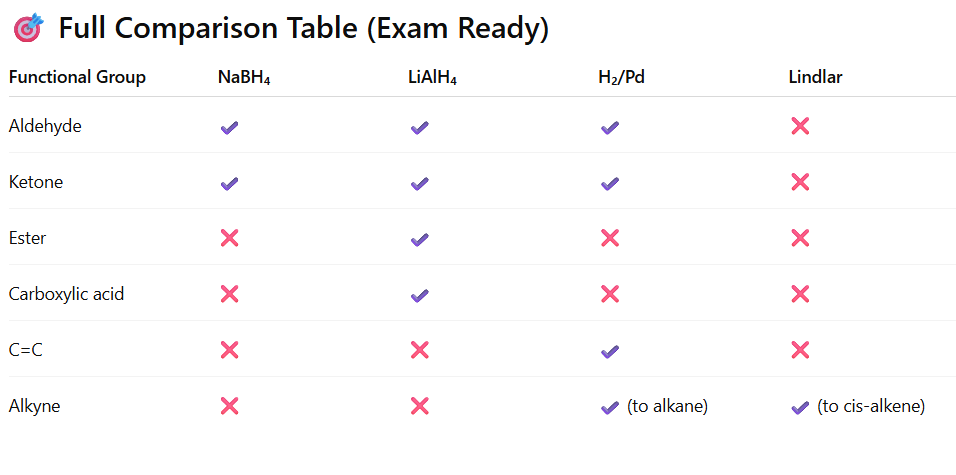
Catalytic hydrogenation (H₂/Pd or Ni)
Zn- Cu Couple +C2H5OH
TPH (Triphenylhydride / Triphenyltin Hydride)
Via Grignard reagent followed by hydrolysis
Important Note for JEE/NEET
Reduction with Nascent Hydrogen Common in laboratory conditions.
Reduction with Hydrogen (Catalytic Hydrogenation)
Using H₂ with Pd/C, Ni or Pt catalyst , Effective especially for benzyl and allyl halides.
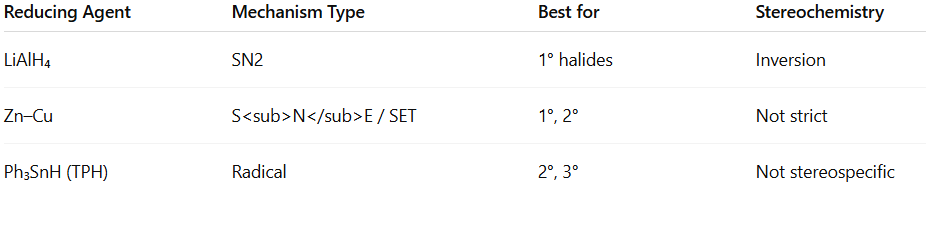
LiAlH₄ (Lithium aluminium hydride) Very effective for primary and secondary halides not for 3 degree.With LiAlH₄
Hydride (H⁻) acts as a strong nucleophile. Mechanism: Direct SN2 displacement of X⁻ by H⁻
NaBH4 and TPH are used to reduce 3 degree haloalkane to alkane.
Zn–Cu couple reduces alkyl halides to alkanes (especially in alcohol medium). Zn–Cu More Reactive than Zn? Copper coating removes oxide layer from zinc, increases surface activity , facilitates electron transfer, acts as better reducing system.
Reduction of Alkyl Halides by TPH. Reaction proceeds via free radical mechanism
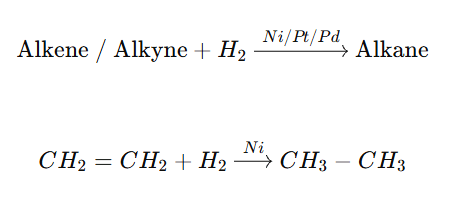
The Sabatier–Senderens reaction is a catalytic hydrogenation reaction in which unsaturated compounds (alkenes or alkynes) are reduced to saturated compounds (alkanes) using hydrogen gas (H₂) in the presence of a metal catalyst such as Ni, Pt, or Pd.
It is named after the French chemists
Paul Sabatier
Jean-Baptiste Senderens
Paul Sabatier received the 1912 Nobel Prize in Chemistry for his work on catalytic hydrogenation.
What JEE / NEET Can Ask
Concept-Based Questions
Type of catalysis → Heterogeneous catalysis
Catalyst used → Ni (most common), Pt, Pd
Nature of reaction → Addition (Reduction) reaction
Mechanism → Adsorption theory
Mechanism (Very Important for JEE)
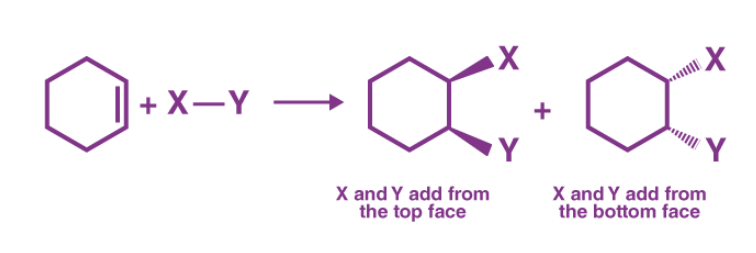
✔ Hydrogen adsorbs on Ni surface ✔ H–H bond breaks → Atomic hydrogen formed ✔ Alkene/Alkyne adsorbs ✔ Syn addition of hydrogen ✔ Alkane formed
🔥 Very Important Concept
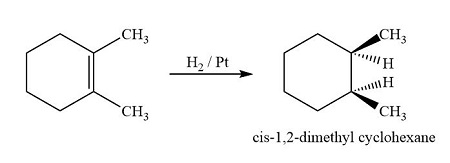
✔ Syn addition may give cis product ✔ But syn ≠ cis always
Example:
Hydrogenation of cycloalkene → gives cis product But hydrogenation of 2-butene → gives alkane (no cis/trans left)
So in that case: Syn addition happened But cis concept disappears
Syn Addition (Mechanism term)
Refers to how groups are added during a reaction.
Both substituents add from the same face of the double bond.
It is a mechanistic term.
Example: Hydrogenation using H₂/Ni (Sabatier–Senderens) → Syn addition
What is Syn Addition?
The addition of two substituents to the same side (or face) of a double or triple bond reduces the bond order but increases the number of substituents.
Raney nickel is significantly more reactive than standard nickel powder. It is Created from a
Nickel-Aluminum alloy, where Aluminum is removed by caustic leaching (NaOH)
Platinum (like Ni, Pd) mainly prefers:
In a benzylidene compound containing a ketonic (C=O) group, when is only the C=C reduced?
NOTE : Pd isomerises the alkene hence with Pd , trans -isomer predominates.
Palladium can catalyze alkene isomerisation via reversible adsorption on its surface, leading to thermodynamic control where the more stable trans isomer predominates.
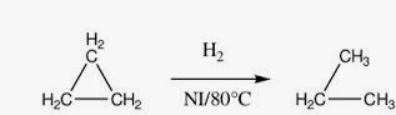
Note: When Cyclopropane/butane reacts with hydrogen gas in the presence of Ni, it gives propane/butane
he ring opens due to high strain and behave like an alkene
Cyclobutane also has ring strain (90° vs 109.5°)
Less than cyclopropane but still significant
Ring opens under catalytic conditions
Important JEE/NEET Concept
Reactivity order due to ring strain: Cyclopropane> Cyclobutane > Cyclopentane
Cyclopentane and cyclohexane usually do NOT open easily.
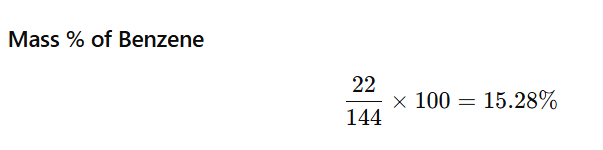
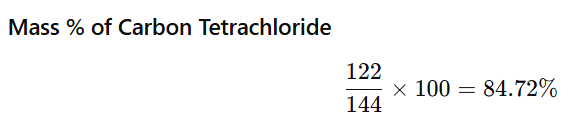
1.1 Calculate the mass percentage of benzene (C6H6) and carbon tetrachloride (CCl4) if 22 g of benzene is dissolved in 122 g of carbon tetrachloride.
Mass of benzene (C₆H₆) = 22 g Mass of carbon tetrachloride (CCl₄) = 122 g
Step 1: Calculate total mass of solution
Total mass=22+122=144 g
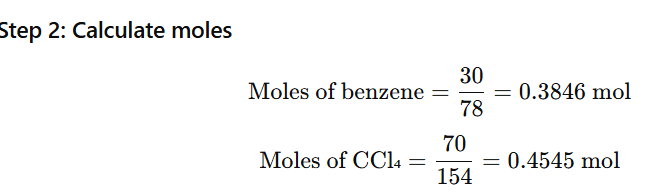
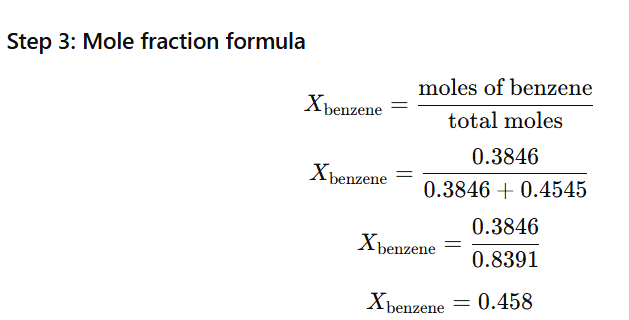
1.2 Calculate the mole fraction of benzene in solution containing 30% by mass in carbon tetrachloride
Solution contains 30% by mass benzene in carbon tetrachloride (CCl₄)
That means in 100 g of solution:
Mass of benzene (C₆H₆) = 30 g
Mass of carbon tetrachloride (CCl₄) = 70 g
Step 1: Calculate molar masses
Molar mass of C₆H₆ = g/mol
Molar mass of CCl₄ = g/mol
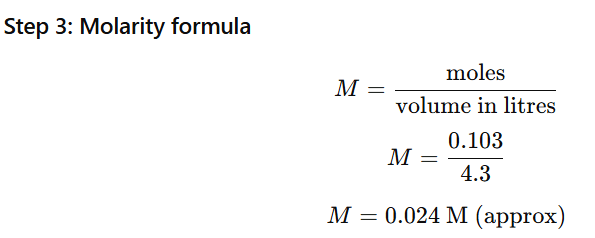
1.3 Calculate the molarity of each of the following solutions: (a) 30 g of Co(NO3)2. 6H2O in 4.3 L of solution (b) 30 mL of 0.5 M H2SO4 diluted to 500 mL
Calculate molar mass
For Co(NO₃)₂·6H₂O
Co = 59
(NO₃)₂ = 2 × (14 + 3×16) = 2 × 62 = 124
6H₂O = 6 × 18 = 108
Molar mass=59+124+108=291 g/mol
Step 2: Calculate moles
Moles=30/291=0.103 mol
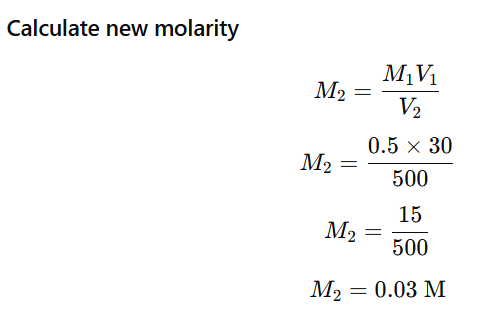
b) 30 mL of 0.5 M H₂SO₄ diluted to 500 mL
Use dilution formula:
Given:
M
mL
mL
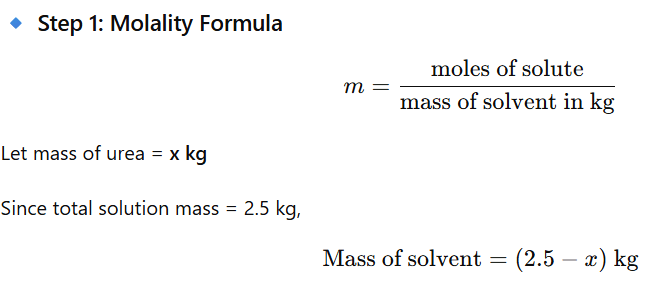
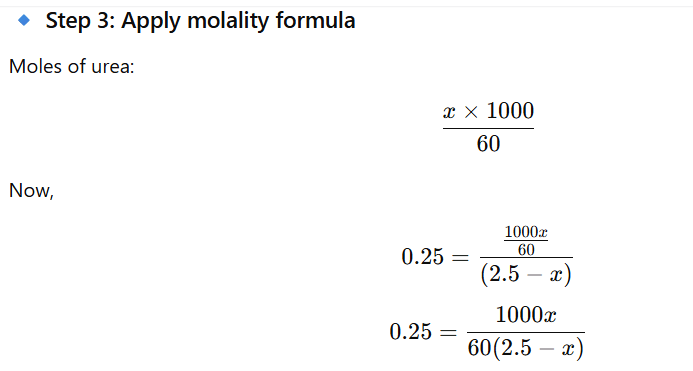
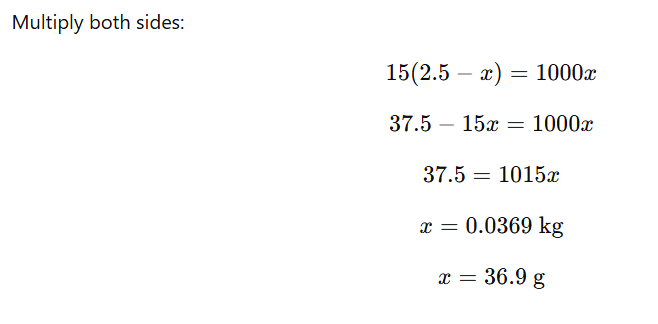
1.4 Calculate the mass of urea (NH2CONH2) required in making 2.5 kg of 0.25 molal aqueous solution
Mass of solution = 2.5 kg Molality (m) = 0.25 mol/kg Solute = Urea (NH₂CONH₂)
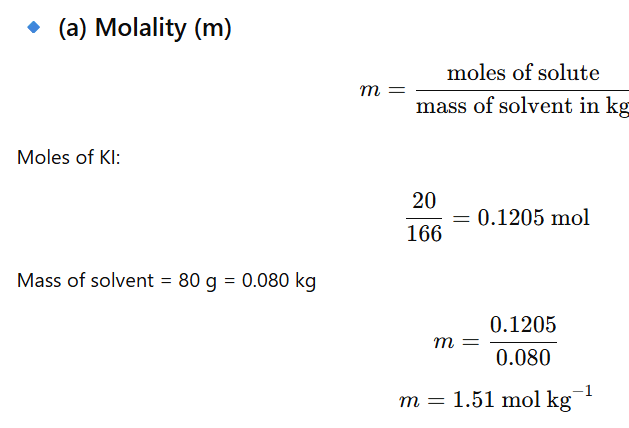
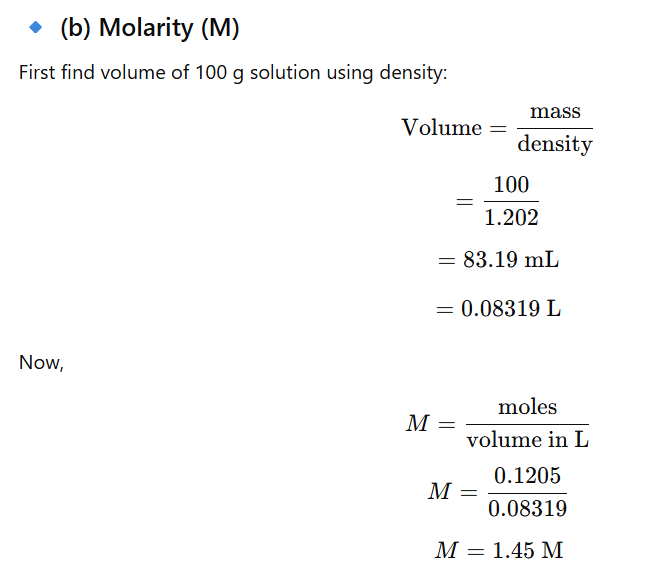
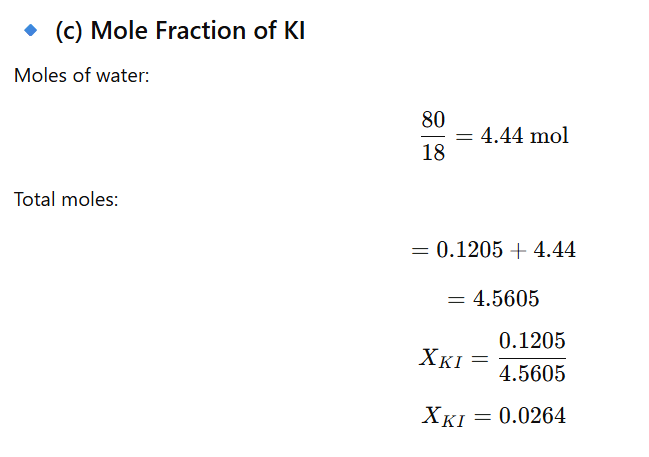
1.5 Calculate (a) molality (b) molarity and (c) mole fraction of KI if the density of 20% (mass/mass) aqueous KI is 1.202 g mL-1
20% (w/w) aqueous KI Density = 1.202 g mL⁻¹
That means:
In 100 g of solution
Mass of KI = 20 g
Mass of water = 80 g
Molar mass of KI =
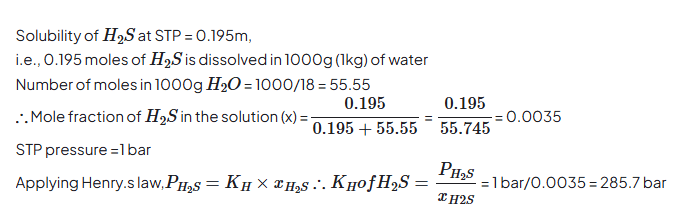
1.6 H2S, a toxic gas with rotten egg like smell, is used for the qualitative analysis. If the solubility of H2S in water at STP is 0.195 m, calculate Henry’s law constant.
To calculate Henry’s law constant (Kₕ), we use:
p=KH×x
Where:
= partial pressure of gas (at STP = 1 atm)
= mole fraction of gas in solution
Given solubility = 0.195 molal (m)
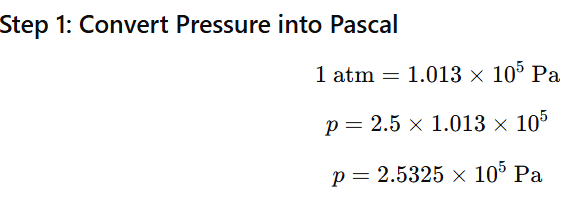
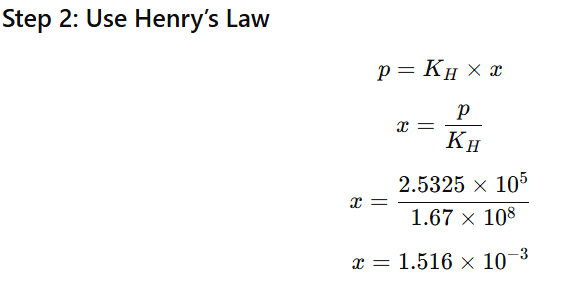
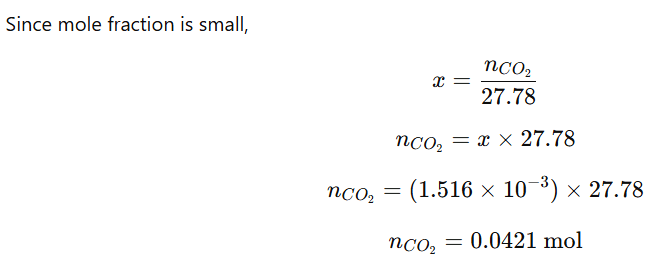
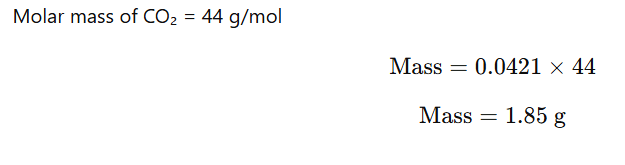
1.7 Henry’s law constant for CO2 in water is 1.67×10⁸ Pa at 298 K. Calculate the quantity of CO2 in 500 mL of soda water when packed under 2.5 atm CO2 pressure at 298 K.
Given:
Henry’s constant,
Pressure of CO₂ = 2.5 atm
Volume of soda water = 500 mL = 0.5 L
Temperature = 298 K
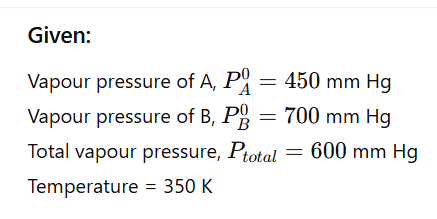
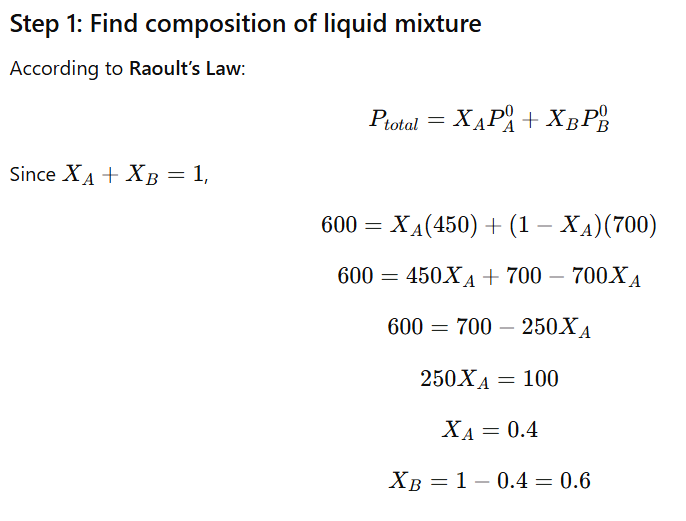
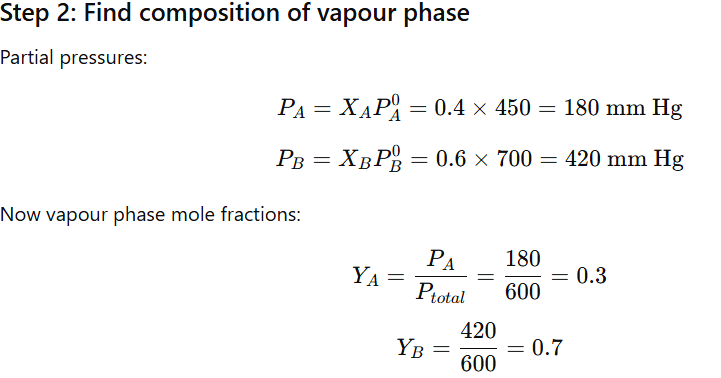
1.8 The vapour pressure of pure liquids A and B are 450 and 700 mm Hg respectively, at 350 K . Find out the composition of the liquid mixture if total vapour pressure is 600 mm Hg. Also find the composition of the vapour phase.
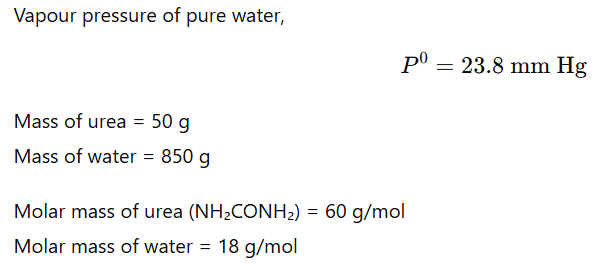
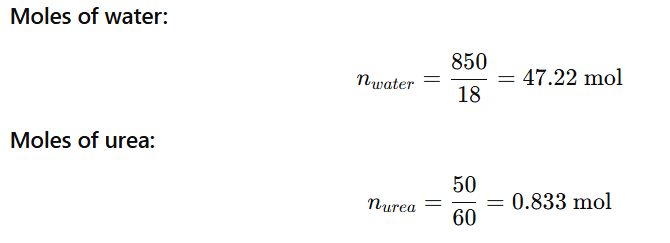
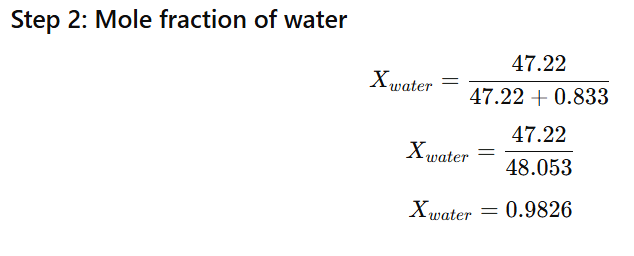
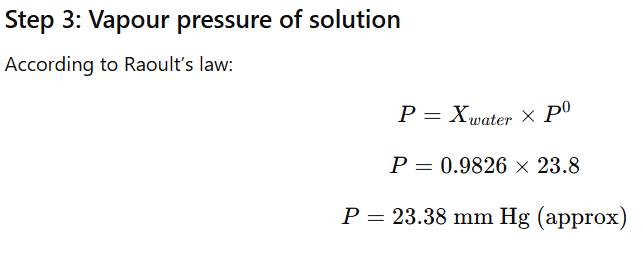
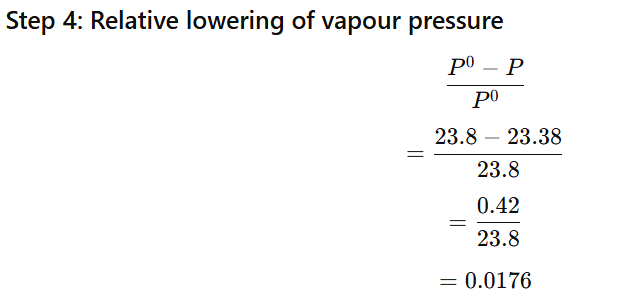
1.9 Vapour pressure of pure water at 298 K is 23.8 mm Hg. 50 g of urea (NH2CONH2) is dissolved in 850 g of water. Calculate the vapour pressure of water for this solution and its relative lowering.
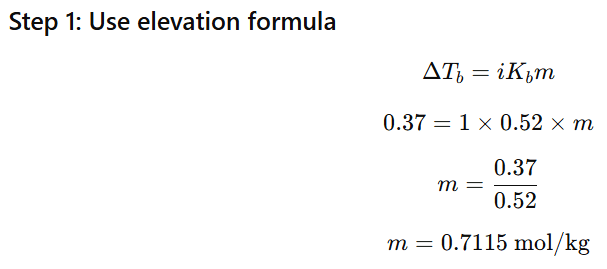
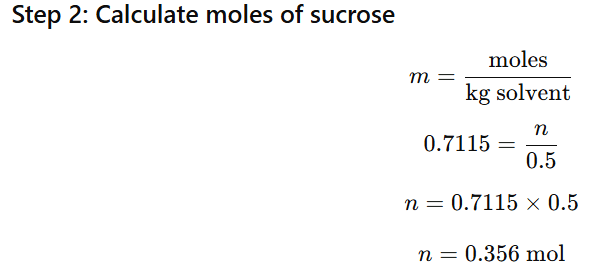
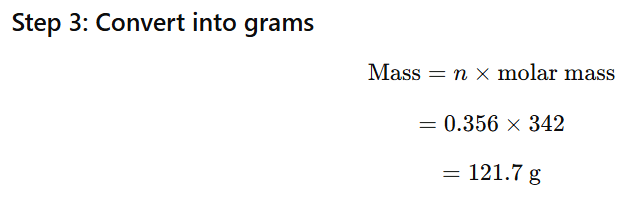
1.10 Boiling point of water at 750 mm Hg is 99.63°C. How much sucrose is to be added to 500 g of water such that it boils at 100°C.
Given:
Boiling point at 750 mm Hg = 99.63°C Required boiling point = 100°C
ΔTb=100−99.63=0.37∘C
Mass of water = 500 g = 0.5 kg
For water: Kb=0.52Kkgmol−1
Sucrose is non-electrolyte →
Molar mass of sucrose (C₁₂H₂₂O₁₁) = 342 g/mol
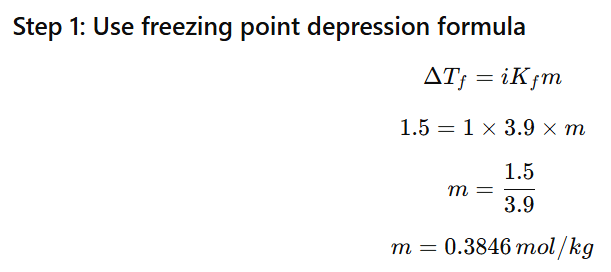
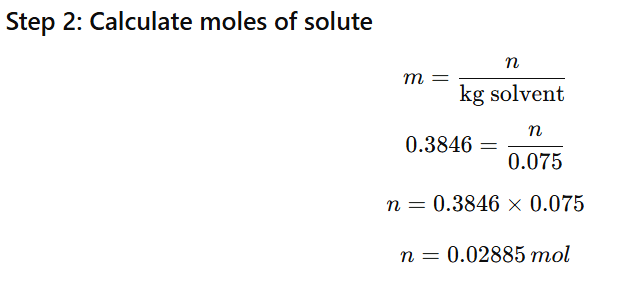
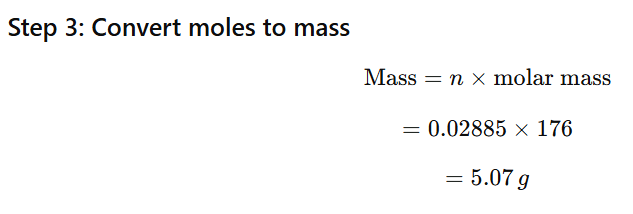
1.11 Calculate the mass of ascorbic acid (Vitamin C, C6H8O6) to be dissolved in 75 g of acetic acid to lower its melting point by 1.5°C. Kf = 3.9 K kg mol-1
Given:
Depression in freezing point: ΔTf=1.5∘C
Kf=3.9Kkgmol−1
Mass of solvent (acetic acid) = 75 g = 0.075 kg
Ascorbic acid (C₆H₈O₆) is non-electrolyte →
Molar mass of ascorbic acid:
6(12)+8(1)+6(16)
=72+8+96=176g/mol
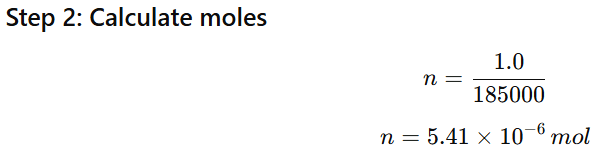
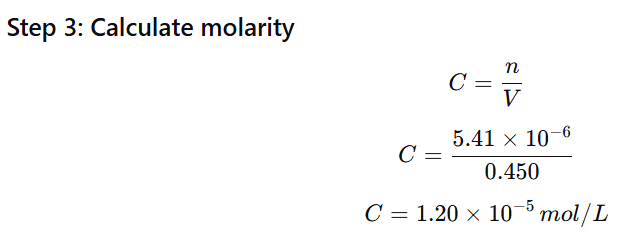
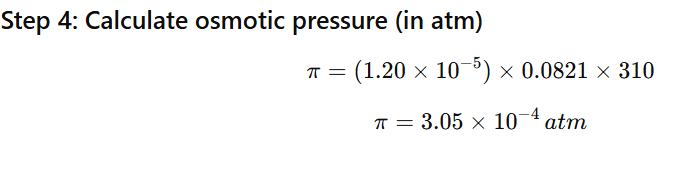
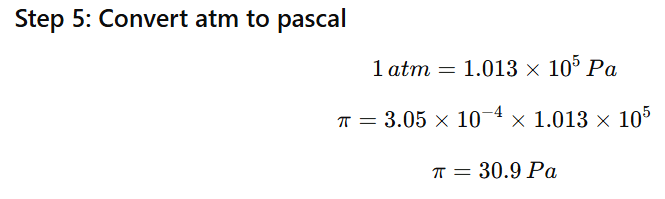
1.12 Calculate the osmotic pressure in pascals exerted by a solution prepared by dissolving 1.0 g of polymer of molar mass 185,000 in 450 mL of water at 37°C
Given:
Mass of polymer = 1.0 g Molar mass = 185,000 g/mol
Volume of solution = 450 mL = 0.450 L Temperature = 37°C = 310 K
Gas constant:
R=0.0821Latmmol−1K−1
Step 1: Use osmotic pressure formula
π=CRT
First find molarity (C).
Exercises
1.1 Define the term solution. How many types of solutions are formed? Write briefly about each type with an example.
Definition of Solution
A solution is a homogeneous mixture of two or more components in which:
The component present in larger amount is called solvent
The component present in smaller amount is called solute
Example: Salt dissolved in water.
Types of Solutions
Solutions are classified on the basis of physical state of solute and solvent.
There are 9 types of solutions:
1. Gas in Gas Solution
Solvent: Gas
Solute: Gas
Example: Air (O₂, CO₂ dissolved in N₂)
2. Gas in Liquid Solution
Solvent: Liquid
Solute: Gas
Example: CO₂ in water (Soda water)
3. Gas in Solid Solution
Solvent: Solid
Solute: Gas
Example: Hydrogen in palladium
4. Liquid in Gas Solution
Solvent: Gas
Solute: Liquid
Example: Moist air (water vapour in air)
5. Liquid in Liquid Solution
Solvent: Liquid
Solute: Liquid
Example: Alcohol in water
6. Liquid in Solid Solution
Solvent: Solid
Solute: Liquid
Example: Dental amalgam (Mercury in silver)
7. Solid in Gas Solution
Solvent: Gas
Solute: Solid
Example: Smoke (dust particles in air)
8. Solid in Liquid Solution
Solvent: Liquid
Solute: Solid
Example: Salt in water
9. Solid in Solid Solution
Solvent: Solid
Solute: Solid
Example: Alloys (Brass = Zn in Cu)
1.2 Give an example of a solid solution in which the solute is a gas.
Hydrogen gas dissolved in palladium metal is an example of a solid solution in which the solute is a gas.
1.3 Define the following terms: (i) Mole fraction (ii) Molality (iii) Molarity (iv) Mass percentage
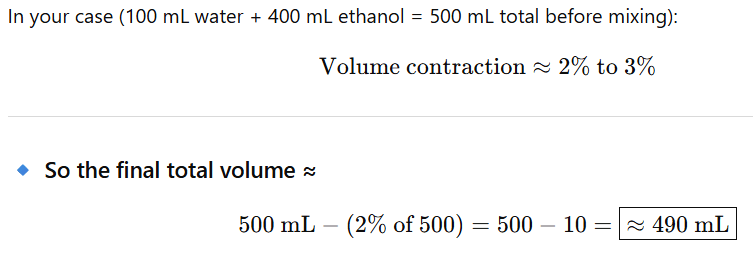
When 100 mL of water is mixed with 400 mL of ethanol, the total volume is not simply additive — because hydrogen bonding causes volume contraction.
Reason:
Water and ethanol molecules form strong hydrogen bonds, allowing the molecules to pack more closely. So the mixture’s final volume is less than 500 mL.
Experimental result:
When equal amounts of water and ethanol are mixed, the volume contraction is about 4–5%.
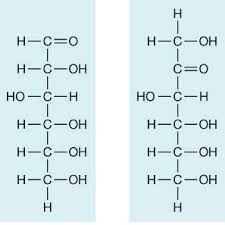
Fructose is a reducing sugar, even though it’s a ketose (contains a keto group), not an aldehyde. Let’s see how?
1. Reducing sugar meaning
A reducing sugar is one that can reduce mild oxidizing agents like Tollens’ reagent (Ag⁺ → Ag) or Fehling’s solution (Cu²⁺ → Cu⁺) — because it has a free aldehyde or ketone group (or can form one in solution).
2. Fructose has a ketone group (not aldehyde)
At first glance, this looks non-reducing because it lacks a free aldehyde group.
3. In alkaline medium → tautomerization
In basic solution, fructose undergoes keto–enol tautomerism, forming an enediol intermediate. This intermediate can rearrange to give glucose and mannose, both of which are aldehydes (aldoses). Fructose⇌enediol formalkaline mediumGlucose+Mannose\text{Fructose} \xrightleftharpoons[\text{enediol form}]{\text{alkaline medium}} \text{Glucose} + \text{Mannose}Fructosealkaline mediumenediol formGlucose+Mannose
4. Hence → Reducing property
Because glucose and mannose can reduce Tollens’ and Fehling’s reagents, fructose also gives a positive test indirectly. So, fructose is a reducing sugar — not directly, but via tautomeric conversion to an aldehyde sugar.