1. Pathogens
- Disease-causing organisms are called pathogens.
- They include bacteria, viruses, fungi, protozoans and helminths.
- Pathogens enter the body, multiply and interfere with normal body functions.
2. Typhoid
- Pathogen: Salmonella typhi (bacterium)
- Transmission: Contaminated food and water
- Symptoms: High fever (39–40°C), weakness, stomach pain, constipation, headache and loss of appetite.
- Test: Widal test
- Severe cases may cause intestinal perforation and death.
3. Pneumonia
- Pathogens: Streptococcus pneumoniae, Haemophilus influenzae
- Affected organ: Alveoli of lungs
- Transmission: Respiratory droplets/aerosols and contaminated utensils.
- Symptoms: Fever, chills, cough and headache.
- Fluid accumulates in alveoli, causing breathing difficulty.
4. Common Cold
- Pathogen: Rhinoviruses
- Affected: Nose and respiratory passage, not lungs.
- Symptoms: Nasal congestion, nasal discharge, sore throat, cough, headache and tiredness.
- Usually lasts 3–7 days.
- Spread through droplets and contaminated objects.
5. Malaria
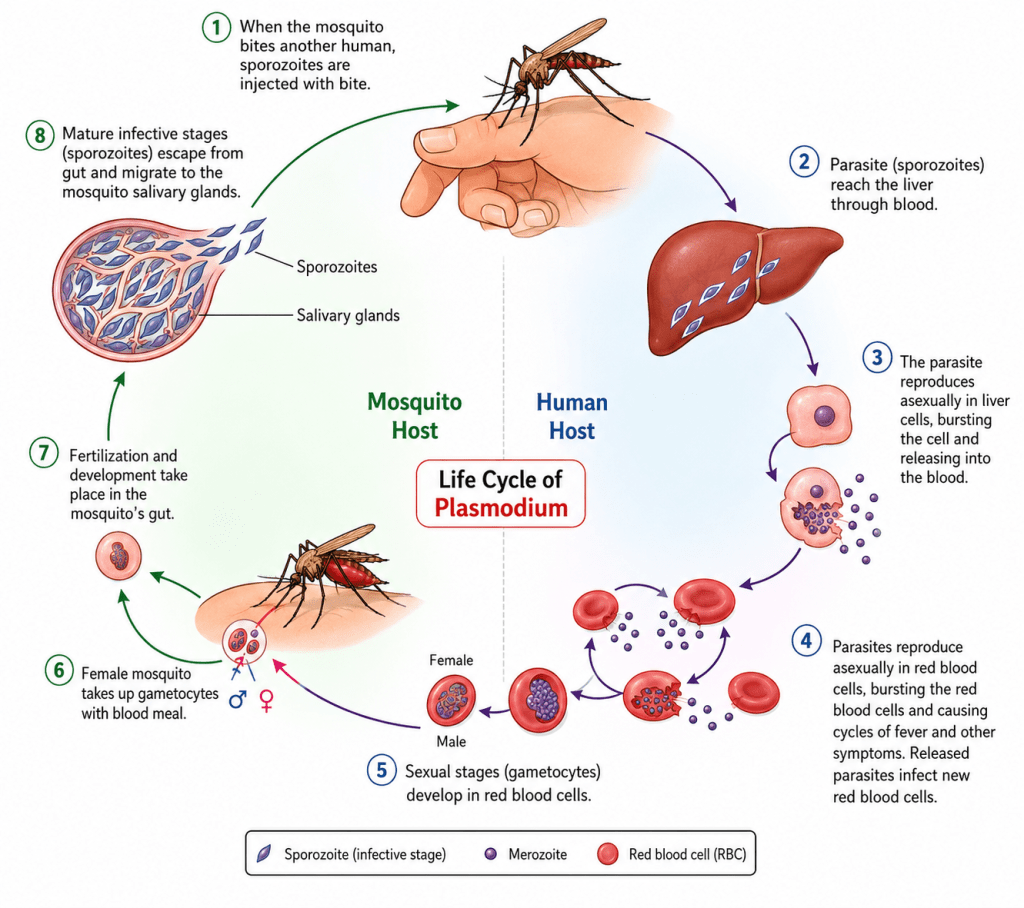
- Pathogen: Plasmodium
- Species include P. vivax, P. malariae and P. falciparum.
- Most serious: P. falciparum → malignant malaria.
- Vector: Female Anopheles mosquito.
- Infective form entering humans: Sporozoites.
- Parasites multiply first in liver cells, then infect RBCs.
- RBC rupture releases haemozoin, causing recurring chills and fever.
- Plasmodium requires two hosts: humans and mosquitoes.
6. Amoebiasis
- Pathogen: Entamoeba histolytica
- Affected: Large intestine
- Symptoms: Constipation, abdominal pain/cramps and stools containing excess mucus and blood.
- Transmission: Contaminated food and water.
- Carrier: Housefly acts as a mechanical carrier.
7. Ascariasis
- Pathogen: Ascaris (roundworm)
- Symptoms: Internal bleeding, muscular pain, fever, anaemia and intestinal blockage.
- Transmission: Contaminated food, water, vegetables and fruits.
8. Filariasis / Elephantiasis
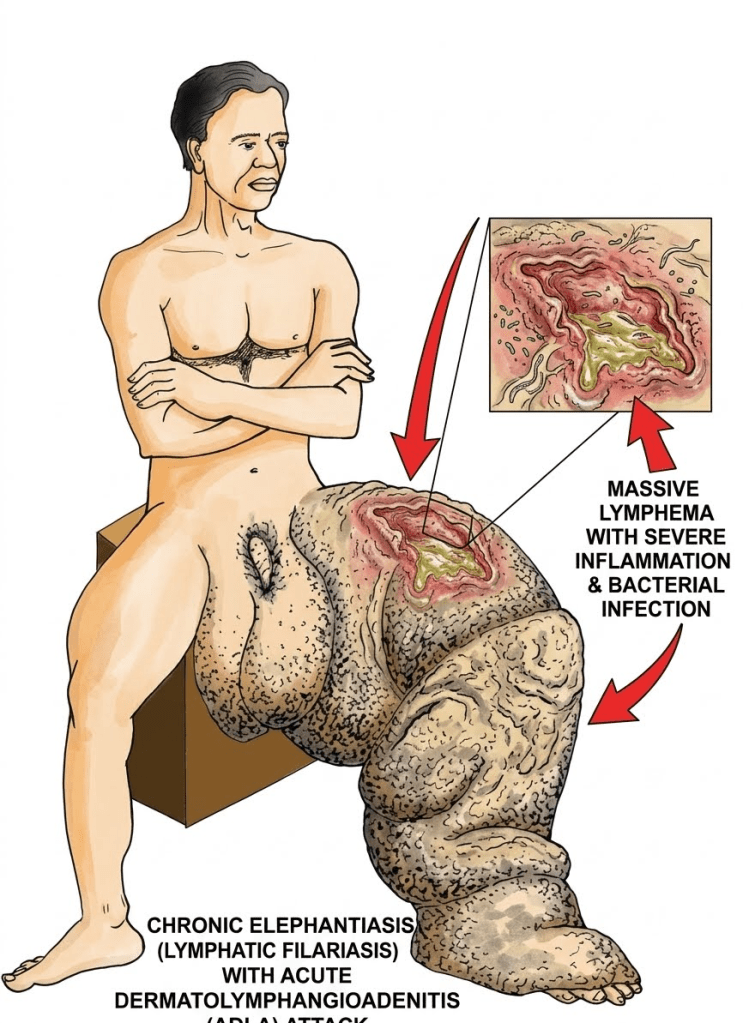
- Pathogen: Wuchereria bancrofti and W. malayi
- Vector: Female mosquito
- Causes chronic inflammation of lymphatic vessels, especially of lower limbs.
- May also affect genital organs and cause deformities.
9. Ringworm
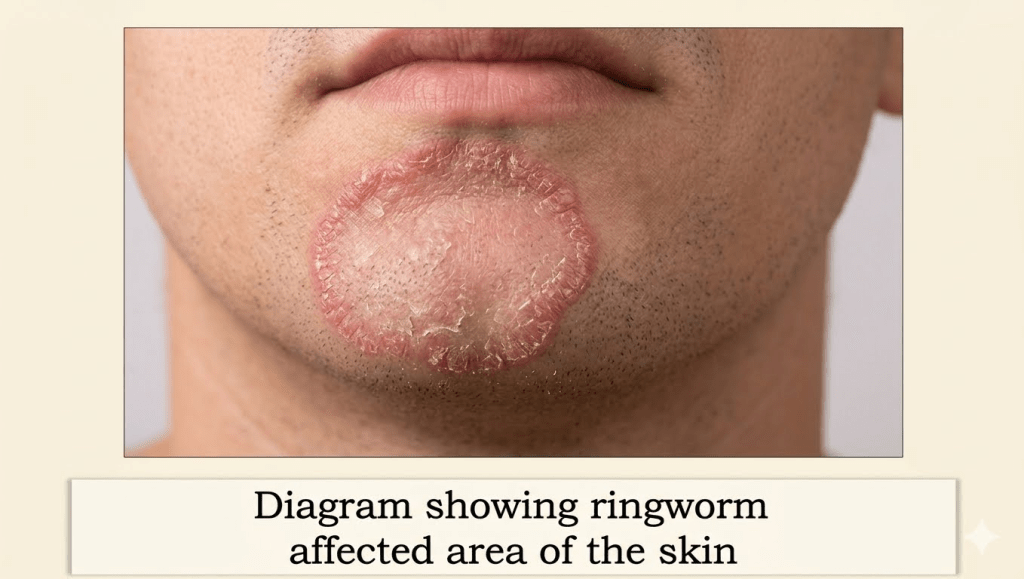
- Fungi: Microsporum, Trichophyton, Epidermophyton
- Affected: Skin, nails and scalp.
- Symptoms: Dry, scaly lesions and intense itching.
- Favourable conditions: Heat and moisture.
- Spread through infected soil, towels, clothes and combs.
10. Prevention and Control
Personal hygiene:
- Keep body clean.
- Drink clean water.
- Eat clean and properly prepared food, vegetables and fruits.
Public hygiene:
- Proper disposal of waste and excreta.
- Regular cleaning and disinfection of water reservoirs and public places.
Vector control:
- Avoid stagnant water.
- Use mosquito nets.
- Clean coolers regularly.
- Use wire mesh on doors/windows.
- Use insecticides where appropriate.
- Gambusia fish feed on mosquito larvae.
11. Vaccination and Antibiotics
- Vaccination and immunisation have helped control many infectious diseases.
- Smallpox has been completely eradicated.
- Vaccines have greatly controlled diseases such as polio, diphtheria, pneumonia and tetanus.
- Antibiotics and other drugs help in treating many infectious diseases.