Sarvan Kumarhttp://sarvankumar.wordpress.comMy name is Sarvan Kumar, I am post graduate in chemistry (MSc). besides teaching chemistry at various schools and coaching centres I have been giving home tuitions to students for 10 years. I have helped students score good marks in chemistry not only in board examination but also JEE, NEET, SAT, IGCSE and IB examinations. Nearly 90% of my students have scored more than 95% in their CBSE board examination. Moreover they have also secured a seat in prestigious engineering and medical college.
Since every student is different hence my unique style of teach
Metals have two type of linkages in coordination compounds one is called primary linkages and other is called secondary linkages.
Primary linkage is equal the oxidation number of metal and secondary linkage is equal to the coordination number of the metal.
The primary valences are ionisable and the secondary valences are non ionisable.
Primary valences satisfied by negative ions and secondary valences are satisfied by neutral molecules.
The secondary linkages of metal have characteristic spatial arrangements coordination polyhedra.
Q.1.Explain the primary linkage and secondary linkage with suitable example.
Ans. [Co(NH3)6]Cl3
In above compound three chlorides are primary linkages and 6 ammonia molecules are secondary linkages.
Q.2.Define counter ions.
Ans. Counter ions are simply the ‘simple’ cations or anions that may or may not participate in the Coordination. Ions outside the square bracket are called counter ions. In [Co(NH3)6]Cl3 , [Co(NH3)6]3+ is coordination entity and 3Cl– are counter ions.
Q.3.What is the difference between double salt and complex salt.
Ans.Double salt dissociates into simple ions completely when dissolved in water.Example, Carnallite, KCl.MgCl2.6H2O dissociates into K+,Cl– and Mg2+.Complex salt dissociates into simple ion and complex ion for example K4Fe(CN)6 dissociate into complex ions [Fe(CN)6]4– and k+, [Fe(CN)6]4– do not dissociate into Fe2+ and CN– ions.
Q.4.Define coordination entity.
Ans.Central metal atom and secondary linkages are collectively called coordination entity. For example [CoCl3(NH3)3]3+ is a coordination entity in which the cobalt ion is surrounded by three ammonia molecules and three chloride ions.
Q.5.Define central atom/ion.
Ans.In coordination entity the metal which is bound with fixed number of secondary linkages is called central atom. For example [CoCl3(NH3)3]3+ is a coordination entity in which the cobalt ion is central ion.
Q.6.Define ligand.
Ans.The negative ions and neutral molecules which are bound to the central atom as secondary linkages are celled ligand, for example [CoCl3(NH3)3]3+ is a coordination entity in which three ammonia molecules and three chloride ions are ligands.
Q 7.Explain the types of ligand.
Ans.Ligands are of two types.
1.Monodentate or unidentate ligand.
When a ligand is bound to a metal ion through a single donor atom is called unidentate ligand For example in [CoCl3(NH3)3] Cl and NH3 are unidentate ligand.
2.Polydentate ligand.
When a ligand is bound to a metal ion through more than one donor atoms is called polydentate ligand for example in [Co(en)2(Cl)2], ‘en’ is polydentate ligand.
Polydentate ligand can further divided into didentate,terdentate,tetradentate ,pentadentate ,hexadentate etc.
Q.8.Define didentate ligand.
Ans. When a ligand is bound to a metal ion through two donors atoms is called bidentate ligand for example in [Co(en)2(Cl)2], en is didentate ligand.
Q.9.Give an example of hexadentate ligand.
Ans. Ethylenediaminetetraacetate ion (EDTA4–) is hexadentate ligand.
Q.10.Define ambidentate ligand.
Ans. Ligand which can coordinate with central atom through two different atoms is called ambidentate ligand.For example;
NO2– It can coordinate either through nitrogen or through oxygen to a central metal atom/ion.
SCN– It can coordinate through the sulphur or nitrogen atom to a central metal atom/ion.
Q.11.Define chelation and chelate effect.
Ans.The phenomena in which polydentate ligand is coordinate with central atom.The stability of complex compound increases this effect is called chelate effect.
Q.12.Define coordination number.
Ans. The number of ligand donor atoms to which the metal is directly bonded is called coordination number for example in [Co(en)2(Cl)2], ‘Co’ has coordination number 6 because ‘en’ is didentate ligand.
Structure of complex compounds on the basis of coordination number
Coordination number
Structure
2
linear
3
Triagonal
4
Tetrahedral or square planer
5
Pentagonal bipyramial
6
Octahedral
Q.13.Define homoleptic and heteroleptic complexes?
Ans. Complexes in which a metal is bound to only one kind of donor groups are known as homoleptic for example [Co(NH3)6]3+.
Complexes in which a metal is bound to more than one kind of donor groups, are known as heteroleptic for example [Co(NH3)4Cl2]+
List of unidentate and didentate ligands
Name
Symbol
Charge
IUPAC Name
fluoride
F
-1
-e+o =fluorido
chloride
Cl
-1
-e+o =chlorido
bromide
Br
-1
-e+o =bromido
iodide
I
-1
-e+o =iodido
Hydroxide
OH
-1
-ide+o=hydroxo
Cyanide
CN
-1
-ide+o=cyano
Nitrite
NO2
-1
-e+o =nitrito
Sulphate
SO4
-2
-e+o =sulphato
Carbonate
CO3
-2
-e+o =carbonato
Water
H2O
0
aqua
Ammonia
NH3
0
ammine
Carbonmonooxide
CO
0
carbonyl
Primary amine
R-NH2
0
Alakananine
triphenylphosphine
PPh3
0
triphenylphosphine
Thiocyanate
SCN
-1
-e+o =thiocyanato
nitric oxide
NO
0
nitrosyl
nitric oxide
NO
+1
Nitrosonium
nitric oxide
NO
-1
Nitroso
Isothiocyanate
NCS
-1
Isothiocyanato
List for bidentate ligand.
Name
Symbol
Charge
IUPAC Name
Ethylenediamine
en, (NH2-CH2-CHNH2)
0
Ethane-1,2-diamine
Oxalate
Ox, (C2O42-)
-2
-e+o=Oxalato
Rules for the IUPAC Nomenclature of coordination compounds
Complex compounds are of three types.
Coordination compounds with +ve coordination entity
Coordination compounds with -ve coordination entity
Coordination compound with neutral coordination entity
[Co(NH3)4Cl2]Cl Rule. 1.Name the positive part first. Since in above example +ve part is complex ion hence name the +ve part by following rules. a.Name the ligands and arrange all in alphabetical order,use di,tri ,tetra etc if same type of ligand is present at more than one times. tetraamminedichlorido b.Name the central atom with its oxidation number in ( ) bracket. Tetraamminedichloridocobalt(III)2.Name the negative part. Here –ve part is simple ion . Tetraamminedichloridocobalt(III)Chloride. Point to be noted a. When the name of the ligands include di tri etc, then use, bis(for 2), tris(for 3)and tetrakis(for 4) . b.There is gap between +ve and –ve part. c.For ambidentate ligand NO2 use ‘N’or O before the name of central atom depending from which atom ligand is coordinated. For example [Pt(NH3)BrCl(NO2)]–Amminebromidochloridonitrito-N-platinate(II) and for [Pt(NH3)BrCl(ONO)]–Amminebromidochloridonitrito-O-platinate(II)
K4[Fe(CN)6] Rule. 1.Name the positive part first.Potassium2.Name the negative part. Since in above example -ve part is complex ion hence name the -ve part by following rules. a.Name the ligands and arrange all in alphabetical order,use di,tri ,tetra etc if same type of ligand is present at more than one times. hexacyano b. Name the central atom with its oxidation number in ( ) bracket. c.use –ate as suffix in the name of central atomPotassium hexacyanoferrate(II) Point to be noted a. When the names of the ligands include di tri etc, then use, bis(for 2), tris(for 3)and tetrakis(for 4) . b.There is gap between +ve and –ve part. c. For some metals, the Latin names are used in the complex anions, e.g., ferrate for Fe, argentate for Ag
[Ni(CO)4] Name it in single word. a.Name the ligands and arrange all in alphabetical order,use di,tri ,tetra etc if same type of ligand is present at more than times. tetracarbonyl b. Name the central atom with its oxidation number in ( ) bracket. Tetracarbonylnickel(0)
Formula for mononuclear coordination entities(contain a single central metal atom)
We start with example tris(ethane-1,2–diammine)cobalt(III) sulphate
1.Write the central atom first in [ ] bracket
[Co]
2.Write all ligands after central atom
[Co(en)3]
3.Write the counter ion [Co(en)3](SO4)
4.Since we do not know the number of +ve ion and –ve ion so let them x and y respectively.
[Co(en)3]x(SO4)y
Now find the value of x and y by using oxidation number of central atom.
3+0.x+(-2)y=0
Hence 3x=2y
Hence x=2 and y=3
Thus compound is [Co(en)3]2(SO4)3
Types of structural isomers with example
Structural isomers have 4 types.
1.Linkage isomesrs.
[Co(NH3)5(NO2)]Cl2 & [Co(NH3)5(ONO)]Cl2
Linkage isomers are formed by ambidentate ligand .In above example NO2 is ambidentate ligand ,forms two isomers. One is formed when central atom is bound through nitrogen and other when it is bound through oxygen.
2.Coordination isomer:
[Cr(NH3)6][Co(CN)6] &[Co(NH3)6][Cr(CN)6]
Coordination isomers are formed when ligands are interchanged between cationic and anionic entities of different metal ions present in a complex.
3.Ionisation isomers.
[Co(NH3)5SO4]Br & [Co(NH3)5Br]SO4
Ionisation isomers are formed when counter ion and ligands interchange their position. counter ion becomes ligand and replace a ligand which becomes counter ion.
4.Hydrate isomers or solvate isomers.
[Cr(H2O)6]Cl3 and[Cr(H2O)5Cl]Cl2.H2O
Hydrate isomers are similar with ionization isomers.It involves solvent molecules like water,water molecules are bound with central atom as ligand or present as free solvent molecules.
Geometrical isomers of coordination compounds
Complex compounds having coordination number either 4(Square planer) or 6 (octahedral) can show geometrical isomerism
Types.
[MA2B2]
[MA2BC]
[MA2B4]
[MA4BC]
[MA2X2]
[MA2B2X]
[MABX2]
[MABCD]
[MA3B3]
[MABCDEF]
Where ABCD are monodentae ligand and X is bidentate ligand.
Structure of geometrical isomers of complex compound?
[MA2B2]
Geometrical isomers of MA2B2
[MA2BC]
Geometrical isomers of MA2BC
[MA2B4]
Geometrical isomers of MA2B4
[MA4BC]
Geometrical isomers of MA4BC
[MA2X2]
Geometrical isomers of MA2 X2
[MABX2]
Geometrical isomers of MABX2
[MA2B2X]
Geometrical isomers of MA2B2 X
[MABCD]
Geometrical isomers of MABCD
[MA3B3]
Geometrical isomers of MA3B3
Where ABCD are monodentae ligand and X is bidentate ligand.
Conditions to show optical isomers by complex compound
Complex compounds having coordination number 6(octahedral) can give optical isomers. Very few tetrahedral complexes show optical isomerism.Square planer complexes are seldom optically active.
Types.
[MA2X2]
[MA2B2X]
[MABX2]
[MX3]
Where A,B are monodentae ligand and X is bidentate ligand.
Structures of all types of optical isomers
[MA2X2]
Optical Isomers of MA2X2
[MA2B2X]
Optical Isomers of MA2B2 X
[MX3]
Optical Isomers of MX3
[MABX2 ]
Optical isomers of ABX2
Valence Bond theory of coordination compounds
We take a example [CoF6]3–
Step 1.Write the electronic configuration of central atom.
Step 2.Calculate oxidation number of central atom.
X+(-1)6=-3
X=3
Step 3. .Write the electronic configuration of central atom ion.
Step 4. Write the electronic configuration of [CoF6]3–
Hybridiastion is sp3d2
Structure –octahedral
Magnetic property-Paramagnetic. (due to presence of unpair electron)
Behavior of complex-Outer orbital complex .
Structure ,magnetic property and color of the complex compound according to VBT if ligand is strong like CO and CN.
We take a example [Co(CN)6]3–
Step 1.Write the electronic configuration of central atom.
Step 2.Calculate oxidation number of central atom.
X+(-1)6=-3
X=3
Step 3. .Write the electronic configuration of central atom ion.
Step.4.Pairing of d electrons take place.
Step 5. Write the electronic configuration of [CoF6]3–
Hybridiastion is d2sp3
Structure –octahedral
Magnetic property-Diamagnetic. (Due to presence of paired electrons)
Behavior of complex-Inner orbital complex .
CFT (Crystal field theory)
The five d orbitals have same energy in isolated gaseous atom and in spherically symmetrical field that is, when –ve ion surrounds the metal hence they are called degenerate orbital.This degeneracy is disturbed in presence of ligand.Thus this splitting of the d orbitals in presence of ligand is called crystal field theory.
d orbital splitting diagram in an Octahedral crystal field
Crystal Field Splitting in Octahedral Crystal Field
d orbital splitting diagram in an tetrahedral field
Energy
d orbital splitting diagram in an tetrahedral field
Q.14 What is spectrochemical series?
Ligands are arranged in the order of increasing field strength is called spectrochemical series.
Q.15Define strong field ligand and weak field ligand.
Strong and weak field ligands. The spectrochemical series ranks ligands according the energy difference ΔO between the t2g and eg orbitals in their octahedral complexes. This energy difference is measured in the spectral transition between these levels, which often lies in the visible part of the spectrum and is responsible for the colors of complexes with partially filled d-orbitals. Ligands that produce a large splitting are called strong field ligands, and those that produce a small splitting are called weak field ligands.
Q.16 What is crystal field splitting energy? How does the magnitude of Δ0 decide the actual configuration of d-orbitals in a coordination entity?
Ans.When the ligands approach a transition metal ion, the d-orbitals split into two sets, one with lower energy and the other with higher energy. The difference of energy between the two sets of orbitals is called crystal field splitting energy.
Let p= The energy required for electron pairing in a single orbital.
Δ0 =Energy difference between t2g and eg set of orbitals in octahedral complex.
Strong field ligand– When Δ0 >P,The fourth electron occupies a t2g orbital with configuration t2g4eg0
Weak field ligand– When Δ0 <P The fourth electron enters one of the eg orbitals giving the configuration t2g3eg1
Q.17Explain bonding in metal carbonyl compound with example.
Ans.The metal-carbon bond in metal carbonyls possess both and bond .The is formed by the donation of lone pair of electrons on the carbonyl carbon into a vacant orbital of the metal. The is formed by the donation of a pair of electrons from a filled d orbital of metal into the vacant antibonding orbital of carbon monoxide example Ni(CO)4 .
Q.18.Why are some of the coordination compounds colored?
Ans. Partly filled d orbitals complex having transition metal as central atom can show colour.Electrons of lower d orbitals absorbed color in visible region and go to the higher state d orbitals.The color of the complex is complementary color of the light absorbed.
Q.19 How is stability of coordination compound determined?
Ans .Stability of coordination compound is determined by stability constant.
Suppose a reaction type stability constant is . Higher the value of higher the stability of coordination compound.
Q.20.Define instability constant or dissociation constant.
Ans.The reciprocal of the association constant is called instability constant or dissociation constant .
Q.21.What are the uses of coordination compound?
Ans.
EDTA, DMG(dimethylglyoxime), are used in qualitative and quantitative chemical analysis.
In determining of hardness of water Na2EDTA is used.
The pigment responsible for photosynthesis, chlorophyll, is a coordination compound of magnesium.
Haemoglobin is a coordination compound of Iron.
Vitamin B12, cyanocobalamine, the anti–pernicious anaemia factor, is a coordination compound of cobalt.
Carboxypeptidase A and carbonic anhydrase are used as enzyme catalyst.
Wilkinson catalyst (rhodium complex, [(Ph3P)3RhCl]) is used for the hydrogenation of alkenes.
EDTA is used in the treatment of lead poisoning.
cis–platin and related compounds inhibit the growth of tumours.
Q.1.Why are d-block elements called transition elements?
Ans.The position of d-block elements in the periodic table is between s-block elements and p-block elements. They exhibit transitional behaviour between s-block and p-block elements,so they are known as transition elements.
Q.2.Write different types of transition elements.
Ans.There are mainly three types of transition series.
1.1st transition series- 3d series (Sc to Zn).
2. 2nd transition series-4dseries (Y to Cd)
3. 3rd transition series-5dseries (La to Hg)
Q.3.Zinc, cadmium and mercury are not considered as transition elements why?
Ans.They have completely filled d orbital(d10) in their ground state as well as in their oxidation state(M2+) hence they are not considered as transition elements.
Q.4.What is the general electronic configuration of d-block elements?
Ans.(n-1)d1–10ns1–2 where n is outermost shell.
Q.5.Write the electronic configuration of Cr and Cu.
Ans.Cr(24)- [Ar] 3d5 4s1
Cu(29)-[Ar] 3d104s1
Q.6.Transition metals are hard ,have high melting points and have low volatility why?
Ans. Transition metals have strong interatomic metallic bonding due to the involvement of greater number of electrons from (n-1)d in addition to the ns electrons because the energy difference between ns electrons and (n-1)d electrons is very small.
Q.7.Zn, Cd and Hg are not hard why?
Ans.They have completely filled d orbital(d10) hence the interatomic metallic bonding is weak. Thus Zn, Cd and Hg are not hard.
Q.8.In any row of transition series the melting points of transition elements rise to a maximum at middle except for anomalous values of Mn and Tc and fall regularly as the atomic number increases why?
Ans.The strength of interatomic metallic bonding increases and becomes maximum at middle(d5) because number of unpair electron increases up to middle. From middle to end strength of metallic bonding decreases as number of unpair electron decreases. Thus in any row the melting points of transition elements rise to a maximum at middle except for anomalous values of Mn and Tc and fall regularly as the atomic number increases.
Q.9.Enthalpies of atomisation of transition elements is very high why?
Ans.It is due to the presence of large number of unpaired electrons in their atoms they have strong interatomic metallic bonding and hence higher enthalpies of atomisation.
Q.10.In 1st transition series the enthalpy of atomization of zinc is the lowest why?
Ans. Zinc have completely filled d orbital(d10) hence the interatomic metallic bonding is weak.
Q.11.Atomic and ionic size of of transition element decreases with increasing atomic number why?
Ans. As atomic number increases the new electron enters a d orbital each time the nuclear charge increases by unity and also the shielding effect of a d electron is very low,hence the net electrostatic attraction between the nuclear charge and the outermost electron increases and the ionic /atomic radius decreases.
Q.12.The variation in atomic /ionic size within a series is quite small why?
Ans.It is due to the presence of d electrons and shielding effect of these electrons is very low.
Q.13.Define lanthanoid contraction.
Ans.The filling of 4f before 5d orbital results in a regular decrease in atomic radii calledlanthanoid contraction which essentially compensates for the expected increase in atomic size with increasing atomic number
Q.14.The radii of the 3rd (5d) series are nearly same with those of the corresponding members of the 2nd series.
Ans.It is due to lanthanoid contraction. The filling of 4f before 5d orbital results in a regular decrease in atomic radii calledlanthanoid contraction which essentially compensates for the expected increase in atomic size with increasing atomic number.
Q.15.Zr and Hf have very similar physical and chemical properties why?
Ans.Zr and Hf have similar atomic radii due to lanthanoid contraction. The filling of 4f before 5d orbital results in a regular decrease in atomic radii calledlanthanoid contraction which essentially compensates for the expected increase in atomic size with increasing atomic number.
Q.16.There is an increase in ionisation enthalpy along each series of the transition elements from left to right why?
Ans. Atomic and ionic size of transition element decreases with increasing atomic number due to poor shielding effect d electrons.
Q.17.Variation in ionization enthalpies of transition element is small why?
Ans. Because variation in atomic /ionic size within a series is quite small.
Q.18.Zinc has high 1st ionization enthalpy why?
Ans.Because electron is removing from stable 4s2 configuration.
Q.19.Zinc has lower 2nd ionization enthalpy.
Ans.After removal of an electron from 4s1 electronic configuration of d orbital remain unchanged.
Q.20.What is the lowest common oxidation state of elements of 1st transition series.
Ans.The lowest common oxidation state of elements of 1st transition series is +2 when 4s electrons are used.
Q.21.Second ionisation enthalpy of Cr and Cu has unusual high values why?
Ans.After removal of one electron from Cr and Cu it converts into stable Cr+(3d5)configuration and Cu+(3d10) configuration respectively hence second ionisation enthalpy of Cr and Cu has unusual high values.
Q.22.The third ionization enthalpy of Mn is high why.
Ans After removal of 2 electrons from Mn it converts into stable Mn2+(3d5)configuration.
Q.23.Transition elements show variable oxidation state why?
Ans.Transition elements have large number of unpair electrons and also these elements use not only ns electrons but also( n-1)d electrons because energy difference between ns and (n-1)d electrons are very small.
Q.24.Scandium does not exhibit variable oxidation states why?
Ans .Sc has only one electron in d orbital hence it can show only one oxidation state +3.
Q.25.Manganese shows largest number of oxidation states that is from +2 to 7 why?
Ans. Mn atoms have maximum number of unpaired electrons (3d5 configuration).
Q.26.The first and second ionization enthalpies in the first series of the transition elements are irregular why?
Ans.Ionisation enthalpy depends not only on the size of elements but also stability of electronic configurations .Some electronic configurations like d0.d5,d10 have extra stability hence the first and second ionization enthalpies in the first series of the transition elements are irregular.
Q.27.The E0(Cu2+/Cu) value for copper is positive (+0.34V) why?
Ans. E0 value depends on following factors.
i.Enthalpy of atomization.
ii.Ionisation enthalpy.
iii.Hydration enthalpy.
Since enthalpy of atomization of Cu is high and hydration enthalpy of Cu2+ is low hence, the E0(Cu2+/Cu) value for copper is positive (+0.34V).
Q.28.Cu is not able to liberate H2 from acids why?
Or
Only oxidising acids (nitric and hot concentrated sulphuric) react with Cu.
Ans. The E0 (Cu2+/Cu) value for copper is positive (+0.34V) due to low hydration enthalpy of Cu2+ and high enthalpy of atomization of Cu.
Q.29.E0value for Mn, Ni and Zn are more negative than expected from the trend why?
Ans.It is due to stable half filled electronic configuration of Mn2+ and fully filled stable electronic configuration of Zn2+ and high hydration enthalpy of Ni2+.
Q.30.Mn3+ is oxidising in nature but Cr2+ reducing in nature why?
Ans.Both Mn3+and Cr2+ have d4 configuration but Mn3+ is reduced into Mn2+ (from d4 to d5) and Cr2+ is oxidized into Cr3+ (from d4 to d3).Both Mn2+ and Cr3+ are stable due to different reasons. Mn2+ has stable half filled d5 configuration and Cr3+ has stable half filled t2g configuration,hence Mn3+ is oxidising but Cr2+ reducing in nature.
Q.31.E0(M3+/M2+)value for Mn is high why?
Ans.It is due to high ionization enthalpy is required to remove an electron from half filled stable electronic configuration of Mn2+( d5), E0(M3+/M2+) value for Mn is high.
Q.32.Copper (I) compounds are unstable in aqueous solution and undergo disproportionation?
Ans.
of Cu2+ is higher than that of Cu+ hence 2nd ionization enthalpy of cu is much more compensated by hydration enthalpy of Cu2+ .
Q.33.The ability of oxygen to stabilise higher oxidation states exceeds that of fluorine why?
Or
The highest Mn fluoride is MnF4 whereas the highest oxide is Mn2O7 why?
Ans. It is due to ability to form multiple bonds by oxygen atom.
Q.34.Compare reducing strength between Cr2+ and Fe2+.
Ans.
since 3d3 configuration is more stable than 3d5 configuration in aq solution hence E0 value of Cr3+/Cr2+ is lesser than Fe3+/Fe2+ thus Cr2+ is more reducing than Fe2+.
Q.35.In the first row transition metals show irregular values of Eo(M2+/M) as we go from left to right why?
Ans. E0 value depends on following factors.
i.Enthalpy of atomization.
ii.Ionisation enthalpy.
iii.Hydration enthalpy
Since first and second ionization enthalpies in the first series of the transition elements are irregular and sublimation enthalpy of manganese and vanadium is much less hence the first row transition metals show irregular values of Eo(M2+/M) as we go from left to right.
Q.36.E0(Mn3+/Mn2+) value is more positive than Cr3+/Cr2+ or Fe3+/Fe2+?
Due to very high ionization enthalpy in removal of an electron from half filled stable electronic configuration of Mn2+( d5) E0(Mn3+/Mn2+) value is more positive than Cr3+/Cr2+ or Fe3+/Fe2.
Q.37.The highest oxidation state of a metal present in its oxide or fluoride only why?
Ans.It is due to high electronegativity of oxygen and fluorine which can stabilize the large oxidation state of metal.
Q.38.Many of the transition metal ions are paramagnetic why?
Ans.Most transition element ions having a magnetic moment due to presence of unpaired electrons hence they are paramagnetic.
Q.39.Sc3+ and Zn2+ are diamagnetic why?
Ans. These ions have no magnetic moment due to presence paired electrons hence they are diamagnetic.
Q.40.What is ‘spin-only’ formula and how magnetic moment is determined by this formula.
n= number of unpaired electrons.Higher the number of unpair electrons,higher the magnetic moment and thus higher the paramagnetism.
Q.41.Why are transitional metal ions coloured?
Ans.It is due to d-d transition ,in presence of ligands splitting of d orbitals are occurred and electrons of lower d orbitals are excited to higher d orbitals by absorbing light in visible region,and thus new color of solution is complementary colour of the light absorbed.
Q.42.Sc3+ and Zn2+ are colorless why?
Ans. d-d transition is not possible on both cases because Sc3+ has no d electron and Zn2+ has completely filled d orbitals.
Q.43.The transition metals form a large number of complex compounds why?
Ans.It is due to following reasons.
i. Smaller sizes of the metal ions.
ii. High ionic charges.
iii.Availability of d orbitals for bond formation.
Q.44.The transition metals are good catalyst why?
Ans.It is due to the following reasons.
i. During catalytic reaction they can adopt multiple oxidation states.
ii.They can form complexes.
Q.45.Give examples of some reactions in which transition metal can acts like catalyst.
Ans. I. Vanadium(V) oxide in contact Process for manufacture of sulphuric acid.
II. Finely divided iron in Haber’s Process for manufacturing ammonia.
III. Nickel in Catalytic Hydrogenation of alkenes.
Q.46.Define interstitial compounds.
Ans.A compound of transition metals and hydrogen, carbon ,nitrogen etc when these smaller metals are trapped into interstitial of crystal lattice.
Examples: example, TiC, Mn4N, Fe3H
Q.47.What are the properties of interstitial compounds.
(i) High melting points
(ii) Very hard.
(iii) Metallic conductor.
(iv) Chemically inert.
Q.48.Explain disproportionation reaction with example .
Ans.In a particular reaction when same compound is reduced and oxidized both, the reaction is called disproportionation reaction.
In above example oxidation number of Mn increases from 6 to 7 and also decreases from 6 to 4.
Q.49.Inner transition elements are called f-block elements why?
Ans. The last electron of these elements enters in the ‘f’’ orbital that is why they are called are called f-block elements
Q.50.Why f-block elements are called inner transition elements.
Ans d-block elements are called transition elements and their two shells (last and the penultimate shells)are incomplete and since last electrons of f-block elements are filled in f orbitals which are inner orbitals of penultimate shell that is why f-block elements are called inner transition elements.
Q.51.How many types of f-block elements.
Ans. Lanthanoids (The fourteen elements after lanthanum).
Actinoids (the fourteen elements after actinium).
Q.52.General electronic configuration of f-block elements.
Ans.(n-2)f0-14 (n-1)0-1ns2
Where n is outermost shell.
For Lanthanoids n=6
For Actinoids n=7
Q.53.What is the common oxidation state of lanthanoids.
Ans. +3 is the common oxidation state of lanthanoids.
Q.54.The first and second ionization enthalpies of the innertransition elements are irregular why?
Ans.It is due to the extra stability of f0,f7,f14 electronic configuration.
Q.55.Ce can exhibit +4 oxidation state why?
Ans.Due to noble gas electronic configuration of Ce in +4 oxidation state it can show this oxidation state.
Q.56.Name the lanthanoids ions which do not show paramagnetic behaviour.
Ans.La3+ and Ce4+(due to f0 configuration)
Yb2+ and Lu3(due to f14 configuration)
Q.57. Name the lanthanoids ions which do not show color in aq solution.
Ans.La3+ and Lu3+ due to f0 and f14configuration configuration respectively.
Q.58.Most of the trivalent lanthanoid ions are coloured both in the solid state and in aqueous solution why?
Ans.Due to presence of unpair f electrons in these trivalent ions they show colour.
Q.59.Explain the abnormally low value of the third ionisation enthalpy of lanthanum, gadolinium and lutetium in lanthanoids series of elements.
Ans.It is due to half filled configuration (f7) of La3+ and Gd3+ and fully filled configuration (f14) of Lu+3.
Q.60.What are the uses of lanthanoids.
Ans. A lanthanoid metal (almost 95%), iron (almost 5%) and traces of S, C, Ca and Al are used to make an alloy named mischmetall. Mischmetall is used in Mg-based alloy to produce bullets, shell and lighter flint.
Q.61.Are all the actinoids are radioactive elements.
Ans, Yes all actinoids are radioactive elements.
Q.62.Define actinoid contraction.
Ans.The gradual decrease in the size of atoms or M3+ ions across the actinoids series is called actinoid contraction.
Q.63.Actinoid contraction is greater from element to element than lanthanoid contraction. Why?
Ans.In lanthanoids electrons are filled in 4f orbitals but in actinoids electrons are filled in 5f orbitals since shielding effect of 5f electrons are lower than 4f electrons hence actinoid contraction is greater from element to element than lanthanoid contraction.
Q.64.Why actinoids show greater range of oxidation in comparision with lanthanoids .
Ans.The energy difference between 5f, 6d and 7sorbitals in case of actinoids are lesser than that of 4f ,5d and 6s orbitals in case of lanthanoids hence actinoids show greater range of oxidation in comparison with lanthanoids .
Q.65.Describe the reactivity of actinoids.
Ans.1 All actinoids are highly reactive.
2.The metal readily tarnish in air.
3.They can react with boiling water and dilute acids and can liberate hydrogen gas.
4.They form oxides and hydrides and other products when combine with nonmetals dircetly.
Q.1.What is the position of p- block elements in periodic table?
Ans.p-block elements are placed in right of the periodic table. Group 13-18 elements are p-block elements.
Q.2.What is the general electronic configuration of the last shell of p-block elements?
Ans. ns2np1-6 .
Group 15 elements.
News Paper AsSb Bik gaya(N, P, AsSb Bi)
Q.1.Arrange atomic size of group 15 elements in inreasing order.
Ans.N< P< As < Sb < Bi.(One shell increases per period when we go top to bottom in group.)
Q.2.Arrange 1st ionization enthalpy of group 15 elements in decreasing order.
Ans. N> P >As > Sb > Bi(Atomic size increases top to bottom in group)
Q.3. Arrange negative electron gain enthalpy of group 15 elements in increasing order.
Ans. N> P >As > Sb > Bi(Atomic size increases top to bottom in group)
Q.4. There is a considerable increase in covalent radius from N to P. However, from As to Bi only a small increase in covalent radius is observed why.
Ans.It is due to the poor shielding effect of d and f electrons which are present in heavier members.
Q .5. The ionisation enthalpy of the group 15 elements is much greater than that of group 14 elements in the corresponding periods Why?
Ans. Group 15 elements are smaller in size with respect to group 14 elements in the corresponding periods and also group 15 elements have stable half-filled p orbitals.
Q.7. Arrange electronegativity of group 15 elements in increasing order.
Ans. N> P >As > Sb > Bi (Atomic size increases top to bottom in group)
Q.8.Explain the physical state of group 15 elements.
Ans. Dinitrogen is gas while all others elements are solids.
Q.9.Explain the metallic property of group 15 elements.
Ans. N- Non metal.
P- Non metal.
As-Metalloids.
Sb-Metalloids
Bi-Metal.
Thus we can say that metallic properties increases top to bottom in group. It is due to ionization enthalpy decreases top to bottom.
Q.10. The melting point increases up to arsenic and then decreases up to bismuth why?
Ans.It is due to atomic size increases from N –As then metallic character increases.
Q.11.The boiling points, in general, increase from top to bottom in the group but Bi has lower boiling point than Sb why?
Ans This is due to interatomic attraction which is lower in Bi.
Q.12.Explain allotropic nature of group 15 elements.
Ans.Except Bi, all the elements show allotropic nature.
Q.13.What is the oxidation range of group 15 elements.
Ans.-(8-group no)- Group no. thus range is –(8-5) to 5 that is -3 to 5.
Q.14.What are the common oxidation states group 15 elements.
Ans. –3, +3 and +5.
Q.15. The tendency to exhibit –3 oxidation state decreases down the group why?
Ans. It is due to increase in size down the group.
Q.16. The stability of +5 oxidation state decreases and that of +3 state increases why?
Ans.Since energy required to unpair the two electrons of ns orbital is not compensated by energy released in formation of two extra bonds due to inert pair effect thus the stability of +5 oxidation state decreases and that of +3 state increases top to bottom.
Q.17.Give a example in which Bi has oxidation no 5.
Ans. BiF5
Q.18.What do you mean by disproportionation reaction explain with example?
Ans. In a particular reaction when same compound is reduced and oxidized the reaction is called disproportionation reaction.
Q.19.When a particular compound of nitrogen goes under disproportionation reaction?
Ans.If oxidation no. of group 15 elements is, in its intermediate oxidation sate that is from from +1 to +4 that compound can go under disproportionation reaction.
Q.20.Nitrogen can show maximum covalency 4 but the heavier elements expand their covalence greater than 4 why?
Ans.Nitrogen has only four outermost orbitals that is one 2s and three 2p orbitals . Hence nitrogen can show maximum covalency 4 but heavier elements have vacant d orbitals hence they can expand their covalence greater than 4.
Q.21.Why phosphorus can forms PF–6 but nitrogen cannot?
Ans.Nitrogen can show maximum covalency 4 but the heavier elements can expand their covalence greater than 4.It is due to nitrogen has only four outermost orbitals that is one 2s and three 2p orbitals . Hence nitrogen can show maximum covalency 4 but heavier elements have vacant d orbitals hence they can expand their covalence greater than 4.
Q.22.Why nitrogen show anomalous behavior in its group?
Ans. It is due to
Small size
High electronegativity
High ionisation enthalpy
Non-availability of d orbitals in nitrogen atom.
Q.23.Nitrogen has unique ability to form multiple bonds with itself and with other elements why?
Ans.It is due to small size and high electronegativity of nitrogen atom.
Q.24.Heavier elements of this group do not form bonds why?
Ans. Heavier elements d orbitals are so large and diffuse that they cannot have effective overlapping hence they do not form bond.
Q.25.Nitrogen exists as a diatomic molecule with a triple bond between the two atoms why?
Ans. Nitrogen has unique ability to form multiple bonds with itself due to small size and high electronegativity .
Q.26.Why is N2 inert at room temperature?
Ans. Nitrogen exists as a diatomic molecule with a triple bond between the two atoms and bond enthalpy of triple bond is very high.
Q.27.N–N bond is weaker than the single P–P bond why?
Ans.Due to small size of nitrogen atom inter electronic repulsion is developed between the two nitrogen atoms hence N–N bond can dissociate easily.
Q.28.Why catenation property of nitrogen is weaker than phosphorus?
Ans. N–N bond is weaker than the single P–P bond .It is due to small size of nitrogen atom inter electronic repulsion is developed between the two nitrogen atoms hence N–N bond can dissociate easily.
Q.29. Nitrogen cannot form bond but the heavier elements can e.g., R3P = O or R3P = CH2 (R = alkyl group.
Ans .It is due to non-availability of d orbitals in nitrogen atom.
Q.30.Arrange melting point of group 15 elements hydrides in decreases order.
Ans. NH3 > BiH3 > SbH3> AsH3 > PH3
From BiH3 To PH3 mass decreases hence intermolecular force of attraction decreases. NH3 has intermolecular H-bonding between their molecules hence boiling point is highest.
Q.31. Arrange boiling point of group 15 elements hydrides in decreasing order.
Ans. BiH3 > SbH3> NH3 > AsH3 > PH3
High boiling of NH3 is due to intermolecular H-bonding between their molecules
Q.32.Why boiling point of NH3 is higher than PH3?
Ans. High boiling of NH3 is due to intermolecular H-bonding between their molecules .In another case PH3 has no H-bonding between their molecules.
Q.33. Arrange bond length of E-H of group 15 elements hydrides in decreases order.
Because bond length of E-H bond increases top to bottom.
Q.35. Arrange thermal stability of group 15 elements hydrides in decreasing order.
Ans. NH3 > PH3 > AsH3 > SbH3 > BiH3
Because bond dissociation enthalpy of of E-H bond of group 15 elements hydrides deceases top to bottom.
Q.36. Arrange reducing property of group 15 elements hydrides in increasing order.
Ans. NH3 <PH3 < AsH3 <SbH3 < BiH3
Because bond dissociation enthalpy of of E-H bond of group 15 elements deceases top to bottom.
Q.37.Why are group 15 elements hydrides Lewis bases.
Ans.This is due to presence of lone pair in group 15 elements hydrides.
Q.38. Arrange basicity of group 15 elements hydrides in increasing order.
Ans. NH3 > PH3 > AsH3 > SbH3 > BiH3
Ans.As we go down the group ability to attract H+ by hydrides decreases top to bottom. It is due to electron density at group 15 elements in hydrides decreases top to bottom.
Q.39.Arrange bond angle of H-E-H in group 15 elements hydrides in decreasing order.
Ans. NH3 > PH3 > AsH3 > SbH3 > BiH3.
Ans. All hydrides have pyramidal structure due to presence of one pair at central atom. As we go down the group size of the central atom increases hence bond pair –bond pair repulsion decreases hence bond angle decreases.
Q.40.Arrange basic properties of group 15 elements oxide in increasing order.
Ans. N2O3 –Acidic
P2O3-Acidic
As2O3-Acidic
Sb2O3-Amphoteric
Bi2O3-Basic.
Thus basic properties increases top to bottom.
Q.41.Which is more acidic in E2O3 and E2O5.
Ans. E2O5 is more acidic than E2O3.
The oxide in the higher oxidation state of the element is more acidic than that of lower oxidation state.
Q.42. Nitrogen does not form pentahalide why?
Ans. Nitrogen has only four outermost orbitals that is one s and three p orbitals and also it has no d orbitals,hence nitrogen cannot show maximum covalency greater than 4.
Q.43.Which is more covalent in PCl3 and PCl5.
Ans.PCl5 is more covalent than PCl3 because Pentahalides(oxidation no.of p is +5) are more covalent than trihalides(oxidation no.of p is +3).
Q.44.Which trihalide of nitrogen is stable.
Ans. NF3
Q.45.Which trihalide of group 15 elements are ionic in nature.
Ans. BiF3
Q.46. Mention the conditions required to maximise the formation of ammonia by Haber’s process.
Ans.Since Haber’s process is reversible and exothermic process and also no. of product molecules are lower than reactant molecules hence high pressure and low temperature would favor the formation of ammonia but temperature should not be very low otherwise reaction will be slow. Iron is used as a catalyst with molybdenum as a promoter.
Q.47.Ammonia gas is highly soluble in water why?
Ans.This is due to the ability of formation of H-bonding with water.
Q.48.Give examples of two neutral oxide of nitrogen.
Ans. N2O, NO.
Q.49.Give examples of acidic oxide of nitrogen.
Ans. N2O3, NO2, N2O4 ,N2O5
Q.50.Why does NO2 exist in dimer form?
Ans. NO2 contains a unpair electron, on dimerisation that is in N2O4 form its odd electron get paired hence NO2 exists in dimer form.
Q.51.What is the covalency of nitrogen in N2O5?
Ans.4.
Q.52. Some metals (e.g., Cr, Al) do not dissolve in concentrated nitric acid why?
Ans .This is due to the formation of a passive film of oxide on the surface of these metals.
Q.53.Describe the properties of important types of allotropes of phosphorus.
Ans.Important allotropes of phosphorus are red ,white and black.
White phosphorus
Red phosphorus
1.It exists as P4 molecule. 2.Poisonous. 3. Insoluble in water but soluble in carbon disulphide. 4.It glows in dark that is it show chemiluminescence or phosphorescence property. 5.It is more reactive than red phosporus. 6.Less stable
1.It exists as polymeric molecule. 2. Non-poisonous. 3. Insoluble in water as well as in carbon disulphide. 4. It does not glow in dark. 5. It is less reactive than red phosphorus. 6.More stable
Q.54.Draw the structure of white phosphorus and red phosphorus.
Structure of White phosphorus
Ans.White phosphorus contains P4 molecules and all 4 atoms are tetrahedrally linked with each other.
Red phosphorus is polymer of white phosphorus.
Q.55.Why white phosphorus is more reactive than red phosphorus?
Ans. White phosphorous is more reactive than red phosphorous because white phosphorous has angular strain in P4 molecule where the angles are only 60o. There is no such angular strain in Red Phosphorous.
Q.56.Explain the types of black phosphorus.
Ans.There are two types of black phosphorus.
1. black phosphorus
It is formed when red phosphorus is heated in a sealed tube at 803K
2. black phosphorus.
It is formed on heating white phosphorus at 473 K under high pressure
Q.5.Prove that PH3 is basic in nature.
Ans. Due to presence of lone pair, PH3 is basic in nature.
Q.57.In PH4+ and PH3 which has higher bond angle and Why?
Ans. Bond angle in PH4+ is higher than that in PH3. It is due to presence of lone pair on phosphorus in PH3 there is lp-bp repulsion so bond angle is lesser than the PH4+
Q.58.Are all the five bonds in PCl5 molecule equivalent explain?
Ans.
Structure of PCl5
PCl5 has 5,P-Cl bonds in which three are equatorial bonds and two are axial bonds . The two axial bonds are longer than equatorial bonds. It is due to the axial bond pairs suffer more repulsion than equatorial bond pairs.
Q.59.In the solid state PCl5 exists as an ionic solid why?
Ans. In the solid state it exists as [PCl4]+ as cation and [PCl6]– as anion.
Q.60.H3PO4(Orthophosphoric acid) is tribasic why?
Ans.
Structure of Orthophosphoric acid
H3PO4 has three replaceable hydrogen because it contains three P-OH bonds hence it is tribasic.
Q.61.H3PO3(Orthophosphorous acid) is dibasic why?
Ans.
Structure of Orthophosphorous acid
H3PO3 has two replaceable hydrogen because it contains two P-OH bonds hence it is dibasic.
Q.62.H3PO2(Hypophosphorous acid) is monobasic why?
Ans.
Structure of Hypophosphorous acid
H3PO2 has only one replaceable hydrogen because it contains one P-OH bond hence it is monobasic.
Q.63.H3PO2 and H3PO3 show reducing property why?
Ans.Reducing property depends on the P-H bond since both molecules contain the hydrogen which is directly linked with phosphorus atom hence H3PO2 and H3PO3 show reducing property.
Group 16 elements.
O- Oxygen
S – Sulphur
Se-Selenium
Te-Tellurium
Po-Polonium They are collectively called chalcogens.
Q.1.Which element is the most abundant in all the elements on earth?
Ans .Oxygen.
Q.2.What are the important source of the sulphur?
Ans. Eggs. proteins, garlic, onion, mustard, hair and wool etc.
Q.3.Why negative electron gain enthalpy of sulphur is higher than oxygen?
Ans.Due to very small size of oxygen atom electron density of oxygen is very high hence interelectronic repulsion is developed between oxygen atom and electron which to be added.
Q.4.Explain the metallic properties of group 16 elements.
Ans. O- Oxygen-Nonmetal
S – Sulphur- Nonmetal
Se-Selenium-Metalloids
Te-Tellurium-Metalloids
Po-Polonium-Metal
Hence metallic properties increases top to bottom,because size of the elements increases top to bottom and ionization enthalpy decreases top to bottom.
Q.5. The melting and boiling points of group 16 elements increase with an increase in atomic number down the group why?
Ans.Since mass of elements increases top to bottom hence vander waal force between their molecules increases hence the melting and boiling points of group 16 elements increase with an increase in atomic number down the group.
Q.6.There is large difference between the melting and boiling points of oxygen and sulphur why?
Ans.Sulphur exists in polyatomic state(S8) and oxygen exists in diatomic state(O2) hence difference between the melting and boiling points of oxygen and sulphur is high.
Q.7. Oxygen shows only negative oxidation state –2 why?
Ans.Due to very small size and high electronegativity of oxygen atom it shows only negative oxidation state –2 with some exceptions.
Q.8.In which compound oxygen show +2 oxidation state.
Ans. OF2
Q.10.The stability of + 6 oxidation state decreases down the group and stability of +4 oxidation state increases of group of 16 elements why?
Ans.As we go down the group energy required to unpair two ns electron is not compensated by energy release during formation of two extra bonds this effect is called inert pair effect and due to this inert pair effect stability of + 6 oxidation state decreases down the group and stability of +4 oxidation state increases of group of 16 elements
Q.11.Oxygen shows anomalous behavior in its group why?
Ans.It is due to
Small size
High electronegativity
Non availability of d orbitals.
Q.12.Oxygen limits its covalency to four(theoretically) why?
Ans.Oxygen can show maximum covalency 4 but the heavier elements expand their covalence greater than 4.It is due to oxygen has only four outermost orbitals that is one s and three p orbitals . Hence oxygen can show maximum covalency 4 but heavier elements have vacant d orbitals hence they can expand their covalence greater than 4.
Q.13.Arrange melting and boiling point of group 16 elements hydrides in increasing order.
Ans.H2S< H2Se< H2Te<H2O.From H2S to H2Te molecular mass increase but presence of H-bonding in H2O molecules its melting point and boiling point is highest.
Q.14. Arrange E-H distance of group 16 elements hydrides in increasing order.
Ans. H-O( H2O )< H-S (H2S )< H-Se (H2Se)< H-Te(H2Te)
Because size of atom increases top to bottom.
Q.15.Arrange bond dissociation enthalpy of H–E bond of group 16 element hydrides in decreasing order.
Ans. H-O( H2O )> H-S (H2S)>H-Se (H2Se)> H-Te(H2Te)
Because size of atom increases top to bottom and thus H–E distance of group 16 elements hydrides increases top to bottom.
Q.16.Arrange thermal stability of group 16 elements hydrides in decreasing order.
Ans. H2O > H2S> H2Se> H2Te. Because bond dissociation enthalpy of H–E bond of group 16 elements hydrides decreases top to bottom.
Q17. Arrange bond angle of H-E-H of 16 element hydrides in decreasing order.
Ans. H2O > H2S> H2Se> H2Te.
All hydrides have bent structure due to presence of two lone pair electron at central atom. As we go down the group size of the central atom increases thus bond pair –bond pair repulsion decreases hence bond angle decreases.
Q.18.Arrange acidic property of group 16 element hydrides in decreasing order.
Ans. H2O < H2S< H2Se< H2Te.
As we down the group bond dissociation enthalpy of H–E bond of group 16 element hydrides decreases top to bottom.
Q.19.Why only hexafluoride is stable halide in hexahalide of group 16 elements?
Ans.It is due to small size and high electronegativity of fluorine atom bond strength of S-F bond is very high. Q.20. Why SF6 is exceptionally stable.
Ans .Presence of six fluoride atoms produce high steric effect around sulphur atom.
Q.21 Arrange stability of halides of group 16 elements in decreasing order.
Ans. The stability of the halides decreases in the order F– > Cl– > Br– > I–.
Q.22.Give some examples of neutral oxide.
Ans. CO, NO and N2O.
Q.23. Give some examples of acidic oxide.
Ans. SO2, Cl2O7, CO2, N2O5
Q.24 Give some examples of basic oxide.
Ans. Na2O, CaO, BaO
Q.25 Give examples of amphoteric oxide.
Ans. Al2O3
Q.26.How is ozone layer useful for us?
Ans.Ozone layer protects the earth’s surface from dangerous ultraviolet (UV) radiations.
Q.27 Ozone is very unstable explain it thermodynamically.
Ans.
Since above reaction is an exothermic process hence is negative and also randomness increases thus is positive. On combining these two values of this reaction is large negative thus ozone is very unstable.
Q.28.How is Ozone estimated quantitatively.
Ans. Step1: Ozone is reacted with an excess of potassium iodide solution buffered with a borate buffer iodine is liberated.
Step2: Liberated iodine is titrated against a standard solution of sodium thiosulphate, thus Ozone is estimated quantitatively.
Q.29.Why ozone is powerful oxidizing agent?
Ans.
Due to formation of nascent oxygen ozone is powerful oxidizing agent.
Q.30.How does jet aeroplanes deplete the ozone layer.
Ans .Exhaust gas reacts with ozone layer.
Q.31.Draw the resonating structure of O3. Are the two O-O bonds identical?
Ans.
Structure of ozone
The two O-O bond lengths in the ozone molecule are identical due to resonance.
Q.32.Explain the properties of different types of allotropes of sulphur.
Ans.Sulphur has many allotropic forms but the two allotropes are very important .
1.Rhombic sulphur
2.Monoclinic sulphur
Rhombic sulphur(alpha sulphur)
Monoclinic sulphur (beta sulphur)
Stable form at room temperature
When Rhombic sulphur is heated above 369 K monoclinic sulphur is obtained.
It is insoluble in water but soluble in CS2
It is soluble in CS2
Contains S8 molecules
Contains S8 molecules
Q.33.Why is S2 paramagnetic in nature.
Ans.Accroding to molecular orbital theory S2 has two unpair electron in antibonding orbitals hence S2 is paramagnetic in nature.
Q.34.Draw the structures of rhombic sulphur in S8 ring and S6 form.
Ans.
In S8 form (Rhombic sulphur)
Structure of S8 (crown shaped)
In S6 form.
Structure of s6 (chairconformation)
Q.35. Draw the resonating structure of SO2. Are the two S-O bonds identical?
Ans.
Structure of SO2
The two S-O bond lengths in the SO2 molecule are identical due to resonance.
Q.36.Which oxoacids of sulphur has peroxy linkage.
Ans. H2S2O8
Q.37.What are the conditions to maximise the formation of H2SO4 by contact process.
Ans.
In Contact process SO2 is first is oxidized to SO3. Since this reaction is exothermic, reversible reaction and also number of gaseous molecules of product is smaller than reactant.Hence low temperature and high pressureare the favourable conditions according to Le-Chtalier principle but the temperature should not be very low otherwise rate of reaction will become slow. V2O5 is used as catalyst.
Q.38.Explain the properties of H2SO4 which decides the reactivity of it.
Ans. (a) Less volatile.
(b) Strong acid.
(c) strong affinity for water.
(d) Strong oxidising agent
Q.39.Why is Ka2<< Ka1for H2SO4 in water?
Ans. H2SO4 is acidic in nature loss H+ in two steps but it largely dissociates in first step.
Step 1-
Step2-
that is why Ka2<< Ka1for H2 SO4 in water
Q.40.List some important use of H2SO4.
Ans.1.Industrial applications
a.Manufacture of fertilizers
b.Manufactuing paints, pigments etc.
2.Metallurgical applications.
Cleansing metals before enameling, electroplating and galvanizing.
3.In lead storage batteries.
Group 17 elements(Halogens)
F- Fluorine
Cl – Chlorine
Br – Bromine
I – Iodine
At- Astatine(Radioactive)
Q.1 Why are halogens obtained mainly from sea water specially chlorine?
Ans.Sea water contains mainly sodium chloride solution but it also contains chlorides, bromides and iodides of sodium, potassium, magnesium and calcium.
Q.2.Group 17 elements have very high ionisation enthalpy why?
Ans.Due to their smallest size in respective period and presence of 7 electrons in their outermost orbital they have little tendency to lose electron. Group 17 elements have very high ionisation enthalpy.
Q.3. Halogens have maximum negative electron gain enthalpy in the respective periods of the periodic table why?
Ans.Halogens are smallest in their respective periods thus having high effective nuclear charge thus they can accept electron easily.
Q.4.What are the physical states of halogens?
Ans. F2– Fluorine-Gas
Cl2– Chlorine-Gas
Br2 – Bromine -Liquid
I2 – Iodine-Solid
Q.5.Arrange melting and boiling point of halogens in increasing order.
Ans. F2 <Cl2< Br2 <I2
As mass of the halogen increases intermolecular Vander waal force of attraction increases thus melting and boiling point increases.
Q.6.Why is –ve electron gain enthalpy of chlorine higher than Fluorine?
Ans.Due to very small size of fluorine atom electron density on fluorine atom is very high,thus inter electronic repulsion is developed between fluorine atom and electron which to be added.Thus –ve electron gain enthalpy of chlorine is higher than Fluorine.
Q.7.Arrange electronegativity of halogens in decreasing order.
Ans.F >Cl> Br> I.Since size decreases top to bottom hence ability to gain electron decreases top to bottom.
Q.8.Halogens are coloured why?
Ans.Halogens absorb light in visible region and thus valence electrons get excited to higher energy level and thus show colour.
Q.9.Arrange bond dissociation enthalpy of halogens in decreasing order.
Ans. Cl2>Br2> F2 >I2
Q.10.Enthalpy of dissociation of F2 is smaller than Cl2 why?
Ans.Fluorine atom is smaller in size thus interelectronic repulsion is developed between lone pairs of two fluorine atoms thus dissociation of this bond become easier.
Q.11.Arrange oxidizing property of halogens in decreasing order.
Ans. Since –ve electron gain enthalpy of halogen atom and hydration enthalpy of halogen ion decreases top to bottom hence standard reduction potential value (Eo) value of halogens decreases from fluorine to Iodine thus oxidizing property of halogens decreases from top to bottom in group.
F2 >Cl2>Br2 >I2
Q.12.-Ve electron gain enthalpy of chlorine is higher than fluorine atom yet fluorine is stronger oxidizing than chlorine.
Ans.The two factors which make oxidising power of fluorine more than that of chlorine are as follows.
1.The lower bond dissociation enthalpy of F-F bond than Cl-Cl.
2.Higher hydration enthalpy of F– than Cl–
Q.13.Fluorine shows only one -1 oxidation state and cannot expand its octet why?
Ans.Fluorine is most electronegative atom and has no d orbitals hence fluorine show only one -1 oxidation state.
Q.14. Other halogens exhibit + 1, + 3, + 5 and + 7 oxidation states but fluorine show only one -1 oxidation state and cannot expand its octet why?
Ans.Fluorine is most electronegative atom and has no d orbital hence fluorine show only one -1 oxidation state. Other halogens have d orbitals and therefore, can expand their octets and show + 1, + 3, + 5 and + 7 oxidation states also.
Q.15. Halogens are highly reactive why?
Ans.Due to their small size and high electronegativity halogens can react with metals and nonmetals and even among themselves, hence halogens are highly reactive.
Q16. Is following reaction feasible?
Ans.
In above reactions II is feasible because fluorine is reduced and chlorine is oxidized since fluorine is stronger oxidizing agent than chlorine
Q.17. Why fluorine shows anomalous behaviour in its group.
Ans.It is due to following reasons.
1.Small size
2.High ionization enthalpy
3.High electronegativity
4. Non availability of d orbitals
Q.18.List some anomalous behaviour of fluorine.
Ans.1. It forms only one oxoacid(HOF) while other halogens form a number of oxoacids.
2.Hydrogen fluoride is liquid but other halides are gases.
3.Bond dissociation enthalpy of F-F is lower than Cl-Cl
4. It exhibits only –1 oxidation state
5. Most of the reactions of fluorine are exothermic .
Q.19.Arrange melting and boiling point of group 17 elements hydrogen halides in increasing order.
Ans. HCl < HBr < HF < HI (melting point)
HCl < HBr < HI< HF(Boiling point)
Q.20.Why boiling point of HF is highest among group 17 elements hydrogen halides?
Ans.Due to presence of H-bonding between HF molecules boiling point of HF is highest.
Q.21.Arrange bond length of H-X of group 17 elements hydrogen halides in incresing order.
Ans. H-F< H-Cl < H-Br < H-I
Because size of the halogen increases top to bottom.
Q.22.Arrange bond dissociation enthalpy of group 17 elements hydrogen halides(H-X) in decresing order.
Ans. H-F> H-Cl >H-Br > H-I
Above order is due to bond length of group 17 elements hydrogen halide (H-X) increases top to bottom.
Q.23.Arrange thermal stability of group 17 elements hydrogen halides(H-X) in decreasing order.
Ans. H-F> H-Cl >H-Br > H-I
Above order is due to bond dissociation enthalpy of group 17 elements hydrogen halides (H-X) decreases top to bottom.
Q.24.Arrange acidic property of group 17 elements hydrogen halides(H-X) in increasing order.
Ans.H-F< H-Cl < H-Br < H-I
Above order is due to bond dissociation enthalpy of group 17 elements hydrogen halides (H-X) decreases top to bottom
Q.25.Why is OF2 called oxygen fluoride?
Ans.It is due to higher electronegativity of fluorine than oxygen.
Q.26.What are the use of ClO2?
Ans.ClO2 is used as a bleaching agent for paper pulp and textiles.
Q.27.Arrange Ionic character of metal halides (MF ,MCl , MBr , MI) in decreasing order.
Ans. MF >MCl > MBr > MI(M is monovalent metal)
As the size of halogen increases its polarizing power increases hence covalent character increases and thus ionic character decreases.
Q.28.Which is more covalent in SnCl2 and SnCl4
Ans.SnCl4 is more covalent than SnCl2
It is due to higher oxidation state of Sn(+4) in SnCl4 than SnCl2
Q.29.What are interhalogens?
Ans.Halogens react amongst themselves and form a number of compounds called Interhalogens.
Types of interhalogens.
XX’3
XX’5
XX’7
where X is a larger size halogen and is smaller size halogen
Q.30.Why is Cl2 powerful bleaching agent?
Ans.Due to formation of nascent oxygen Cl2 is powerful bleaching agent.The bleaching action of Chlorine is permanent because it involves the process of oxidation.
Q.31.Examples of three poisonous gases which can be formed from chlorine gas.
Ans.
Phosgene gas (COCl2)
Tear gas(CCl3NO2)
Mustard gas (ClCH2CH2SCH2CH2Cl)
Q.32.What is aqua regia.
Ans.Mixture of three parts of concentrated HCl and one part of concentrated HNO3 is called aqua regia.It is used for dissolving noble metals such as gold, platinum etc.
Q.33.Arrange acidic and oxidising property of HOCl, HOCIO , HOCIO2, HOCIO3 In increasing order.
Ans. HOCl < HOCIO < HOCIO2 <HOCIO3 (Acidic Strength)
Oxygen is more electronegative than chlorine. With an increase in the number of O atoms attached to Cl, more electrons are pulled away from O−H bond and more weaker becomes the O−H bond. This increases the acid strength.
HOCl > HOCIO > HOCIO2 > HOCIO3 (Oxidising Power)
because the oxidizing power of oxyacids of chlorine is inversely related to the thermal stability of these acids i.e. higher the thermal stability, lower will be oxidizing power of the oxyacid and vice versa. For example the HClO4 is most stable so it has lowest oxidizing power amongst the oxyacids of chlorine.
Q.34.Among interhalogens, IF7 have maximum number of halogen atoms why?
Ans.It is due to the ratio of radii between I and F is maximum.
Q.35.Interhalogen compounds are more reactive than halogens (except fluorine) why?
Ans. This is due to X-X’ bond in interhalogens is weaker than X–X bond in halogens except F–F bond.
Q.36.Explain the properties of interhalogens.
Ans.1. Covalent in nature.
2. Diamagnetic
3. Physical properties are intermediate between those of constituent halogens.
4. More reactive than halogens except fluorine.
Group 18 elements (Noble gases)
He- Helium
Ne- Neon
Ar- Argon
Kr- Krypton
Xe- Xenon
Rn- Radon
Q.1.Why are group 18 elements called noble gases?
Ans. Group 18 elements have their completely filled valence shell orbitals hence react with a few elements thus they are now known as noble gases.
Q.2.Why group 18 elements have very high ionisation enthalpy?
Ans. Group 18 elements have their completely filled valence shell orbitals hence they have very little tendency to loss electron thus they have very high ionisation enthalpy.
Q.3. Why Group 18 elements have +ve electron gain enthalpy.
Ans. Group 18 elements have their completely filled valence shell orbitals hence they have no tendency gain electron thus they have +ve electron gain enthalpy.
Q.4.Boiling points of noble gases are very low why?
Ans.Noble gases atoms are joined with each other by weak dispersion force hence they can liquefy easily.
Q.5.Why only Xe forms some compound with most electronegative fluorine and oxygen atom?
Ans.Due to its large size and and low ionization enthalpy it can forms compound with most electronegative fluorine and oxygen atom.
Q.6.Why the chemistry of radon is difficult?
Ans.Due to its radioactive nature with very short half life period.
Q.7.What are the uses of He?
Ans.1.Due to its low solubility in blood it is used as diluents for oxygen in diving apparatus.
2. In filling balloons for meteorological observations.
3. Liquid helium used as cryogenic agent for carrying out various experiments at low temperatures.
4. In gas-cooled nuclear reactors.
Q.8.What are the uses of Ne?
Ans.1.In discharge tubes and fluorescent bulbs for advertisement display.
2. Neon bulbs are used in botanical gardens and in green houses
Q.9.What are the uses of Ar?
Ans.1.To provide an inert atmosphere in high temperature metallurgical processes.
General principle and Processes of Isolation of Elements
Q.1.Define minerals.
Ans.Inorganic solid substance which are naturally occurring chemical substances in the earth’s crust obtainable by mining called minerals.
Q.2.Define ores.
Ans.A naturally occurring solid material from which a metal or valuable mineral can be profitably extracted.
Q.3.Define gangue.
Ans.Ores contaminated with earthly or undesired materials known as gangue.
Q.4.Define metallurgy.
Ans.The entire scientific and technological process used for isolation of the metal from its ores is known a metallurgy.
Q.5.Explain the different processes of metallurgy.
Ans.The extraction and isolation of metals from ores involve the following major steps:
Concentration of the ore,
Isolation of the metal from its concentrated ore, and
Purification of the metal.
Q.6.Name the most abundant element of earth.
Ans.Aluminium
Q.7.Which ore is chosen for the extraction of aluminium.
Ans.Bauxite is chosen for aluminium.
Q.8.Which ore is chosen for the extraction of iron.
Ans.Iron,oxide ores are taken, which are abundant and do not produce polluting gases like SO2 that is produced in case iron pyrites.
Q.9.Define the term concentration/dressing/benefaction.
Ans. Removal of the unwanted materials e.g., sand, clays, etc,.from the ore is known as concentration, dressing or benefaction.
Q.10.What are the different types of concentration process.
Ans.
Hydraulic washing
Magnetic separation.
Froth floatation method
Leaching
Q.11.Explain the hydraulic process.
Ans.An upward stream of running water is used to wash the powdered ore. The lighter gangue particles are washed away and the heavier ores are left behind.
Q.12.Explain the Magnetic separation process.
Ans.The ground ore is carried on a conveyer belt which passes over a magnetic roller If either the ore or the gangue is capable of being attracted by a magnetic get separated by attracting towards magnetic field.
Q.13.Explain the froth floatation method.
Ans.This method is used for removing gangue from sulphide ores. In this process, a suspension of the powdered ore is made with water. Pine oils, fatty acids, xanthates or any other collector is added to this suspension.Cerosols,aniline or any other froth stabilizer is also added to it.Froth forms which contain minerals when this suspension is rotated by rotating paddle.The froth is light and thus skimmed off from suspension.
Q.14.Why is pine oils, fatty acids, xanthates or any other collector is added to this suspension in froth floatation method?
Ans.To enhance non-wettability of the mineral particles in water.
Q.15. How is ZnS separated from PbS when they are present on same ore by froth floatation method?
Ans NaCN depressant is used. It selectively prevents ZnS from coming to the froth but allows PbS to come with the froth.
Q.16.What is depressant which is used in froth floatation method in some cases.
Ans. It is possible to separate two sulphide ores by adjusting proportion of oil to water or by using depressants?
Q.17.What is leaching?
Ans. Leaching is the method used for concentrate the ore. If the ore is soluble in some suitable solvent this method is carried out.
Q.18.How is leaching of alumina from bauxite carried out?
Ans. Bauxite which contains SiO2,iron oxides and titanium oxide (TiO2) as impurities is added to concentrated NaOH solution. Al2O3 is leached out as sodium aluminate (and SiO2 too as sodium silicate) leaving the impurities behind.
The aluminate in solution is neutralised by passing CO2 gas and hydrated Al2O3 is precipitated.
The sodium silicate remains in the solution and hydrated alumina is filtered, dried and heated to give back pure Al2O3.
Q.19. How is leaching of silver carried out?
Ans. Silver is leached with a dilute solution of NaCN or KCN in the presence of air from which the metal is obtained by replacement
Q. 20.How does leaching of gold is carried out.
Ans Silver is leached with a dilute solution of NaCN in the presence of air from which the metal is obtained by replacement
Q.21.Use of roasting and calcination.
Ans. While calcination is mostly used in the oxidation of carbonates, roasting is a method that is used for converting sulphide ores. During roasting, moisture and non-metallic impurities in the form of volatile gases are released.
Q.22.Define calcination.
Ans. Calcination is method of removal of a volatile fraction from concentrated ore and conversion into oxide.
Q.23.Define Roasting.
Ans. The process of conversion of concentrated ore into oxide by heating the ore in regular supply of air in a furnace at a temperature below the melting point of the metal.
2ZnS + 3O2 → 2ZnO + 2SO2
2PbS + 3O2 → 2PbO + 2SO2
2Cu2S +3O2 → 2Cu2O + 2SO2
Q.24.What is copper matte?
Copper matte is a mixture of copper sulfide (Cu2S) and some iron sulfide (FeS). Matte is a process in which copper is extracted before the final reduction.
when a hot blast of air is blown through a molten matte placed in a silica lined converter, FeS of the matte oxidizes to FeO. This FeO combines with SiO2 (silica) to produce FeSiO3;(slag).
2FeS + 3O2 ⇒ 2FeO + 2SO2 FeO + SiO2 ⇒ FeSiO3
Q.25.How is metal obtained from its oxide.
Ans. (I) Direct heating of metal oxide into metal (Metals low in activity series)
2HgO → Hg +O2
(II) Using C or CO as reducing agent to reduce metal oxide into metal (Metals in the middle of the activity series)
MxOy + yC → xM + y CO
(III) Metal oxides are reduced to metal by electrolysis method(Metals in the top of the activity series)
Q.26.Suggest a condition under which magnesium could reduce alumina.
Ans.The three equations are:
Reverse the eqn. number 1 and add it with eqn number 2 we get desired eqn. 3
From Ellingham diagram we can say that below1350oC, ΔG° value is –ve and reaction is feasible.
Q.27.Suggest a condition under which aluminum could reduce MgO.
Ans.The three equations are:
Reverse the eqn. number 2 and add it with eqn number 1 we get desired eqn. 3
From Ellingham diagram we can say that above 1350oC, ΔG° value is –ve and reaction is feasible.
Q.28.Although thermodynamically feasible, in practice, magnesium metal is not used for the reduction of alumina in the metallurgy of aluminum why ?
Ans.Temperatures below the point of intersection of Al2O3 and MgO curves, magnesium can reduce alumina,but the process will be uneconomical.
Q.29.Why is the reduction of a metal oxide easier if the metal formed is in liquid state at the temperature of reduction?
Ans The entropy is higher if the metal is in liquid state than when it is in solid state. The value of entropy change (ΔS) of the reduction process is more on +ve side when the metal formed is in liquid state and the metal oxide being reduced is in solid state. Thus the value of ΔGo becomes more on negative side and the reduction becomes easier.
Q.30.Is following reaction feasible?
FeO(s) + C(s) → Fe(s) + CO (g)
Ans. Consider the two reactions
FeO(s) → Fe(s) +1/2O2(g)——-1
C(S)+1/2O2(g) → CO————2
Adding these two equation we get desired eqn.and value of ΔGo is –ve from Ellingham diagram thus reaction is feasible.
Q.31.How is Iron extracted from haematite.
Ans.The main iron ore is haematite. Haematite is iron(III) oxide Fe2O3.The iron ore contains impurities, mainly silica (silicon dioxide).Limestone (calcium carbonate) is added to the iron ore which reacts with the silica to form molten calcium in the blast furnace.The calcium silicate (called slag) floats on the liquid iron.Since iron is below carbon in the reactivity series,iron in the ore is reduced to iron metal by heating with carbon (coke). It is actually carbon monoxide which does the reducing in the blast furnace. Hot air is blasted into the furnace causing coke (carbon) to burn rapidly producing carbon dioxide and raising the temperature to 2000oC. The temperature where the reduction takes place is above 1500 °C. Iron falls to the bottom of the furnace where the temperature is approximately 2000 °C. Iron is liquid at this temperature and is tapped off periodically.
Q .32.Why is lime stone added tom blast furnace.
Ans Limestone is calcium carbonate (CaCO3) and it is added to the blast furnace to remove the impurities in the iron ore.
CaCO3(s) → CaO(s) + CO2(g)
CaO(s) + SiO2(s) → CaSiO3(l)
Q.33.What is difference among pig iron ,cast iron, wrought iron or malleable iron?
Ans.Pig iron – It contains about 4% carbon and contains many impurities in smaller amount e.g., S, P, Si, Mn. It can cast into variety of shapes.
Cast iron–It contains about 3% carbon and made by melting pig iron with scrap iron and coke using hot air blast. It is extremely hard and brittle.
Wrought iron or malleable iron- Itis the purest form of commercial iron and is prepared from cast iron by oxidising impurities in a reverberatory furnace lined with haematite.
Q.34.How is Cu extracted from copper(I)oxide?
Ans.The ore is heated in a reverberatory furnace after mixing with silica. In the furnace,iron oxide ‘slags of’ as iron silicate and copper is produced in the form of copper matte.This contains Cu2S and FeS. Copper matte is then charged into silica lined convertor. Some silica is also added and hot air blast is blown to convert the remaining Fes.FeO,and Cu2S/Cu2O to the metallic copper.
Following reaction takes place:
2FeS + 3O2 → 2FeO + 2SO2
FeO + SiO2 → FeSiO3
2Cu2S + 3O2 → + 2SO2
2Cu2O + Cu2S → 6Cu + SO2
Q.35.How is zinc extracted from zinc oxide?
The reduction of zinc oxide is done using coke. The temperature in this case is higher than that in case of copper. For the purpose of heating, the oxide is made into brickettes with coke and clay.
The metal is distilled off and collected by rapid chilling.
Q.36.In the metallurgy of aluminium, purified Al2O3 is mixed with Na3AlF6 (Cryolite) or CaF2 why?
Ans .They lowers the melting point of the mix and brings conductivity.
Q.37.Describe Hall-Heroult process for the purification of Aluminum.
Ans.Cathode : Steel vessel with lining of carbon.
Anode: graphite
Electrolyte: Molten Al2O3 with Na3AlF6
Cathode: Al3+ (melt) + 3e–→ Al(l)
Anode: C(s) + O2– (melt) → CO(g) + 2e–
C(s) + 2O2– (melt) → CO2 (g) + 4e–
Overall Process: 2Al2O3 + 3C → 4Al + 3CO2
Q.38.At a site, low grade copper ores are available and zinc and iron scraps are also available. Which of the two scraps would be more suitable for reducing the leached copper ore and why?
Ans Zinc being above iron in the electrochemical series (more reactive metal is zinc), the reduction will be faster in case zinc scraps are used. But zinc is costlier metal than iron so using iron scraps will be advisable and advantageous.
Q.39.Describe the extraction of chlorine from brine (chlorine is abundant in sea water as common salt)?
Ans.Aq solution of NaCl is eloctrolysed using graphite electrodes. But the electrolysis requires an excess potential to overcome some other hindering reactions. Thus, Cl2 is obtained by electrolysis giving out H2 and aqueous NaOH as by products.
2Cl–(aq) + 2H2O(l) → 2OH–(aq) + H2(g) + Cl2(g)
Q.40.What happenes electrolysis of molten NaCl is carried out.
Ans.Na metal is produced at cathode and not NaOH.
Q.41.Define Distillation
Ans.This is very useful for low boiling metals like zinc and mercury. The impure metal is evaporated to obtain the pure metal as distillate.
Q.42.Define Liquation.
In this method a low melting metal like tin, it can be made to flow on a sloping surface. In this way it is separated from higher melting impurities.
Q.43.Explain electrolyting refining.
Ans In this method, the impure metal is made to act as anode. A strip of the same metal in pure form is used as cathode. They are put in a suitable electrolytic bath containing soluble salt of the same metal. The more basic metal remains in the solution and the less basic ones go to the anode mud.
Anode : M → Mn+ + ne–
Cathode: Mn+ + ne–→ M
Q.44.How is copper refined using an electrolytic method.
Ans.Anodes are of impure copper and pure copper strips are taken as cathode. The electrolyte is acidified solution of copper sulphate and the net result of electrolysis is the transfer of copper in pure form from the anode to the cathode:
Anode: Cu → Cu2+ + 2 e–
Cathode: Cu2+ + 2e– → Cu
Q.45.Explain Zone refining.
Ans.This method is based on the principle that the impurities are more soluble in the melt than in the solid state of the metal. A circular mobile heater is fixed at one end of a rod of the impure metal.The molten zone moves along with the heater which is moved forward. As the heater moves forward, the pure metal crystallises out of the melt and the impurities pass on into the adjacent molten zone.
Q.46.Explain vapour phase refining.
Ans.In this method, the metal is converted into its volatile compound and collected elsewhere. It is then decomposed to give pure metal.
Q.47.What are the two requirements for vapour phase refining?
Ans.(i) The metal should form a volatile compound with an available reagent,
(ii) The volatile compound should be easily decomposable, so that the recovery is easy.
Q.48.Explain Mond Process for Refining Nickel.
Ans. In this process, nickel is heated in a stream of carbon monoxide forming a volatile complex, nickel tetracarbonyl:
The carbonyl is subjected to higher temperature so that it is decomposed giving the pure metal:
Q.49.Explain van arkel method for refining Zirconium or Titanium.
Ans. The crude metal is heated in an evacuated vessel with iodine. The metal iodide being more covalent, volatilises:
Zr + 2I2 → ZrI4
The metal iodide is decomposed on a tungsten filament, electrically heated to about 1800K. The pure metal is thus deposited on the filament.
ZrI4 → Zr + 2I2
Q .50.Explain chromatographic method.
Ans It is based on the principle that different components of a mixture are differently adsorbed on an adsorbent. The mixture is put in a liquid or gaseous medium which is moved through the adsorbent. Different components are adsorbed at different levels on the column. Later the adsorbed components are removed (eluted) by using suitable solvents (eluant).
Q.51.What is the advantage of column chromatography?
Ans.This is very useful for purification of the elements which are available in minute quantities and the impurities are not very different in chemical properties from the element to be purified.
Q.52.What are the uses of Aluminium,Copper, Zinc and Iron.
Ans.
Aluminium
Aluminium foils are used as wrappers for chocolates.
The fine dust of the metal is used in paints and lacquers.
Aluminum, being highly reactive, is also used in the extraction of chromium and manganese from their oxides.
Wires of aluminum are used as electricity conductors.
Copper
Copper is used for making wires used in electrical industry and for water and steam pipes.
It is also used in several alloys that are rather tougher than the metal itself
Organic Chemistry-Some basic Principles and techniques
What is the hybridization state of each carbon in the following compounds?
(a) CH3-CH2Cl, (b) C6H6, (c) CH2=C=CH-CH3
Methods for determination of hybridization state of carbon.
No. of atoms attached to carbon
Hybridisation state.
2
Sp
3
Sp2
4
Sp3
(a) Sp3, Sp3
(b) All carbon are Sp2 hybridised.
(c) Sp2 ,Sp ,Sp2, Sp3
Represent 2-methylbutane in condensed form ,complete structural form and bond line form.
Condensed form-CH3CH(CH3)CH2CH3
Complete structural form
Bond line form
What are the common names of following Alicyclic compounds?
Alkane family
Alkene family
CH2=CH2 Ethylene
Alkyne family
Name of alkyl Groups.
Naming of alkyl halide family
Naming of Alcohol family
Aldehyde family
H-CHO Formaldehyde
CH3-CHO Acetaldehyde
Ketone family
CH3-CO-CH3 Acetone
Carboxylic acid
H-COOH Formic acid
CH3-COOH Acetic acid
Ester family
H-COOCH3 Methyl formate
CH3-COOCH2-CH3 Ethyl acetate
Acid Amide family
H-CONH2 Formamide
CH3-CONH2 Acetamide
Acid halide family
H-COCl Formyl chloride
CH3-COBr Acetyl bromide
Acid anhydride family
(CH3-CO)2O Acetic anhydride
Ether family
CH3-O-CH3 dimethyl ether
C2H5-O-C2H5 diethyl ether
(CH3)3C-O-CH2-CH3 tert-butyl ethyl ether
Amines family
Primary amine(1oAmine)
CH3-NH2 Methyl amine
CH3-CH2– NH2 Ethyl amine
CH3-CH2-CH2– NH2 n- propyl amine
Secondary amine(2oAmine)
CH3-NH2 Methyl amine
CH3-CH2– NH- CH2-CH3 diethyl amine
CH3-CH2-CH2– NH- CH2-CH3 Ethyl n- propyl amine
Tertiary amine(3oAmine)
(CH3)3-N trimethyl amine
Rules for IUPAC naming of organic compounds.
Alkane family
(i)Select the longest chain 1st
(ii) Give the parent name.
Since the longest chain containing 6 carbons hence parent name is hexane.
(iii) If more than one longest chains are present select that chain which follow lowest locant rule
Lowest locant rule :The lowest set of locants is defined as the set that, when compared term by term with other locant sets, each cited in order of increasing value, has the lowest term at the first point of difference; for example, the locant set ‘2,3,5,8’ is lower than ‘3,4,6,8’ and ‘2,4,5,7’
In above example if we go from left side branches come at 2 and 4 and from right side 3 and 5. According to Lowest locant rule we will go from left.
(iv) If the two branches are present at equivalent positions, take that chain which give
lower position of that branch which come first in alphabetical order.
(v) While giving the name of an alkyl group ,that carbon atom of branch is numbered 1
which attaches to the main chain of alkane
(vi) Write all branches before parent name in alphabetical order.
Thus mane of above compound is 4-ethyl-2-methylhexane.
(vi) The prefixes iso- and neo- are considered to be the part of an alkyl group,and the
prefixes sec– and tert– are not considered to be the part of the alkyl group.
(vii) If two chains having same length then that chain is taken which contains more number of branches.
(viii) Use di (for 2), tri (for 3), tetra (for 4), penta (for 5), hexa (for 6) if substituents come more than one times.
Alkene family
Rule (i)The longest chain is selected containing double bond and give the parent name as alk-(position of double bond)-ene. Priority is given to double bond so that it gets lowest position.
Example:
Rule (ii)Others rule are similar with alkane.
Thus above compound is 3-ethyl-5-methylhex-2-ene.
Name of polyalkene.
Rule (i)The longest chain is selected containing maximum double bonds and give the parent name as alka-(positions of double bonds)-polyene (where poly is di,tri,tetra etc depending on mumber of double bonds). Longest chain is selected such a way that it obeys lowest sum rule.
Alkyne family
Rule (i)The longest chain is selected containing triple bond and give the parent name as alk-position of triple bond-yne. Priority is given to triple bond so that it gets lowest position.
Hex-1-yne
Rule (ii) Others rule are similar as alkane. Thus above compound is 3-ethyl-5-methylhex-1-yne
Name of polyalkyne family.
All rules are similar with polyalkene but -ene is replaced with -yne
Compounds containing both double bonds and triple bonds.
Rule(i) Priority is given to double bond so that it gets lowest position.
Parent name is Alk-position of double bond-en-position of triple bond-yne.
Rule1. Use lowest Locant Rule. If lowest locant Rule is same give priority to the double bond.
Naming of alkyl halide family
Halogens are considered as substituent only and write them with other substituent in alphabetical order.
Alcohol family
General formula is R-OH
Where R is an alkyl group.
Rule (i) The longest chain is selected containing –OH group and give the parent name as alkan-position of alcohol-ol. Priority is given to –OH group so that it gets lowest position.
4-ethyl-2-methylhexan-3-ol.
Naming of alcohol containing multiple –OH groups.
4-ethyl-2-methyl hexane-2.3-diol
Rule-The longest chain is selected containing maximum –OH groups and give the parent name as alkane-(positions of –OH groups)-polyol (where poly is di,tri,tetra etc depending on mumber of OH groups). Longest chain is selected such a way that it obeys lowest locant rule.
Thus name of above compound is 4-ethyl-2-methyl hexane-2.3-diol.
Compounds containing alcohol and double bond
The longest chain is selected containing both double bond and alcohol group and give the parent name as alk-position of double bond-en-position of –OH group-ol Priority is given to –OH group so that it gets lowest position.
4-ethyl-2-methylhex-5-en-3-ol.
Compounds containing alcohol and triple bond
The longest chain is selected containing both triple bond alcohol group and give the parent name as alk-position of triple bond-yn-position of –OHgroup-ol Priority is given to –OH group so that it gets lowest position.
4-ethyl-2-methylhex-5-yn-3-ol.
Naming of aldehyde family
Rule(i)The carbon of functional group is numbered 1 and parent name is given as alkanal.
(ii)All others rule are similar with alkane
3-ethyl-5methylhexanal
Compounds containing multiple –CHO group.
Case1 When compounds contain two –CHO group.
Rule: One –CHO is numbered 1 and another is last.
4-ethyl-2-methylhexane-1,6-dial
Parent name is given as alkane-positions of aldehydic groups-dial
4-ethyl-2-methylhexane-1,6-dial
CaseII When compounds contain more than two –CHO groups and all –CHO groups are attached in main chain.
Butane-1,2,4-tricarbaldehyde
Case III When compounds contain more than two –CHO groups and one of the–CHO group is not attached in main chain.
Compounds containing double bond/triple bond and aldehydic group.
All rules are similar when alcohol contain double bond/triple bond but –ol is replaced by al.
3-ethyl-2- methylhex-5-ynal
Naming of ketone family
4-ethyl-2-methylhexan-3-one
Rule:The longest chain is selected containing ketonic group and give the parent name as alkan-position of ketonic group -one Priority is given -CO group so that it gets lowest position.
Rule (ii) Others rule are similar with alkane.
Thus above compound is 4-ethyl-2-methylhexan-3-one
Compounds containing polyketonic geoup.
Rule-The longest chain is selected containing maximum –CO groups and give the parent name as alkane-positions of –CO groups-polyone(where poly is di,tri,tetra etc depending on number of CO groups). Longest chain is selected such a way that it obeys lowest locant rule.
3-ethyl-5-methylhexane-2,4-dione
Thus name of above compound is 3-ethyl-5-methylhexane-2,4-dione
Compounds containing double bond/triple bond and ketonic group.
All rules are similar when alcohol contain double bond/triple bond but –ol is replaced by one.
4-ethylhex-5-yn-2-one
Naming of carboxylic acid.
Rule(i)The carbon of functional group is numbered 1 and parent name is given as alkanoic acid.
(ii)All others rule are similar with alkane
3-ethyl-5-methylhexanoic acid
Compounds containing multiple –COOH group.
Case1 When compounds contain two –COOH group.
Rule:One –COOH is numbered 1 and another is last.
Parent name is given as alkane-positions of carboxylic group-dioic acid
3-ethyl-2-methylhexane-1,6-dioic acid.
CaseII When compounds contain more than two –COOH groups and all –COOH groups are attached in main chain.
3-ethylbutane-1,2,4-tricarboxylic acid
Case III When compounds contain more than two –COOH groups and one of the–COOH group is not attached in main chain.
3-(carboxymethyl)hexane-1,6-dioic acid.
Compounds containing double bond/triple bond and acidic group
3-ethyl-2- methylhex-5-ynoic acid
Naming of Acid halide
Functional group is –COX(where X is halogen)
The carbon of functional group is numbered 1 and parent name is given as alkanoyl halide.
3-ethylhexanoyl chloride
Naming of Acid amide
Functional group is –CONH2
The carbon of functional group is numbered 1 and parent name is given as alkanamide
3-ethyl-5-metylhexanamide
Naming of Acid ester
Functional group is –COOR
The carbon of functional group is numbered 1 and parent name is given as alkanoate.
Alkyl group with ester group written as separate word.
Methyl 3-ethyl-5-metylhexanoate
Naming of Acid anhydride
Propanoic anhydride
Naming of ether family.
General formulas- R-O-R
CH3-CH2-O-CH3
Smaller O-R group is considered as branch and written as alkoxy .
Hence name of above compound is methoxyethane.
Name of nitrile family
General formula R-CN
The carbon of functional group is numbered 1 and parent name is given as alkanenitrile.
CH3-CH2-CH2-CH2-CN
Hence name of above compound is Pentanenitrile.
Multiple -CN group
CN-CH2-CH2-CH2-CN
Pentane-1,5-dinitrile.
Butane-1,2,4- tricarbonitrile
Naming of amine family.
Primary amine
General formula R-NH2
CH3-CH2-CH2-CH2-NH2
Longest chain is selected containing –NH2 group and parent name is
alkan-position of NH2-amine
hence name is above compound is butan-1-amine
Secondary amine
General formula R-NH-R
CH3-CH2-CH2-CH2-NH- CH2-CH3
Rule (i) Longest chain is selected containing –NH on either side of N and parent name is
alkan-position of NH-amine
Rule(ii)Alkyl on other side of –NH is written as branch before parent name.
hence name is above compound is N-ethylbutan-1-amine
Tertiary amine
N-ethyl-N-methylbutan-1-amine
Naming of aliphatic compound containing multiple functional groups.
In given multiple groups family is decided by priority rule. Other groups are written as branch.
In this category side chain contains higher number of carbon atoms than in ring. Side chain is considered as parent chain.
In this category side contain lower number of carbon atoms than in ring. Side chains are written as substituent according to lowest sum rule. If only two side chains are present give position one to that which comes alphabetically first.
Category III
In this category side contains lower number of carbon atoms than in ring. Side chains are written as substituent according to lowest locant rule. If only two side chains are present give position one to that which comes alphabetically first.
Category IV
In this category side chain contain either double or triple bond or functional groups.Side chain is written as main chain and ring becomes substituent.
Category V
When more than one rings are present in single chain.
Category VI
When side chain contains functional group and ring contains double or triple bond. Side chain is considered as main chain.
Category VII
When side chain as well as ring contain same functional group. Which will be considered as main chain it depends on number of carbon atoms.
Category VIII
When side chain as well as ring contain different functional group.Which will be considered as main chain it depends on the priority order.
Category IX
When a compound contains benzene ring and and alicyclic ring in same chain.
Name of some other compounds.
Naming of aromatic compound.
Category I
When aromatic compound contains substituentsonly.
Parent name is benzene and write all branches before parent name with their positions according to lowest locant rule. If lowest locant rule is same, group which come alphabetically first should be at lowest position.
When benzene doesn’t contain principal functional group groups.
When aromatic compound contains more than one function groups.
When aromatic compound contains more than one functional groups of same type.
Isomers
Compounds having same molecular formula but different structural formula called isomers.
Type of isomers:
Structural isomers-Isomers having different bonding pattern that is different positions of double bonds/functional groups/substituents are called structural isomers.
Stereo isomers-Isomers having same bonding pattern but differ in relative positions of their atoms or groups in space are called stereoisomers.
Position isomers-
In position isomerism, the basic carbon skeleton remains unchanged, but important groups are moved around on that skeleton.
Chain isomers-
Isomers having difference in main chain are called chain isomers. Chain isomers are molecules with the same molecular formula, but different arrangements of the carbon ‘skeleton’
Example:
Functional isomers-
Isomers having difference in functional groups are called functional isomers.
Example:
CH3-CH2-CH2-CH2 OH CH3-CH2-O-CH2-CH3
Metamers-
Isomers having difference in alkyl chains on either side of the functional group
in the molecule are called metamers . Example:
CH3-CH2-CH2-CH2 OH CH3-CH2-O-CH2-CH3
Division of the covalent bond
There are two types of division of covalent bond.
(i) Homolytic division
(ii) Heterolytic division
(i) Homolytic division-Type of division in which one electron of the shared pair in a covalent bond goes with each of the combining atoms. Free radicals are formed during this division.
(ii) Heterolytic division-Type of division in which the shared pair of electrons remains with one of the combining atom.Cations and anions are formed during this division.
Q.Define carbocation(carbonium ion) and carboanions.
Ans.Species having a carbon atom containing +ve charge and 6 electrons called carbocation.
Example: CH3CH2+
Species having a carbon atom containing -ve charge and 8 electrons called anions.
Example:
Types of carbocation:
There are three types of carbocation.
Primary carbocation(1o)-CH3CH2+
Seconary carbocation(2o) CH3-CH+-CH3
Tertiary carbocation(3o)-(CH3)3C+
What is free radicals.
Species which contains unpaired electron called free radicals.
Define different types of chemical reagent.There are two types of reagent
(i)Electrophile
Electrophile is the molecule or ion that is electron deficient and accept a pair of electrons to make a new covalent bond.
Examples:
(i) Cations are electrophile like CH3+, CH3CH2+ etc
(ii) Electron deficient compounds are electrophile AlCl3,BF3
(ii) Nucleophile:
Atoms or molecules which can donate electron are called nucleophile
Examples:
(i) Anions are electrophile like Cl–,OH–, CN– etc
(ii) Electron deficient compounds are electrophile like H2O,NH3
Explain inductive (I) effect.
Inductive effect is an effect in which permanent polarization arises due to partial displacement of sigma e- along carbon chain or partial displacement of sigma-bonded electron toward more electronegative atom in carbon chain i.e.
There are two types of inductive effect
(i)+I effect.
When an atom or group donates electrons towards the bond and acquires a partial positive charge, the atom or group is called +I group, and the corresponding effect is called the positive Inductive Effect or the +I effect.
Example of +I groups: – O –, – COO –, –CR3, –CHR2, –CH2R, –CH3, –D
(ii)-I effect
When an atom or group attracts the bonding electrons towards itself and acquires a partial negative charge, the atom or group is called -I group and the corresponding effect is called the electron-withdrawing inductive effect, or the -I effect.
Example of -I groups: –NO2, – SO2R, –CN, –SO2Ar, –COOH, –F, – Cl, – Br, – I, –OAr, –COOR, –OR, –COR, –SH, –SR, –OH, –Ar, – CH = CR2
Inductive Effect Order
The following groups are listed approximately in order of decreasing strength for both – I and + I effects.
Example: Which is more stable in CH3-CH2-CH2– and NO2-CH2-CH2–
NO2-CH2-CH2–is more stable than CH3-CH2-CH2–. -I effect of NO2 disperse the –ve charge whereas +I effect CH3-CH2-CH2 of does not.
Arrange the stability of primary,secondary ,tertiary carbocation in increasing order.
As the number of pushing alkyl groups increases dispersion of +ve charge increases thus stability increases.
Arrange the stability of primary,secondary ,tertiary carboanion in decreasing order.
As the number of pushing alkyl groups increases the density of -ve charge increases thus stability decreases.
Define resonance.
When a molecule is represented by two or more structures and that structures are different in the position of electrons not in position of atoms, then the structure is called as resonating structure and this phenomenon is called as resonance..
Condition for resonance effect.
Resonance is possible in only in following conditions.
(i) Molecule should be planer, nearly planer or a part of it is planer
(ii) Molecule should posses conjugated system.
Conjugated system:- Continuous Unhybridized p-orbital parallel to each-other.
A carbon (or other atom) with an empty p orbital (e.g. a carbocation)
A carbon with a half-filled p orbital (e.g. a radical)
A carbon with a lone pair (carbanion)
Any other atom with a lone pair (e.g. N, O, S, etc.
Types of resonance effect.
(i)+R effect
Positive resonance or mesomeric effect (+M or +R): The groups show positive mesomeric effect when they release electrons to the rest of the molecule by delocalization. These groups are denoted by +M or +R. Due to this effect, the electron density on rest of the molecular entity is increased.
E.g. -OH, -OR, -SH, -SR, -NH2, -NR2 etc.
(ii)-R effect
Negative resonance or mesomeric effect (-M or -R): It is shown by substituents or groups that withdraw electrons by delocalization mechanism from rest of the molecule and are denoted by -M or -R. The electron density on rest of the molecular entity is decreased due to this effect.
E.g. -NO2, Carbony group (C=O), -C≡N, -COOH, -SO3H etc.
Electromeric effect(E effect)
Transfer of electrons to one of the atom joined by a multiple bond on the demand of an attacking is called electromeric effect.
Types of electromeric effect
(i)+E effect
The transfer of electrons takes place to that atom to which the attacking reagent gets attached
(ii)-E effect
The transfer of electrons takes place to that atom to which the attacking reagent does not get attached.
Explain hyperconjugation
The delocalization of sigma electrons of a C-H bond of an alkyl group directly attached to an unsaturated system (or) to a species with an unshared p -orbital such as Carbocations (or) free radicals is known as hyperconjugation. Hyperconjugation is a permanent effect.
Ans.The accumulation of molecules of a substance on the surface of solid is called adsorption.
Q.2.Define adsorbent and adsorbate.
Ans. Substance, adsorbed on the surface is called the adsorbate and the substance on which adsorption takes place is called adsorbent.
Q.3.Define desorption.
Ans.The removal of the adsorbed substance from the surface of adsorbent is called desorption.
Q.4.Define absorption.
Ans.The process in which the substance is uniformly distributed throughout the body of material is called absorption.
Q.5.Define sorption.
Ans. When both adsorption and absorption take place simultaneously.
Q.6.Give some examples of adsorption.
Ans.1. Adsorption of gases like O2, H2, CO, Cl2, NH3 or SO2 on the surface of charcoal.
2.Colouring substances are adsorbed by the animal charcoal.
3. Moisture get adsorbed on the surface of the alumina or silica gel.
Q.7. It is observed that the pressure of the closed vessel Containing O2, H2, CO, Cl2, NH3 or SO2 decreases when charcoal is kept in it.
Ans .It is due to Adsorption of gases like O2, H2, CO, Cl2, NH3 or SO2 on the surface of charcoal.
Q.8.When aqueous solution of raw sugar passed over beds of animal charcoal, becomes colourless why?
Ans. It is due to coloring substances are adsorbed by the animal charcoal.
Q.9. The air becomes dry in the presence of silica gel why?
Ans. It is due to moisture get adsorbed on the surface of the alumina or silica gel.
Q.10. When animal charcoal is added in a solution of an organic dye it becomes colourless why?
Ans. The molecules of the dye adsorbed on the surface of charcoal.
Q11.Explain the mechanism of adsorption.
Ans. on the surface the particles are not surrounded by atoms or molecules of their kind on all sides, and hence they possess unbalanced attractive forces towards downward direction.
Adsorption can also explained by thermodynamics principle.
1.ΔH(Enthalpy change) in adsorption is negative. During adsorption there is always a decrease in residual forces of the surface. That is there is deceases in surface energy which appears as heat.
2. ΔS(Entropy change) in adsorption is negative because in adsorption the freedom of movement of adsorbate molecules become restricted.
Hence according to ΔG = ΔH – TΔS, ΔG can be negative if ΔH has sufficiently high negative value as – TΔS is positive
Q.12. Explain types of Adsorption.
Ans. There are two types of adsorption of gases on solids
1.Physisorption
2.Chemisorption
1.Physisorption
If adsorption of gas on the surface of a solid occurs on account of weak van der Waals’ forces, the adsorption is called physisorption.
2. Chemisorption
When the gas molecules or atoms are held to the solid adsorbent surface by chemical bonds (covalent or ionic), the adsorption is called chemisorption.
Q.13. What do you mean by specificity in physisorption?
Ans In physisorption a given surface of an adsorbent does not show any preference for a particular gas as the van der Waals’ forces are universal.
Q.14.How does physisorption depends on nature of adsorbate:
Ans.Easily liquefiable gases with higher critical temperatures are readily adsorbed .
Q.15.Arrange the amount of adsorption of methane , sulphur dioxide and hydrogen on 1g of activated charcoal oorder.
Ans. Sulphur dioxide (SO2)>Methane(CH4)> Hydrogen(H2).
It is due to critical temperature decreases in following order
Sulphur dioxide (SO2)>Methane(CH4)> Hydrogen(H2)
Q.16. Explain the reversible nature of physisorption.
Ans. Adsorbtion increases when pressure is increased as the volume of the gas decreases according to Le–Chateliers’s principle and the gas can be removed by decreasing pressure thus physisorption is reversible in nature .
Q.17.The physisorption occurs readily at low temperature and decreases with increasing temperature why.
Ans. Since adsorption is exothermic reversible process hence it goes towards backward direction on increasing temperature according to Le-Chatelier’s principle.
Q.18.How does adsorption depends on the surface area of adsorbent explain.
Ans.The amount of adsorption increases with the increase in surface area of the adsorbent.
Q19. Finely divided metals and porous substances are good adsorbents why.
Ans.It is due to their large surface area finely divided metals and porous substances are good adsorbents.
Q.20. Why enthalpy of physisorption is quite low.
Ans. It is due to the attraction between adsorbent and adsosrbate molecules is only weak van der Waals’ forces.
Q.21. What do you mean by high specificity of chemisorption.
Ans. Chemisorption is highly specific and it will only occur if there is some possibility of chemical bonding between adsorbent and adsorbate.
Q.22. Explain the Irreversible nature of chemisorption.
Ans.Since chemisorptions involves chemical bond formation hence it is Irreversible in nature .
Q.23 Chemisorption occurs at higher temperature and increases with increasing temperature why.?
Ans. Since chemisorption involves chemical bond formation hence adsorbate molecules need energy of activation. More number of molecules get required amount of activation energy when temperature increases hence chemisorption increases on increasing temperature.
Q.24. Enthalpy of chemisorption is high why?
Ans.Since chemisorption involves chemical bond formation hence enthalpy of chemisorption is high.
Q.25.Why physisorption is multimolecular and chemisorption is unimolecular.
Ans. Since chemisorption involves chemical bond formation and in physisorption adsorbate molecules are attracted by adsorbent by van der Waals’ forces.
Q.26.Define adsorption isotherm.
Ans. The relation in the amount of gas adsorbed by the adsorbent with pressure at constant temperature can be expressed by means of a curve known as adsorption isotherm.
Q.27.Explain Freundlich adsorption isotherm.
Ans. The relation between the quantity of gas adsorbed by unit mass of solid adsorbent and pressure at a particular temperature can be expressed by the following equation called Freundlich adsorption isotherm
x/m= k.p1/n (n > 1)
Where x= mass of the gas adsorbed.
m= mass m of the adsorbent.
P =Pressure
k and n = constants.
Taking logarithm on both sides.
log(x/m)= log k + 1/n log p.
Q.28.When adsorption is independent of pressure and when it is directly proportional to the pressure.
Ans.Minimum Value of 1/n is o and maximum value is 1
On minimum value
log(x/m)= log k + 0.log p
log(x/m)= log K
log(x/m)= constant
hence adsorption is independent of pressure.
On maximum value
log(x/m)= log K + 1.log p
log(x/m)= log K+ logp
Adsorption is directly proportional to the pressure.
Q.29.What are the applications of adsorption.
Ans. (i) Production of high vacuum.
(ii) Gas masks.
Charcoal is used as adsorbent in gas masks.
(iii)Controlling humidity.
Silica gel and alumina gel can adsorbs the moisture.
(iv) Removal of colouring matter from solutions.
Animal charcoal can adsorbs colouring matter from solutions
(v) Heterogeneous catalysis.
During Heterogeneous catalysis catalyst adsorbs the reactant molecules on surface of it.
(vi) Separation of inert gases
Due to the difference in degree of adsorption by different inert gases.
(vii) In curing diseases
(viii) Froth floatation process
(ix) Adsorption indicators
(x)In chromatographic analysis.
Q.30.Define catalyst.
Ans.Substances, which increase the rate of a chemical reaction and remain chemically and quantitatively unchanged after the reaction, are called catalysts.
Q.31.Define Promoters and poisons.
Ans. Substances that enhance the activity of a catalyst are called promoters.
In Haber’s process for manufacturing ammonia, molybdenum acts as a promoter for iron catalyst.
And substances that decrease the activity of a catalyst are called poisons.
Q.32.Explain the type of catalysis.
Ans. Catalysis can be divided into two groups.
Homogeneous catalysis.
Heterogeneous catalysis.
Homogeneous catalysis.
When the reactants and the catalyst are in the same phase the process is called homogeneous catalysis.
Heterogeneous catalysis.
When the reactants and the catalyst are in the different phase the process is called Heterogeneous catalysis.
Q.33. Explain the mechanism of heterogeneous catalysis.
Ans. (i) Diffusion of reactants to the surface of the catalyst.
(ii) Adsorption of reactant molecules on the surface of the catalyst.
(iii) Chemical reaction between reactants on the surface of catalyst and formation of an intermediate
(iv) Desorption of reaction products from the catalyst surface, and therefore making the surface available again for more reaction to occur.
(V) Diffusion of reaction products away from the catalyst’s surface.
Q.34.What do you mean by activity of catalyst.
Ans.It must be strong enough to make the catalyst active whereas, not so strong that the reactant molecules get immobilized on the catalytic surface leaving no further space for the new reactants to get adsorbed.
Q.35.What do you mean by selectivity of catalyst.
Ans. A particular substance can catalyse only a particular reaction. A substance which catalyse one reaction may fail to catalyse another reaction.
Q.36.Define shape-selective catalysts.
Ans.The catalytic reaction that depends upon the pore structure of the catalyst and the size of the reactant and product molecules is called shape-selective catalysis.
Example. Zeolites.
ZSM-5 a Zeolites It converts alcohols into gasoline (petrol)
Q.37.Define Enzyme Catalysis.
Ans. Reactions that occur in the bodies of animals and plants to maintain the life process are catalysed by enzymes such reactions are called enzyme Catalysis.
Examples.
(iii) Conversion of milk into curd
Lacto bacilli enzyme present in curd converts milk into curd
(iv) The pepsin enzyme present in stomach, converts proteins into peptides and in intestine, the pancreatic trypsin converts proteins into amino acids .
Q.38.What are the characteristics of enzyme catalyst.
Ans. (i)highly efficient
(ii) Highly specific: Each enzyme is specific for a particular reaction.One catalyst cannot catalyse more than one enzymic reaction
(iii) At optimum temperature enzymes are highly active.The rate of an enzyme reaction is maximum at a particular temperature, called the optimum temperature. On either side of the this optimum temperature, the decreases. Human body optimum temperature is 310K
(iv) At optimum pH enzymes are highly active.
The rate of an enzyme reaction is maximum at a particular pH, called the optimum pH. On either side of the this optimum pH, the activity of enzyme decreases
(v) Activators and co-enzymes Increase the activity of enzyme.
activators and co-enzymes both increase the activity of catalyst but activators are metal ions such as Na+, Mn2+, Co2+, Cu2+and co-enzymes are other substances.
(vi) Effects of inhibitors and poisons
Substances which mimic or destroy the catalytic activity of the enzymes completely called inhibitors and poisons.
Example drugs.
Q.39.When a small non-protein (vitamin) is present along with an enzyme, the catalytic activity is enhanced considerably why.
Ans.It is due to non-protein (vitamin) works like co-enzyme for enzyme catalyst and increase the activity of catalyst.
Q.40. Amylase in presence of sodium chloride i.e., Na+ ions are catalytically very active why.?
Ans. It is due to Na+ ions work like activators for enzyme catalyst and increase the activity of catalyst.
Q.41.Explain the Mechanism of enzyme catalysed reaction.
Ans. Step 1: Enzyme catalyst binds with substrate to form an activated complex.
Step 2: Activated complex decomposed and form product.
Q.42.Define colloids.
Ans.A heterogenous mixture of two components in diameter of dispersed phase particle is 1 to1000 nm .
Q.43.Classify colloids on the basis of physical state of dispersed phase and dispersion medium.
Q.44.Define aquasol or hydrosol.
Ans.Types of sol(solid dispersed into liquid dispersion medium) in which water acts as dispersion medium.
Q.45.Define alcosol.
Ans.Types of sol(solid dispersed into liquid dispersion medium) in which alcohol acts as dispersion medium.
Q.46. Classify colloids on the basis of nature of interaction between the dispersed phase and the dispersion medium.
Ans.There are two types of colloids on the basis of nature of interaction between the dispersed phase and the dispersion medium.
(i) Lyophilic colloids.
(ii) Lyophobic colloids.
(i) Lyophilic colloids.
The type of colloid which is formed by simple mixing of dispersed phase into suitable dispersion medium called Lyophilic colloids .Example: When gum, gelatine, starch, rubber, etc. is dissolved into suitable medium.
(ii) Lyophobic colloids.
The type of colloid which can’t be formed by simple mixing of dispersed phase into suitable dispersion medium but only by special methods called Lyophobic colloids.
Examples.When metal or their sulphides is dissolved into suitable medium.
Q.45. Why Lyophilic colloids are called reversible sols.
Ans. If the dispersion medium is separated from the dispersed phase the sol can be reconstituted by simply remixing with the dispersion medium.
Q.46. Why Lyophilic colloids are quite stable and cannot be easily coagulated.?
Ans.In lyophilic colloid ,particles have great interaction with dispersion medium hence Lyophilic colloids are quite stable and cannot be easily coagulated.
Q.47. Why Lyophobic colloids are called irreversible sols.
Ans.Once the dispersion medium is separated from the dispersed phase the sol cannot be reconstituted by simple addition of the dispersion medium.
Q.48.Why lyophobic sols need stabilizing agents for their preservation.
Ans.Lyophobic colloids are not quite stable and can be easily coagulated hence it needs stabilizing agents for their preservation.
Q.49.Classify colloids on the basis of type of the particles of the dispersed phase.
Ans. There are three types of colloids on the basis of type of the particles of the dispersed phase.
Multimolecular colloids
Macromolecular colloids
Associated colloids
(i) Multimolecular colloids:
When smaller molecules (which size is not in colloidal range) present in suitable dispersion medium aggregate together to form species having size in the colloidal range form a colloids called multimolecular colloids.
Macromolecular colloids:
These types of colloid are formed by natural macromolecules ike starch, cellulose, proteins and enzymes or by man made macromolecules like polythene, nylon, polystyrene, synthetic rubber when dissolved in suitable dispersion medium.
(iii) Associated colloids.
When soaps or sodium potassium salts of long of a higher fatty acid present in suitable dispersion medium they aggregate together to form a aggregate called micelles and thus colloids are formed called associated colloids .
Q.50.Define CMC (Citical micelle concentration).
Ans. The formation of micelles takes place only above a particular concentration called CMC or critical micelle concentration .
Q.51. Define Kraft temperature (Tk) .
Ans.The formation of micelles takes place only above a particular temperature is called Kraft temperature (Tk) .
Q.52.Explain the mechanism of micelle formation.
Ans.Sodium stearate (an example of salt) is dissolved in water.It is dissociated into C17H35COO– anion and Na+ and cation. The C17H35COO– ions, contain two parts, a long hydrocarbon chain R (C17H35) called non-polar hydrophobic ‘tail’ and a polar group COO– a polar-ionic head. At lower concentration the C17H35COO– ions are present on the surface with their COO– groups in water and the hydrocarbon chains R staying away from it and remain at the surface. At CMC the anions are aggregated to form a spherical shape with their hydrocarbon chains pointing towards the centre of the sphere with COO– part remaining outward on the surface of the sphere. This aggregate is called micelle.
A.51.Explain the cleansing action of soap.
Ans.A micelle forms around grease. The hydrophobic part is in the grease and hydrophilic part projects out of the grease. Since the hydrophilic part can interact with water the oil droplet pulled in water and removed from the dirty surface.
Q.53.How can we prepare the lyophobic colloid by chemical methods give some examples.
Q.54. How can we prepare the lyophobic colloid by electrical disintegration(Bredig’s Arc) method.
Ans. An ice bath is taken. A container containing sutaible dispersion medium is kept in the centre of the ice bath. An electric arc is struck between electrodes of the metal immersed in the dispersion medium.The intense heat produced vapourises the metal, which then condenses to form particles of colloidal size.
Q.55. How can we prepare the lyophobic colloid by electrical peptization method.
Ans.The process in which a freshly formed precipitate substance is shaked with suitable dispersion medium and forms colloid. A small amount of electrolyte used for this purpose is called peptizing agent.
Q.56.Explain dialysis.
Ans .Dialysis method is used for purification of colloid. In this method smaller dissolved impurities are removed out from colloidal solution by diffusion method using suitable membrane.
Q.57.Explain eletro-dialysis.
Ans.Simple dialysis is very slow, It can be made faster by applying an electric field in the impure colloidal solution.The ions present in the colloidal solution migrate out to the oppositely charged electrodes.
Q.58.Expain the ultrafiltration method for the preparation of colloidal solution.
Ans. Specially prepared filter called ultrafilter is used, This filter permit all substances to pass except the colloidal particles through its pores, this method of purification is called ultrafiltration.
Q.59.Explain some properties of colloid.
Ans.(i) Colligative properties.
They show all types of colligative properties that is relative lowering of vapour pressure,
depression in freezing point, osmotic pressure and elevation in boiling point.
Q.60.Define Tyndall effect .
Ans.The path of light becomes visible when beam of light is passed through colloidal solution. It is due to scattering of light in all directions by colloidal particles.
Q.61.Give an example of Tyndall effect.
Ans. Path of projection of picture in the cinema hall becomes visible due to scattering of light by dust and smoke particles.
Q.62.Which property of colloidal solution is used to distinguish between a colloidal and true solution.
Ans. Tyndall effect.
Q.63.Which property of colloidal solution is responsible for the colour of colloidal solution.
Ans.Tyndall effect is responsible for color of the colloids that is light scattered by the dispersed particles.
Q.64.Explain factors effecting colour of the colloids.
Ans.colour of the colloids depends on the following two factors.
1.Size of the colloidal particles.
Finest gold sol is red in colour; as the size of particles increases , it appears purple, then blue and finally golden.
2.The manner in which the observer receives the light.
A mixture of milk and water appears blue when viewed by the reflected light and red when viewed by the transmitted light.
Q.65.Define Brownian movement.
Ans.The continuous zig-zag motion of colloidal particles is called Brownian movement.
Q.64.Explain the reason of Brownian movement.
Ans.It is due to the unbalanced bombardment of the colloidal particles by the molecules of the dispersion medium.
Q.66. Which property of colloidal solution is called stirring effect which does not permit the particles to settle and thus, is responsible for the stability of sols.
Ans. Brownian movement.
Q.67.Explain the factors effecting Brownian movement.
Ans. Brownian movement depends on following factors.
1.Size of colloidal particles.
Smaller the size of colloidal particles faster is the motion.
2.viscosity.
Lesser the viscosity of colloidal particles faster is the motion.
Metals, e.g., copper, silver, gold sols.Metallic sulphides, e.g., As2S3,Sb2S3, CdS sols.Acid dye stuffs, e.g., eosin, congo red sols.Sols of starch, gum, gelatin,clay, charcoal, Blood etc.
Q.70.Explain he reason behind charge on colloidal particles.
Ans.Colloidal particles adsorbed the common –ve or +ve ion from the adsorption medium this method is called preferential adsorption of ions.
Q.71. When silver nitrate solution is added to potassium iodide solution, negatively charged colloidal solution(AgI/I–) is formed why.?
Ans.Because the precipitated silver iodide adsorbs common iodide ions from the dispersion medium.
Q.72.When potassium iodide solution is added to silver nitrate solution, positively charged colloidal solution(AgI/Ag+)is formed why?
Ans. Because the precipitated silver iodide adsorbs common Ag+ ions from the dispersion medium.
Q.73.When FeCl3 is added to excess of hot water, a positively charged sol of hydrated ferric oxide (Fe2O3.xH2O/Fe3+) is formed why.
Ans.It is due to adsorption of Fe3+ ions by colloidal particles Fe2O3.
Q.74.When FeCl3 is added to excess of NaOH, a negatively charged sol of hydrated ferric oxide (Fe2O3.xH2O/OH–) is formed why.
Ans. It is due to adsorption of OH–ion by colloidal particles.
Q.75. Define electrokinetic potential or zeta potential .
Ans.The potential difference between the fixed layer and the diffused layer is called electrokinetic potential or zeta potential.
Q.76.Define electrophorsis.
Ans. The experiment which confirms existence of charge on colloidal particles is called electrophoresis. In this method electric potential is applied across two platinum electrodes dipping in a colloidal solution, if the the colloidal particles contain +ve charge they move toward the -ve electrode or vice versa.
Q.77.Define electrosmosis.
Ans.The movement of the dispersion medium towards an electric field when movement of colloidal particles towards electrode in electrophorsis is prevented is called eletroosmmosis.
Q.78.Define Coagulation or precipitation.
Ans.The process of settling down of the colloidal particles is called coagulation.
Q.79.Explain mutual coagulation .
Ans.Mutual coagulation is one of the coagulation method for coagulation of the colloids.In this method two oppositelly charged sols are mixed in equal proportions, they neutralise their charges and get precipitated.
Q.80.Mixing of hydrated ferric oxide and arsenious sulphide bring them in the precipitated forms why?
Ans.Mutual coagulation occurs between hydrated ferric oxide(+ve) colloids and arsenious sulphide(-ve) and they get precipitated.
Q.81.How can colloids get coagulated on boiling.
Ans. Charge on colloidal particles is responsible for the stability of sols. On boiling increased collisions between colloidal particles and molecules of dispersion medium reduce the charge and colloids get coagulated.
Q.82.Explain Hardy-Schulze rule.
Ans.The higher the charge on –ve or +ve flocculating ion or coagulating ion which is added to the +ve or –ve colloids respectively for coagulation higher is its power of precipitation.
Q.83.How lyophilic colloids become protective colloids for lyophobic colloids.
Ans.Due to strong affinity of dispersed particles with dispersion medium lyophilic sols are highly stable.Thus when a lyophilic sol is added to the lyophobic sol, the lyophilic particles form a layer around lyophobic particles and thus protect the lyophobic collids from coagulating ion.
Q.84.Define emulsion.
Ans.The types of colloid in which liquid dispersed phase is dispersed into liquid dispersion medium.
Q.85.Explain the different types of emulsion.
Ans.There are two types of emulsion.
O/W emulsions(Oil in water)
Types of emulsion in which fat is dispersed phase and water is dispersion medium.
Example:Milk
W/O emulsions(water in oil)
Types of emulsion in which water is dispersed phase and fat is dispersion medium.
Cream.
Q. 86.Define emulsifying agent.
Ans.Substance which is added to the emulsion for its stabilization is called emulsifying agent.
Examples .
For O/W emulsions:
Proteins, gums, natural and synthetic soaps, etc.,
For W/O emulsions :
Heavy metal salts of fatty acids, long chain alcohols, lampblack, etc.
Q.87.Explain the methods for separation of dispersed phase from dispersion medium in emulsion.
Ans.
Heating,
Freezing,
Centrifuging
Q.88 The color of the sky is blue why.?
Ans. It is due to scattering of blue light by dust particles along with water suspended in air.
Q.89.What ccauses fog and mist.
Ans.The air above the ground level cooled below its dew point ,causing water vapor to condenses around the dust and other particle in the atmosphere and results in formation of fog and mist.
Q.90.What causes rain.
Ans.1.When cloud droplets in clouds grow and combine to become so large till they come down in the form of rain.
2.Rain fall also occurs due to precipitation when two oppositely charged clouds meet ,they neutralises each other and come down in the form of rain.
Q.91.How artificial rain is possible.
Ans.Artificial rains are possible by throwing electrified sand to the colloid from aeroplanes which convert water to rain fall.
Q.92.Give some examples of food articles of which are colloidal in nature.
Ans. Milk, butter, halwa, ice creams, and fruit juices.
Q.93.Why alum has styptic properties and stop further bleeding caused by razor shaving.
Ans.The styptic action of alum due to coagulation of blood forming a clot which stops further bleeding.
Q.94.How formation of delta occurs ?
Ans.It is an example of coagulation .River water is a colloidal solution of clay. When river water meets the sea water, the electrolytes present in sea water coagulate the colloidal solution of clay and delta forms.
Q.95 What is Cottrell precipitator.
Ans.Cottrell precipitator is precipitator which precipitate smoke particles (such as carbon, arsenic compounds, dust) because this precipitator contains plates having a charge opposite to that carried by smoke particles.
Q96.How alum make water fit for drinking.
Ans. Alum is used as flocculating ion and coagulate the suspended impurities in water and make water fit for drinking purposes.
Q.97.Give some examples of medicine which are colloids.
Ans.
Argyrol (silver sol ) is used as an eye lotion.
Colloidal antimony is used in curing kalaazar.
Colloidal gold is used for intramuscular injection.
Milk of (emulsion) is used for stomach disorders.
Q.98.Colloidal medicines are more effective medicines why?
Ans.Due to their large surface area colloidal medicines can be easily assimilated thus colloidal medicines are more effective medicines.
Q.99.Explain the tanning process.
Ans.The process by which animal hide which is a +ve charged colloid is made hard by soaking it tannin which is –ve charged colloid.
Q.100.What is latex.
Ans.Latex is the emulsion of polymer microparticles in an aqueous medium.
Q.101.How can we obtained rubber from latex.
Ans. Rubber is obtained by coagulation of latex.
Q.102.Give examples of some Industrial products which are colloidal in nature.
Ans.Paints, inks, synthetic plastics, rubber,graphite lubricants, cement etc.
Cell that converts the chemical energy into electrical energy is called Galvanic cell /Daniell cell/Voltaic cell.
Chemical reactions in Daniell cell.
How can we represent the Galvanic cell.
Cu(s)|Cu2+(aq)||Ag+(aq)|Ag(s)
Define standard cell potential or emfo or Eo
The potential difference between the two electrodes of a galvanic cell is called the standard cell potential when concentration of electrolyte is unity. It is called the cell electromotive force(emf) of the cell when no current is drawn through the cell.
The standard cell potential is the difference between the electrode potentials (reduction potentials) of the cathode and anode.
Eocell = Eoright – Eoleft
Cu(s)|Cu2+(aq)||Ag+(aq)|Ag(s)
Eocell = Eoright – Eoleft = EoAg+|Ag – EoCu2+|Cu
Define standard hydrogen electrode(SHE).
Standard hydrogen electrode is a half-cell represented by Pt(s) H2(g) I H+(aq) has zero potential at all temperatures.
What do you mean by half cell.
Metal electrode dipped into salt solution which is present either in left side or right side of Galvanic cell is called half cell.
Example :In Cu(s)|Cu2+(aq)||Ag+(aq)|Ag(s)
Cu(s)|Cu2+(aq) is half cell present in right side.
Ag+(aq)|Ag(s) half cell present in left side.
How can we calculate standard half cell potential of half cell.
The standard potential of individual half-cell cannot be find. At 298 K the emf of the cell, standard hydrogen electrode is taken as anode and the other half-cell as cathode, gives the reduction potential of the other half-cell.
We can find EoCu2+ I Cu by following cell.
Pt(s)|H2(g) (1 bar) | H+(aq)1 M II Cu2+ (1M)|Cu.
Eocell = Eoright – Eoleft
EoCu2+|Cu(S) – EoH+|H2
= EoCu2+ |Cu(S)– 0
hence Eocell = EoCu2+|Cu(S)
How can we determine the cell potential (Ecell) of Galvanic cell by Nerns’t equation.
How we can determine the oxidizing and reducing power of substance according to their Eo value.
Higher the Eo(standard reduction potential) value higher the oxidizing power of that element.
Lower the Eo(standard reduction potential) value higher the reducing power of that element.
Free Energy and Cell Potential
The Relationship between Cell Potential & the Equilibrium Constant
Define electrolytic cell .
The cell which converts electrical energy into chemical energy is called electrolytic cell.
Explain electrolytic cell with reaction involving at two electrodes.
We have a container containing an electrolyte a molten NaCl. In this electrolyte two platinum electrodes are dipped. One electrode which is joined to the positive terminal of battery is +ve electrode or anode and that joined to the negative terminal of battery is negative electrode or cathode.
Define conductance(G)
Reciprocal of resistance (R) is called conductance.
Unit of G=ohm -1 Or mho or ohm-1 .The SI unit of conductance is Siemens(s).
The SI unit of conductance is Siemens (S)
Define conductivity
The reciprocal of resistivity is called conductivity.Conductivity of a solution is defined as the conductance of a solution of 1 cm in length and area of cross-section 1 sq. cm
Define molar conductivity (ʌm)
The conductance of the electrolytic solution kept between the electrodes of a conductivity cell at unit distance but having area of cross section is large enough to contain volume of solution that contains one mole of the electrolyte.
Explain the relation between conductivity and concentration of electrolyte.
Conductivity increases with increase in concentration of both weak and strong electrolytes because the number of ions per unit in a solution increases on increasing concentration.
Explain the relation between molar conductivity and concentration of strong electrolyte.
ʌm increases slowly with dilution and can be represented by the equation.
The value of the constant ‘A’ for a given solvent and temperature depends on the type of electrolyte. Molar conductivity increases with on dilution. It is due to the total volume, V, of solution containing one mole of electrolyte also increases.
Explain the relation between molar conductivity and concentration of weak electrolyte.
Molar conductivity increases with on dilution. It is due to the total volume, V, of solution containing one mole of electrolyte also increases. In such cases ʌm increases steeply on dilution, especially near lower concentrations. It is due to degree of dissociation of weak electrolyte depends on the concentration of electrolyte. As the concentration decreases degree of dissociation of electrolyte increases .
Define limiting molar conductivity
Molar conductivity of an electrolyte at infinite dilution is called limiting molar conductivity
Explain Kohlrausch law of independent migration of ions.
Limiting molar conductivity of an electrolyte is the sum of the individual contributions of the anion and cation of the electrolyte.
Explain application of Kohlrausch law of independent migration of ions.
Using Kohlrausch law of independent migration of ions, it is possible to calculate limiting molar conductivity of any electrolyte from the of individual ions.
How we can determine the value of degree of dissociation of weak electrolyte
Define Faraday law of electrolysis.
Faraday’s irst Laws of Electrolysis
The amount of substance deposited on electrode during electrolysis by a current is proportional to the quantity of electricity passed through the electrolyte .
w ∝ Q that is W=ZIt
Z=constant called electrochemical equivalent. I=current ,t=Time
Faraday’s Second Laws of Electrolysis
The amounts of different substances liberated by when same quantity of electricity is passed through the different electrolytic solution are proportional to their equivalent weights.
How much electricity is required to deposit one mole of substance at electrode.
nF electricity is required to deposit one mole of substance at electrode.
Where F =Faraday constant=96500 coulomb.
n=Number of electrons involved during the reaction.
Describe the factors effecting Product of electrolysis.
1. It depends on the nature of electrolyte.
2.The type of electrodes.
If the electrode is inert (e.g., platinum or gold), it does not participate in the chemical reaction and acts only as source for electrons. if the electrode is reactive, it participates in the electrode reaction.
3.Different oxidising and reducing species present in the electrolytic cell.
Define overpotential.
Ans.Some of the electrochemical processes although feasible, are so slow kinetically that at lower voltages these do not seem to take place and extra potential has to be applied, which makes such process more difficult to occur called overpotential.
What are the products of electrolysis if molten NaCl is taken.
What are the products of electrolysis if aq NaCl is taken.
We have Na+ and H+cations and Cl– and OH–anions.
At Cathode: The reaction with higher value of Eo is preferred and therefore, the reaction at the cathode during electrolysis is:
At anode :The reaction with lower value of Eo is preferred and therefore, OH– should oxidized but account overpotential the reaction at the cathode during electrolysis is:
What are the products of electrolysis if aq sulphuric acid is taken.
We have H+cation and SO42– and OH–anions.
The reaction at the cathode during electrolysis is:
The reaction at the anode during electrolysis is when dilute sulphuric acid is taken
The reaction at the anode during electrolysis is when dilute sulphuric acid is taken :
DefIne primary batteries.
The reaction occurs only once and after use over a period of time battery becomes dead and cannot be reused again. Examples dry cell or Leclanche cell.
DefIne secondary batteries.
A secondary cell after use can be recharged by passing current through it in the opposite direction so that it can be used again. Example The Lead storage battery.
Explain the structure and mechanism of dry cell.
Anode – zinc container
Cathode- carbon (graphite) rod surrounded by powdered manganese dioxide and carbon .
The space between the electrodes is filled by a moist paste of NH4Cl and ZnCl2
In the reaction at cathode, manganese is reduced from the + 4 oxidation state to the +3 state.
complex ion forms when ammonia produced in the dry cell reaction reacts Zn2+ is [Zn (NH3)4]2+.
Explain the structure and mechanism of Mercury cell.
Anode-zinc – mercury amalgam
Cathode-paste of HgO and carbon.
The electrolyte is a paste of KOH and ZnO.
The electrode reactions for the cell are given below:
Explain the structure and mechanism of Lead storage battery when it is discharging.
Anode- lead
Cathode- grid of lead packed with lead dioxide (PbO2 )
A 38% solution of sulphuric acid is used as an electrolyte.
The cell reactions:
Explain the structure and mechanism of Lead storage battery when it is charging.
Define fuel cells and explain the structure and mechanism of this cell.
Galvanic cells that are designed to convert the energy of combustion of fuels like hydrogen, methane, methanol, etc. directly into electrical energy are called fuel cells.
In the cell, hydrogen and oxygen are bubbled through porous carbon electrodes into concentrated aqueous sodium hydroxide solution.
Explain the mechanism of corrosion.
Slowly eating away of the surfaces of metallic objects into oxides or other salts of the metal in presence of moisture is called corrosion.
Corrosion of Iron is called Rusting.
Mechanism:
At a particular spot of an object made of iron, oxidation takes place and that spot behaves as anode.
Electrons released at anodic spot move through the metal and go to another spot on the metal and reduce oxygen in presence of H+.
The ferrous ions are further oxidised by atmospheric oxygen to ferric ions which come out as rust in the form of hydrated ferric oxide (Fe2O3.xH2O)
Methods of prevention of corrosion .
1.To prevent the surface of the metallic object to come in contact with atmosphere. Cover it with paint or by some chemicals (e.g. bisphenol).
2. To cover the surface by other metals (Sn, Zn, etc.) that are inert or react to save the object.
3. Provide a sacrificial electrode of another metal (like Mg, Zn, etc.) which corrodes itself but saves the object.
Change in concentration of reactant per unit time is called rate of reaction
What is the unit of rate of reaction.
Mol L-1 S-1
Define average rate of reaction.
Average rate of reaction is always define in particular interval.
Define Instantaneous rate of reaction.
Rate of reaction at particular instant is called instantaneous rate of reaction.
Express the rate of reaction in terms of each reactant and each products.
Write the equation for rate of disappearance of A and B and rate of formation/production/appearance of C and D.
Define rate law/Differential Rate Laws
According to rate law; rate of reaction is directly proportional to the product of concentration of reactants raise to the power equal to order of reaction in terms of that reactant.
aA+Bb= Products
Rate=K[A]l[B]m
Where K= constant called rate constant or specific rate constant.
l=order of reaction in terms of A.
m=order of reaction in terms of B.
What is the unit of rate constant.
Unit of K=mol1-nLn-1S-1
Where n=Order of reaction.
For Zero order reaction= mol1L-1S-1
For first order reaction= S-1
For second order reaction= mol-1L1S-1
Define Order of reaction.
Sum of the power of concentration terms in rate law equation is called order of reaction.
aA+Bb=
Rate=K[A]l[B]m
For example order of reaction for this reaction is- (l+m)
Define Rate Constant K.
The rate constant of a reaction is defined as rate of reaction when concentration of reactants are taken unity.
Rate=K[A]l[B]m
let [A]=1M and [B]=1M
Rate=K
What are the features of order of reaction.
1.Order of reaction may be +ve ,-ve or fraction.
2.Order of the reaction is pure experimental quantity it cannot be determined by just looking the reaction.
3.If a reaction occurs in more than one step slowest step is rate determining step.
Define Molecularity of the reaction.
Total no. of reactants molecules for formation of product is called molecularity of reaction.
What are the features of molecularity.
1.Molecularity never be fraction ,negative it is only +ve integer.
2.Molecularity can be determined by just looking the reaction.
3.If a reaction occurs in more than one step each step has its own molecularity.
4.The molecularity of a reaction can not be greater than three because more than three molecules may not mutually collide each other to have an effective collision.
Define pseudo first order reaction with two examples.
Pseudo first order reaction is actually of higher order reaction but can be approximated or appears to be pseudo first order reactions.
Concentration of water can be approximated as consantt as is concentration does not change a lot during the reaction.
Derive integrated rate equation for zero order reactions.
Give some examples of zero order reaction.
1.The decomposition of gaseous ammonia on a hot platinum surface is a zero order reaction at high pressure.
2.The thermal decomposition of HI on gold surface .
Define Half life period .
The time in which the concentration of a reactant is reduced to one half of its initial concentration It is represented as t1/2.
Derive half life period for zero order reaction.
It is to be noted that half life period depends on the initial concentration of the reaction.
Derive integrated rate equation for first order reactions.
Derive half life period for first order reaction.
It is to be noted that half life period is independent from initial concentration.
How does the rate constant change with per 10o rise of temperature.
The rate constant is nearly doubled for a chemical reaction with rise in temperature by 10o
How does the rate constant change with temperature according to Arrhenius equation.
K = A e –Ea /RT
where A is the Arrhenius factor or the frequency factor or pre-exponential factor.
Ea is activation energy.
R is gas constant.
Taking natural logarithm of both sides
ln K = ln A –Ea/RT
Define activation energy(Ea)
Activation energy, in chemistry, the minimum amount of energy that is required to activate atoms or molecules to a condition in which they can undergo chemical transformation
Define threshold energy.
It is the minimum amount of energy which the reactant molecules must possess for the effective collision in forming the products
Define most probable kinetic energy.
The energy possessed by maximum number of molecules called most probable kinetic energy.
Define Collision frequency.
The number of collisions per second per unit volume of the reaction mixture is known as collision frequency (Z).
Define effective collisions.
The collisions in which molecules collide with sufficient kinetic energy called threshold energy and proper orientation, so that they can form products are called effective collisions.
Draw graph for zero order reaction between concentration [R] and time t.
Draw graph for first order reaction between concentration log [R] and time t
Draw graph for first order reaction between concentration log [Ro]/[R] and time t.
Draw graph for Arrhenius equation between concentration logK and time 1/T.
The homogeneous mixture of two components in which one component is called solute and another component is called solvent.
Types of solution on the basis of physical state of solvent and solute.
Nine types of solution.
Solid+Solid.
Solid+Liquid.
Solid+Gas
Liquid+Solid
Liquid+Liquid
Liquid+Gas
Gas+Solid
Gas+Liquid
Gas+Gas
Define the term concentration.
Amount of the solute present in given amount of solvent is called concentration.
Different types of concentration terms.
1.Molarity.
2.Molality
3.Mole fraction.
4.Mass percentage
5.Concentration in ppm.
Molarity-Number of moles of solute present in one litre of solution.
M=n/V
Where n= Number of moles of solute and V=Volume of solution in liter.
Molality= Number of moles of solute present in one Kg of solvent.
m=n/w
where n= Number of moles of solute and w=mass of solvent in Kg.
Define the term solubility.
The maximum amount of solute that can be dissolved into given amount of solvent at given temperature is called solubility of that solute.
Factors which effect the solubility.
1.Nature of the solvent and solute
2.Temperature.
3.Pressure.
Define the term dissolution.
The process of dissolving solid in liquid due to which concentration of solid increases in solution is called dissolution.
Define the term crystallization.
The process in which solid solute particles collide with each other and get separated out of solution is called crystallization.
Define the term saturated solution.
When rate of dissolution is equal to the rate of crystallization the solution is called saturated solution. In this solution no more solute can be dissolved at given temperature and pressure.
Define the term unsaturated solution.
In this solution more solute can be dissolved at same temperature and pressure.
Conditions of solubility of particular substance in particular solvent.
Like dissolves in like that is a polar solute can dissolved in polar solvent and non polar substance can be dissolved in nonpolar solvent.
Explain the effect of pressure on solubility of solid in a liquid.
Effect of pressure on solubility of solid in liquid is not significant because compressibility of solid and liquid is very low.
Explain the effect of temperature on solubility of solid in a liquid.
Solubility of solid in liquid is reversible process. If dissolution process is endothermic (Δsol H > 0), the solubility should increase with rise in temperature and if it is exothermic (Δsol H < 0) the solubility should decrease according to Le Chateliers Principle.
Explain the effect of pressure on solubility of gas in a liquid.
Solubility of gas in a liquid increases on increasing pressure. Since dissolution of gas in liquid is reversible process so increasing pressure more of gas must be dissolved in liquid to decrease the process so that equilibrium should maintained.
Explain the effect of temperature on solubility of gas in a liquid.
Dissolution process involves dynamic equilibrium and thus must follow Le Chatelier’s principle. As dissolution is an exothermic process, the solubility should decrease with increase of temperature.
Explain Henry’s law and its applications.
The amount of solute that can be dissolved in given amount of solvent at given temperature is directly proportional to the partial pressure of the gas above the liquid
p = KHx
KH is the Henry’s law constant.
X=mole fraction
Applications.
1.When CO2 is packed in soda water or In soft drinks it is packed under high pressure.
2.People suffer from a medical condition called anoxia at high altitude.
It is due to pressure of air at high altitude is low so solubility of oxygen in blood becomes low.
3. Scuba divers suffer from a medical condition called bends when they come out from deep sea water to the surface. It is due to when they come out towards surface pressure gradually decreases and bubble of nitrogen is formed in blood.
Why aquatic species are more comfortable in cold waters rather than in warm waters.
Solubillty of gas increases with decrease in temperature so that aquatic species are more comfortable in cold waters rather than in warm waters.
Define vapour pressure.
In a closed container when rate of evaporation is equal to the rate of condensation the pressure of a vapor above its liquid is called vapor pressure.
Which has higher vapour pressure in solvent and solution if a non volatile solute is added to the solvent.
Vapour pressure of solvent is higher than the vapor pressure of solution because no. of particles of volatile solvent decreases at the surface of liquid in case of solution.
Expain Raoult’s law.
For any solution the partial vapour pressure of each volatile component in the solution is directly proportional to its mole fraction.
Or
When non volatile solute (like solid solute) is added to the solvent vapour pressure of solution is directly proportional to the mole fraction of solvent.
What is colligative properties.
The properties of solution which don’t depend on the nature of the solute but depends on the amount of solute is called colligative properties.
Types of colligative properties.
1.Relative lowering of vapour pressure .
2.Elevation of boiling point.
3.Depression of freezing point.
4.Osmotic pressure.
Derive the equation for relative lowering of vapor pressurewhen non volatile solute is added to the volatile solvent.
According to Raoult’ law
Derive an equation for the calculation of total vapour pressure when two components in solution are volatile.
Why boiling point of solution is higher than that of solventwhen non volatile solute is added to the volatile solvent.
Since vapour pressure of solution is lower than that of solvent hence vapour pressure of solution will be equal to1atm at higher temperature.
Derive an equation for determination of elevation of boiling pointwhen non volatile solute is added to the volatile solvent.
Why freezing point of solution is lower than that of solventwhen non volatile solute is added to the volatile solvent.
Since vapour pressure of solution is lower than that of solvent hence vapour pressure of solution will be equal to vapour pressure of its solid state at lower temperature.
Derive an equation for determination of depression in freezing pointwhen non volatile solute is added to the volatile solvent.
Define osmosis.
The spontaneous phenomena of flowing solvent molecules from lower concentration solution to higher concentration solution is called osmosis.
What is the reason of osmosis.
Since vapor pressure of lower concentration is higher than higher concentration side.
Define osmotic pressure.
The extra pressure which is applied on the higher concentration solution side to prevent osmosis is called osmotic pressure.
How can we calculate osmotic pressure.
A raw mango is placed in concentrated salt solution, it shrivels into pickle why.
Raw mango loses water via osmosis.
Why wilted flowers revive when placed in fresh water?
Osmosis occurs due to vapor pressure difference and water molecules flow from fresh water to flower.
Carrot that has become limp because of water loss into the atmosphere can be placed into the water making it firm once again.
Osmosis occurs due to vapor pressure difference and water molecules flow from fresh water to carrot.
Define isotonic solution.
Two solution having same osmotic pressure at constant temperature is called isotonic solution.
Explain Hypertonic and Hypotonic solution.
Two solutions which are separated by SPM in which one solution has osmotic pressure lower than the other, the lower osmotic pressure solution is called hypotonic solution and higher osmotic pressure solution is called hypertonic solution,
Why sodium chloride solution, called normal saline solution having concentration of 0.9% (mass/mass) is safe to inject intravenously.
The osmotic pressure of the fluid inside the blood cell is equal to 0.9% (mass/mass)
When blood cells placed in a solution containing more than 0.9% (mass/volume) sodium chloride, it would shrink why?
Because water molecules flow out from blood cells to sodium chloride solution via osmosis .
When blood cells placed in a solution containing lower than 0.9% (mass/volume) sodium chloride, it would swell why?
Because water molecules get inside to blood cells from sodium chloride solution via osmosis.
Explain reverse osmosis and application of it.
When extra pressure which is applied to the higher concentration solution is higher than the osmotic pressur the process is reversed. Now water molecules passes from higher concentration solution to lower concentration this process is called reverse osmosis.
We can apply reverse osmosis to reduce the salt level from salty water.
Define ideal and non ideal solution.
Ideal solution–Solutions which obey Raoult’s law over the entire range of concentration are known as ideal solutions.
Solutions which don’t obey Raoult’s law over the entire range of concentration are known non ideal solutions.
What are the features of ideal solution?
3.If the two components of solution are A and B than intermolecular force of attraction between A-B is nearly equal to the A-A and B-B.
4.Examples.n-hexane and n-heptane, bromoethane and chloroethne benzene and toluene .
Types of non ideal solution.
Non Ideal solution have two types.
1.Non Ideal solution having +ve deviation.
3 .If the two components of solution is A and B than intermolecular force of attraction between A-B is lesser than the A-A and B-B.
4. Example.Mixture of alcohol and acetone
1.Non Ideal solution having -ve deviation
3. If the two components of solution is A and B than intermolecular force of attraction between A-B is higher than the A-A and B-B.
4. Example.Mixture of chloroform and acetone.
Define Azeotropic mixture.
The mixture of the two components which boil at same temperature. These type of mixture can’t be separated by fractional distillation.
Types of azeotropic mixture.
a.Maximum boiling azeotropic mixture.
Mixture of the two components which boilng point is higher than the either of the two components. This type of mixture shows large –ve deviations from Raoult’s law. Example. 68% nitric acid and 32% water by mass.
b.Minimum boiling azeotropic mixture.
Mixture of the two components which boilng point is lower than the either of the two components.This type of mixture shows large +ve deviations from Raoult’s law.
Example 95% by volume of ethanol in water.
What do you mean by Van’t Hoff factor.
Factor which makes experimental and theoretical value of colligative property equal.
Q.1.Group number 13-18 elements are known as p-block elements why?
Ans.The last electron of these elements goes into p-orbitals.
Q.2.What is the valance shell electronic configuration of p-block elements.
Ans.ns2np1-6
Q.3.1st member of group 13-17 elements show different behavior from rest of the elements why?
Ans.It is due to small size and high electronegativity of 1st member of group 13-17 elements.
Q.4.1st member of group 13-17 elements can show maximum covalency four but other elements can expand their covalency greater than four why?
Or
While boron forms only [BF4]–, aluminium gives [AlF6]3– ion why?
Ans.1st member of group 13-17 elements has only four outermost orbitals one ns and three np orbitals hence they can show maximum covalency four but other elements have vacant d orbitals hence hence they can expand their covalency greater than four.
Q.5.The first member of group 13-17 elements can form multiple bonds to itself ( e.g., C=C, C≡C, N≡N) and to other elements like C=O, C=N, C ≡N, N=O). But heavier member don’t why?
Ans.It is due to small size and high electronegativity of 1st member of group 13-17 elements but p-orbital of heavier member is so large and diffuse to effective overlapping.
Q.6.What is inert pair effect?
Ans.When 2 electrons of outermost ns orbital are reluctant towards bonding and elements show oxidation state two unit less than the group oxidation state ,this effect is called inert pair effect.
Group 13 elements :boron family
B,Al,Ga,In, Tl
Q.1.Boron has unusually high melting point why?
Ans.Due to very strong crystalline lattice arises from its small size, boron has unusually high melting point.
Q.2. Gallium can exist in liquid state during summer why?
Ans. It is due to very low melting point of Gallium.
Q.3.Boron forms only covalent compound why?
Ans.It is due to very high first three ionization enthalpies of boron it is unable to form +3 ions hence it forms mainly covalent compound.
Q.4.Aluminium is electropositive element and can form ionic compound why?
Ans.It is due to larger size and lower ionization enthalpies of Al can form Al3+ion and can form ionic compound.
Q.5.What are the oxidation states of group 13 elements with or without inert pair effect.
Ans.Without inert pair effect +3
With inert pair effect +1
Q.6.Stability of +3 oxidation state decreases top to bottom and +1 increases top to bottom.
Ans .As we go down the group electronegativity decreases hence energy required to unpair two ns electron is not compensated by energy release in formation of two extra bond.
Q.7.Which is more stable in BCl3 and TlCl3.
Ans.Since stability of +3 oxidation stability decreases top to bottom as energy required to unpair two ns electron is not compensated by energy release in formation of two extra bonds hence the BCl3 is more stable than TlCl3.
Q.8.Atomic radius of Ga is less than that of Al why?.
Ans. Presence of additional 10 d-electrons in Ga which produce poor screening effect and increased effective nuclear charge decreases the atomic size.
Q.9.Ionisation enthalpy of Ga is higher than Al why?
Ans. Atomic size of Ga is lower than Al hence Ionisation enthalpy of Ga is higher than Al
Q.10.Ionisation enthalpy of Tl is higher than In why.
Ans Higher ionization energy compensate the high effective nuclear charge arises due to poor shielding effect of d and f electrons in Tl.
Q.11.The order of ionisation enthalpies of group 13 elements increases in following order why ?
Ans. As the elements losing its electron +ve charge increases thus size decreases hence ionization enthalpy increases.
Q.12.Electronegativity of alkali metals first decreases from B and Al and then increases slightly why?
Ans.It is due to irregularities in atomic size and presence of d and f electrons in heavier member.
Q.13.In trivalent state compounds of 13 elements are Lewis acid why?
Ans. In trivalent state compounds of 13 elements are electron deficient hence they are Lewis acid example BF3, BCl3 etc.
Q.14. Arrange the Lewis basic strength of group 13 trivalent compound.
Ans. The tendency to behave as Lewis acid decreases with the increase in the size down the group. BI3< BBr3< BCl3< BF3
Q.15. Aluminum is very less reactive towards oxygen why?
Ans. Aluminum forms a thin oxide layer on the surface which protects the metal from further attack.
Q.16.AlCl3 exists in dimer why?
Ans. Al atom in molecule is electron deficient due to presence of only six electrons on its valence shell.
Q.17.Arrange acidic property of group 13 oxides.
Ans.Acidic property of group 13 oxide decreases down the group.
Boron trioxide – acidic
Aluminum and gallium oxides – amphoteric
Indium and thallium – basic
Q.18.White fumes appear around the bottle of anhydrous aluminum chloride give reason.
Ans.Anhydrous aluminum chloride liberates HCl gas on hydrolysis with atmospheric moisture moist HCl appears white in colour.
Q.19.Boron is unable to form BF63-why?
Ans. Boron has only four outermost orbital one ns and three np orbitals hence it cannot expand covalency greater than 4.
Q.20.What is the heating effect of borax?
Q.21.What is borax bead test?
Ans.This test is used for identify transition elements. When borax is converted into metaborate of a transition elements it gives characteristic color.
Q.22.The structure of boric acid H3BO3.
Ans .It has a layer structure in which planar BO3 units are joined by hydrogen bonds.
Q.23.What is the heating effect of boric acid?
Ans.
Q.24.Boric acid is weak monobasic acid why?
Ans.Boric acid accept OH– from water in turn release H+ ion, thus orthoboric acid behaves like monobasic acid.
Q.25.What is inorganic benzene
Ans .B3N3H6 is known as inorganic benzene.
Q.26.Describe the structure of diborane.
Ans. Diborane contains four terminal B-H bonds and two bridge (B-H-B) bonds .The four terminal B-H bonds lie in one plane and two centre-two electron bonds bonds while the two bridge (B-H-B) bonds present above and below this plane and three centre–two electron bonds.
Q.27.What do you mean by banana bond in diborane.
Ans. Two bridge (B-H-B) bonds present above and below this plane and three centre–two electron bonds are known as banana bond.
Q.28.What are the different uses of B and Al.
Ans.1.Boron fibers in making bullet proof vest.
2 Metal borides are in nuclear industry.
3.Borax and boric acid are used in making heat resistant glasses.
4. Aq. orthoboric acid as mild antiseptic.
5. In packing
6. Utensil making,
7.Construction, aeroplane and transportation industry.
Group 14 elements: Carbon family
C,Si,Ge,Sn,Pb
Q.30.What is the common oxidation state of group 14 elements?
Ans. +4 and +2 are the common oxidation states of these elements. Carbon also show negative oxidation state.
Q.31.Compounds in +4 oxidation state are generally covalent in nature why?
Ans. Since the sum of the first four ionization enthalpies of group 14 elements is very high hence these compounds are mainly covalent.
Q.32.What are the oxidation state of group 14 elements without inert pair effect.
Ans +2=With inert pair effect
+4=without inert pair effect
Q.33.Stability of +2 oxidation state increases top to bottom and +4 decreases top to bottom why?
Or
PbX2 is more stable than PbX4 why?
Or
GeX4 is more stable than GeX2
Or
In heavier members of group 14 elements the tendency to show +2 oxidation state increases in the sequence Ge<Sn<Pb.why?
Or
Carbon and silicon mostly show +4 oxidation state why?
Ans. As we go down the group electronegativity decreases hence energy required to unpair two ns electrons is not compensated by energy release in formation of two extra bond.Thus stability of+2 oxidation stae increases and that of +4 decreases.
Q.34.Lead compound in +4 state are strong oxidising agents why?
Ans. +4 oxidation state of Pb is unstable due to inert pair effect hence tend to decrease this oxidation state into stable +2 oxidation state hence works as oxidizing agent.
Q.35. Sn in +2 state is a reducing agent why?
Ans.Sn can show both +2 and +4 oxidation state hence in +2 oxidation state it works as reducing agent.
Q.36.Maximum covalency of carbon is 4 but other elements can extend their covalency greater than 4 why?
Or
The species like, SiF62–, [GeCl6]2–,[Sn(OH)6]2- of heavier group 14 elements known but carbon is unable to form these types of compound why?
Or
Halides of heaviour elements(SiCl4) undergo hydrolysis but CCl4 not why?
Ans. Carbon has only four outermost orbitals one 2s and three 2p orbitals hence they can show maximum covalency four but other elements have vacant d orbitals hence hence they can expand their covalency greater than four.
Q.37.Give the example of acidic,amphoteric and neutral oxide of group14 elements
Ans. CO2, SiO2 and GeO2 –acidic
SnO2 and PbO2 – amphoteric SnO PbO
CO –neutral
Q.38.PbI4 does not exist why?
Ans. Energy released during formation of Pb—I bond cannot unpair 6s2 electrons and excite of them to higher orbital to have four unpaired electrons around lead atom.
Q.39.[SiF6]2– is known whereas [SiCl6]2– not why?
Ans.(i) Due to larger size of Cl– ions they cannot be accommodated around Si4+
(ii)Due to lower electronegativity of Cl– Interaction between lone pair of chloride ion and Si4+ is not very strong.
Q.40.Carbon show different behaviour than rest of the members of its Group why?
Ans. It is due to following reasons of carbon atoms.
Smaller size
High electronegativity
Higher ionisation enthalpy
Unavailability of d orbitals
Q.41.What is catenation property.
Ans.Tendency of atoms to link with one another through covalent bonds to form chains and rings called catenation.
Q.42.Catenation property of carbon is very high why?
Ans.This is due to strong C—C bond catenation property of carbon is very high.
Q.43.Tendency to show catenation property by group 14 elements decreases down the group why?
Ans.The size and electronegativity decreases down the group hence tendency to show catenation property by group 14 elements decreases down the group. Lead does not show catenation. C > > Si > Ge = Sn.
Q.44.Carbon is able to show allotropic forms why?
Ans.Due to high catenation property and ability to form bond by carbon atoms it show allotrope.
Q.45.Name the all crystalline allotropes of carbon.
Ans.(i)Diamond
(ii)Graphite
(iii) Fullerenes
Q.46.Describe the structure of Diamond.
Ans. Diamond has crystalline structure in which each carbon is sp3 hybridised and linked to four other carbon in tetrahedral manner.
Q.47.Diamond is used as an abrasive for sharpening hard tools why?
Or
Diamond is covalent, yet it has high melting point why?
Ans.Diamond is a hardest substance on the earth because bond dissociation enthalpy of extended covalent bonding between carbon atoms is very high hence use as abrasive.
Q.48.What are the other uses of diamond.
Ans.(i) In jewelry
(ii) In making dyes
(ii) In the manufacture of tungsten filaments for electric light bulbs.
Q.49.Describe the structure of Graphite.
Ans (i) Crystalline layered structure.
(ii) Each layer is joined with each other by van der Waals forces.
(iii) Each layer is composed of planar hexagonal rings of carbon atoms.
(iv)Each carbon is sp2 hybridised in hexagonal ring.
(v) Fourth electrons of carbon are delocalized over the whole sheet.
Q.50.Graphite conducts electricity why?
Ans. Since each carbon is sp2 hybridised in hexagonal ring hence fourth electrons of carbon are delocalized over the whole sheet thus graphite is good conductor.
Q.51.Graphite is very soft and slippery why?
Or
Graphite is used as a dry lubricant in machines running at high temperature, where oil cannot be used as a lubricant.
Ans.Due to layered structure graphite cleaves easily between the layers and, therefore it is very soft and slippery.
Q.52.How is fullerene made?
Ans.By heating graphite in an electric arc in the presence of inert gases.
Q.53.Describe the structure of Fullerenes.
Ans. Fullerene contains mainly C60 molecule with traces of C70.
Q.54.Describe the structure of C60 molecule(Buckminsterfullerene)
Ans.(i) It contains 20 six- membered rings and 12 five membered rings.
(ii) A six membered ring is fused with six or five membered rings but a five membered ring can only fuse with six membered rings.
(iii)All the carbon atoms are sp2 hybridised
(iv) The fourth electron of each carbon is delocalised in molecular orbitals.
Q.55.C60 molecule is also called Buckminsterfullerene why?
Ans. C60 molecule has a shape like soccer ball and called Buckminsterfullerene.
Q.56.Which Property of Buckminsterfullerene give its aromatic character?
Ans. The fourth electron of each carbon is delocalised in molecular orbitals.
Q.57.Fullerenes are the only pure form of carbon why?
Ans Fullerenes have smooth structure without having ‘dangling’ bonds.
Q.58. of graphite is taken as zero why?
Ans. Graphite is thermodynamically most stable allotrope of carbon and, therefore of graphite is taken as zero.
Q.59.Give some examples of impure form of carbon.
Ans. Carbon black, coke, and charcoal.
Q.60.How is Carbon black obtained?
Ans. Carbon black is obtained by burning hydrocarbons in a limited supply of air.
Q.61.How is charcoal obtained?
Ans.Charcoal is obtained by heating wood in the absence of air.
Q.62 How is coke obtained?
Ans. Coke is obtained by heating coal in the absence of air.
Q.63.What are the uses of carbon?
Ans.(i) Composites which contain graphite are used in products such as tennis rackets, fishing rods, aircrafts and canoes.
(ii) Graphite is used as electrode in batteries and industrial electrolysis due to its good conducting nature.
(iii) Charcoal is used in gas masks to adsorb poisonous gases due to its porous nature.
(iv) Carbon black is used as black pigment in black ink and as filler in automobile tyres.
(v) Coke is used as a fuel and largely as a reducing agent in metallurgy.
(vi) Diamond in jewellery.
Q.64.What is producer gas?
Ans.Mixture of CO and N2 known as producer gas.
Q.65.What is water gas/synthesis gas/syn gas?
Ans.Mixture of CO and H2 known as producer gas.
Q.66.What are metal carbonyls?
Ans.CO contains a lone pair at carbon and acts as donor atom to the metal and forms metal carbonyl.
Q.67.CO is highly poisonous why?
Ans.CO forms complex with hemoglobin which is more stable than the oxygen-hemoglobin complex prevents hemoglobin in the red blood corpuscles from carrying oxygen round the body and ultimately death.
Q.68.Name the buffer system which helps blood to maintain pH.
Ans.H2CO3/HCO3–
Q.69.What is photosynthesis?
Ans.The process by which green plants convert atmospheric CO2 into carbohydrates called photosynthesis.
Q.70.What is green house effect?
Ans. Increasing amount of CO2 in atmosphere produce during combustion of fossil fuels and decomposition of limestone for cement raise the temperature of the atmosphere called green house effect.
Q.71.What is dry ice?
Ans.Solid CO2 is known as dry ice. Dry ice is used as a refrigerant for ice-cream and frozen food.
Q.72. What are the uses of gaseous CO2?
Ans (i)As and non-supporter of combustion it is used as fire extinguisher.
(ii) In soft drinks.
Q.73.Draw the resonating structure of CO2
Q.74 What is silica?
Ans.Silicon dioxide(SiO2) is known as silica. Example Quartz, cristobalite and tridymite are crystalline forms of silica.
Q.75.Describe the structure of silica.
Ans.Silicon dioxide is a covalent, three-dimensional network solid in which each silicon atom is covalently bonded in a tetrahedral manner to four oxygen atoms.
Q.76.Silica in its normal form is almost nonreactive why?
Ans. It is due to very high Si—O bond enthalpy.
Q.77.What are the different uses of silica?
Ans (i) Quartz is used as a piezoelectric material
(ii) Silica gel is used as a drying agent.
(iii) Kieselghur, an amorphous form of silica is used in filtration plants.
Q.78.What are silicones ?
Ans.silicones are organosilicon polymers formed by –(R2SiO)-as repeated unit.
Q.79.What are the uses of silicones?
Ans. Silicones are used as sealant, greases, electrical insulators and for water proofing of
fabrics.
(ii) In surgical and cosmetic plants.
Q80 What are silicates?
Ans.The basic structural unit of silicates is SiO4 in which silicon atom is bonded to four oxygen atoms in tetrahedron manner.Example feldspar, zeolites, mica and asbestos.
Q81.Give the two examples of man made silicate.
Ans.Glass and cement.
Q82 What are Zeolites?
Ans. If some Aluminum atoms replace few silicon atoms in three-dimensional network of silicon dioxide the structure formed is aluminosilicate a types of zeolite.
Q 83.What are different uses of zeolites?
Ans.(i)ZSM-5 a zeolite used in used to convert alcohols directly into gasoline.
(ii)Hydrated zeolites are used for softening of “hard” water


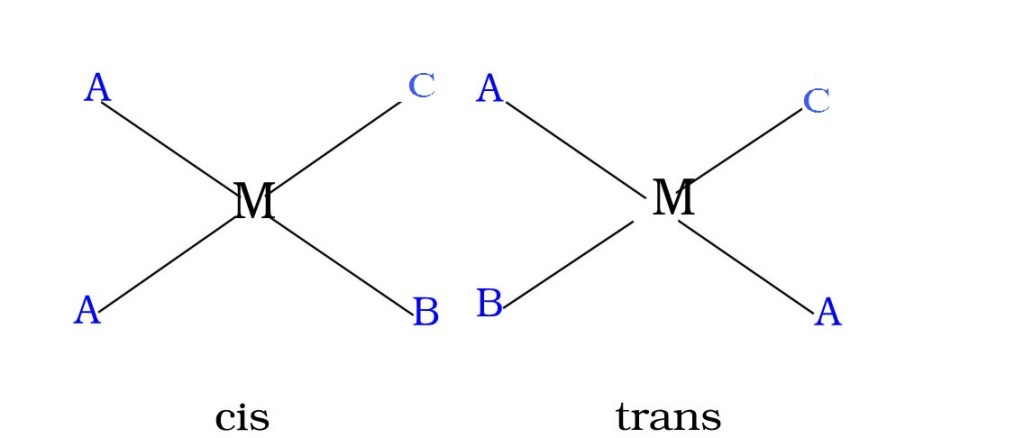

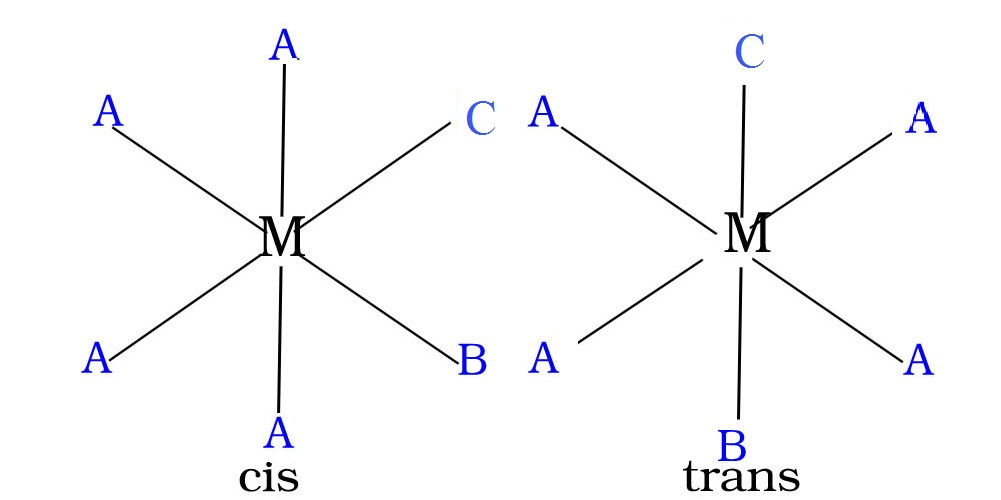


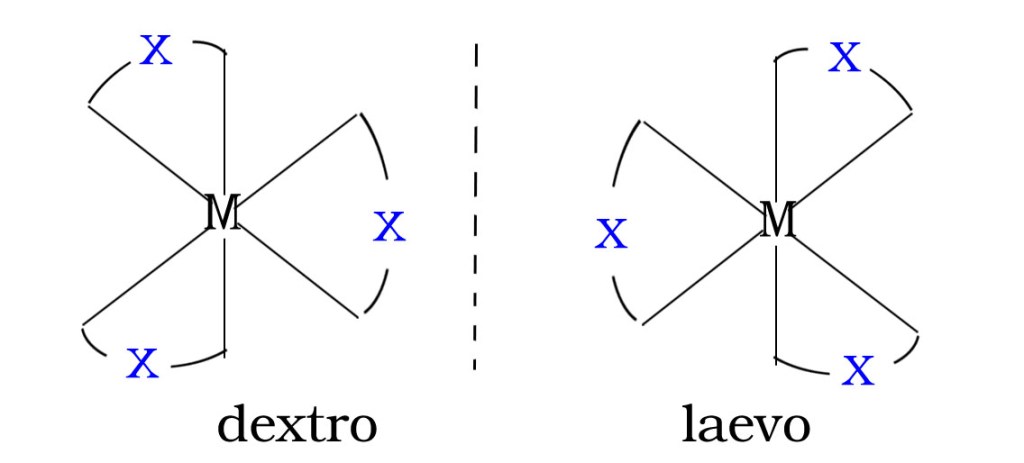
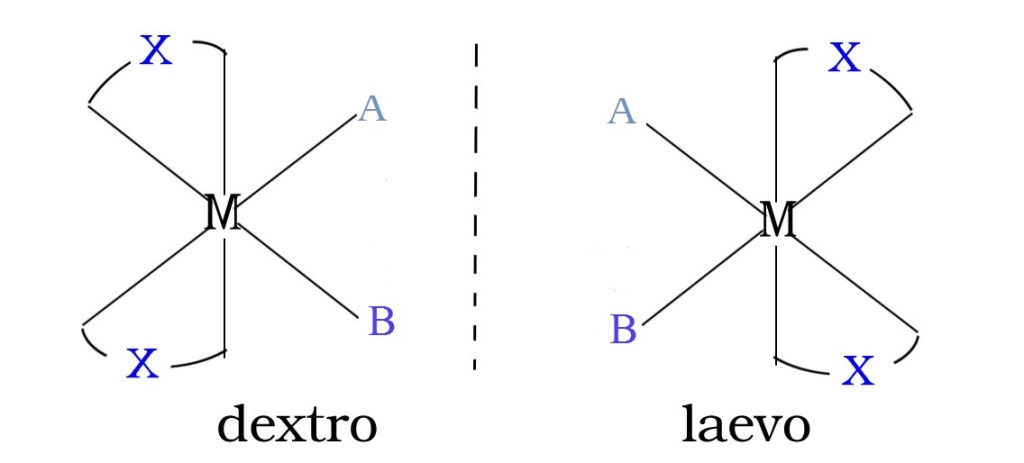



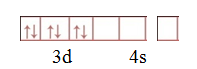
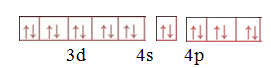
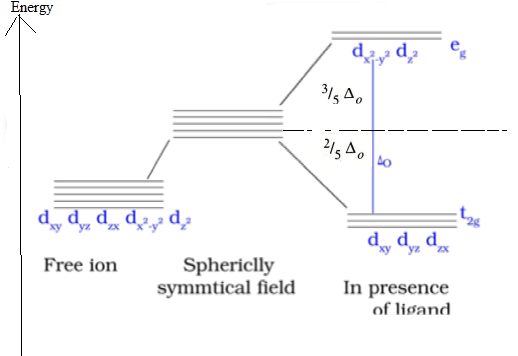

 and
and  bond .The
 is formed by the donation of lone pair of electrons on the carbonyl carbon into a vacant orbital of the metal. The
  is formed by the donation of a pair of electrons from a filled d orbital of metal into the vacant antibonding
  orbital of carbon monoxide example Ni(CO)4 .
 stability constant is
  . Higher the value of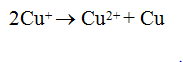
 of Cu2+ is higher than that of Cu+ hence 2nd ionization enthalpy of cu is much more compensated by hydration enthalpy of Cu2+ .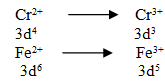
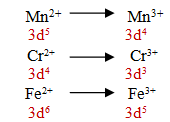




 multiple bonds with itself and with other elements why?
 bond but the heavier elements can e.g., R3P = O or R3P = CH2 (R = alkyl group.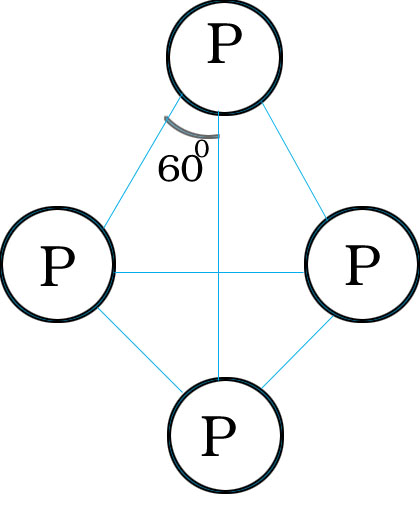
 black phosphorus
 black phosphorus.

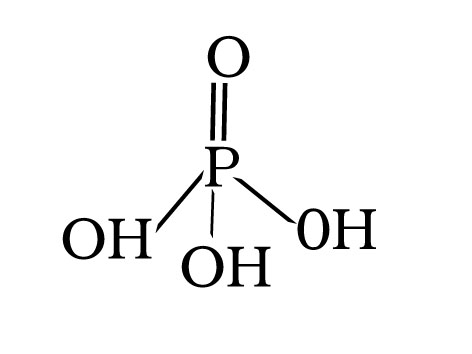
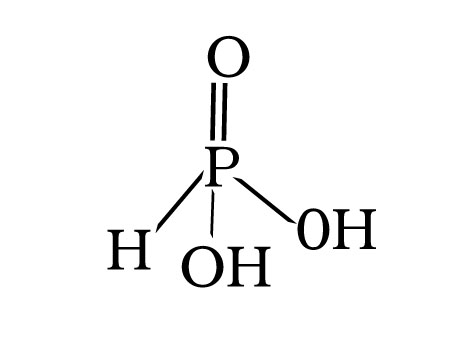

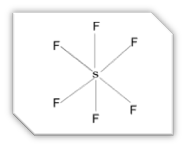
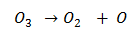
 is negative and also randomness increases thus
  is positive. On combining these two values
  of this reaction is large negative thus ozone is very unstable.


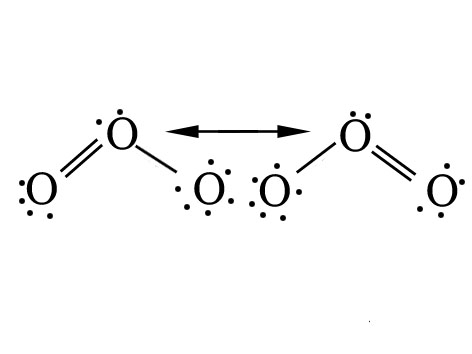
 orbitals hence S2 is paramagnetic in nature.

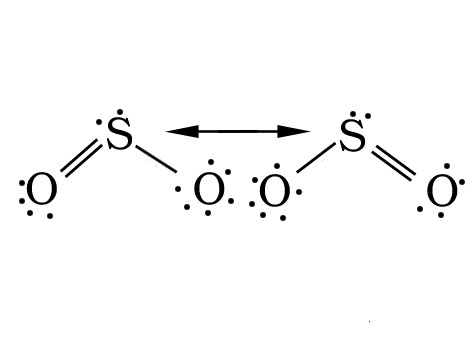



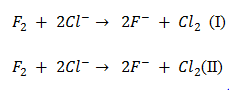

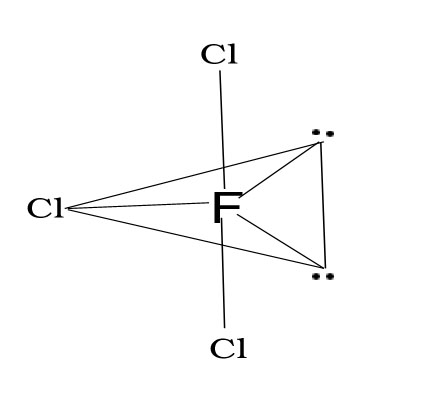

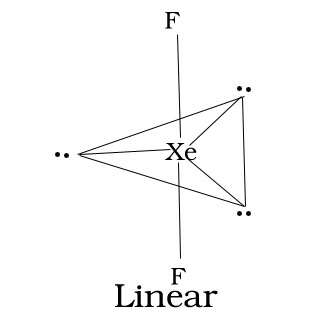

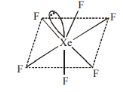
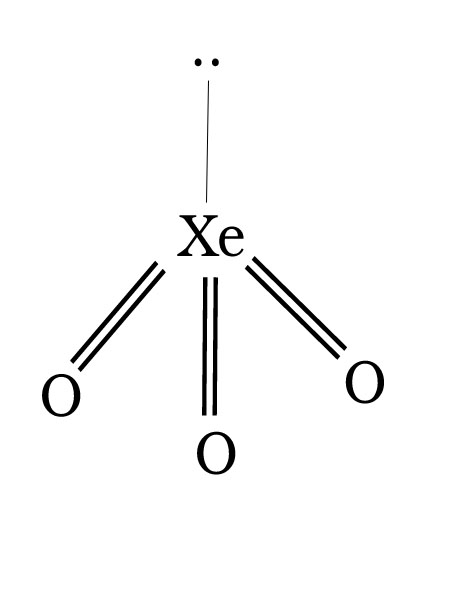






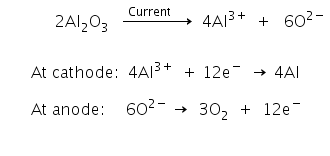
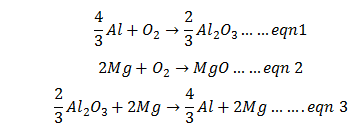
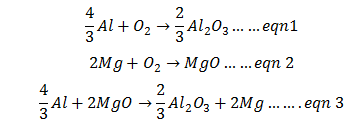
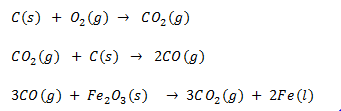

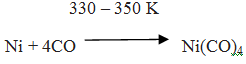
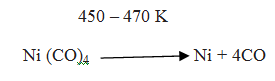
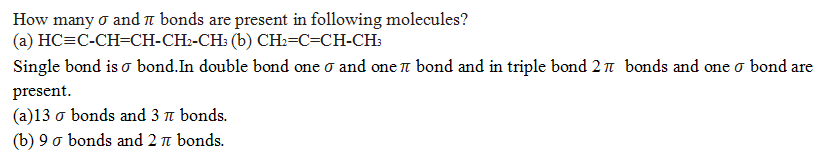
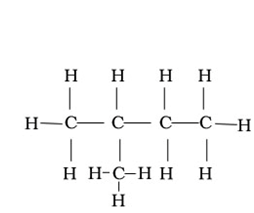
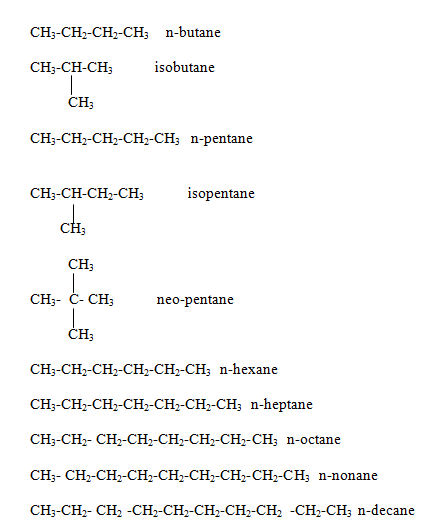



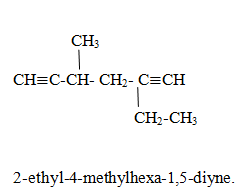
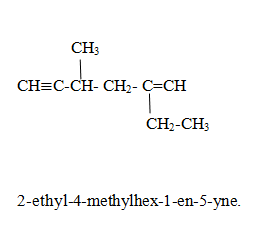
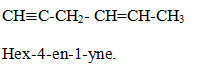
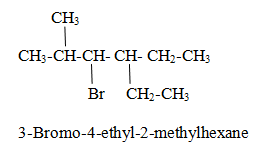












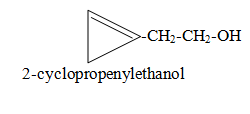

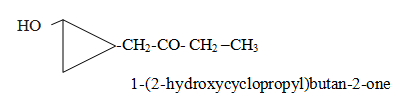
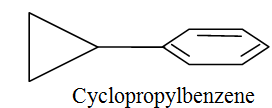
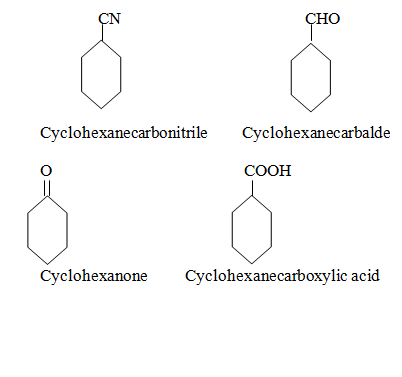
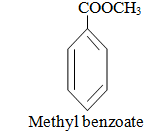


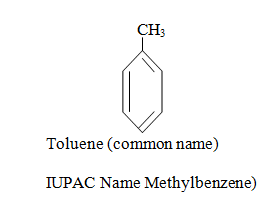
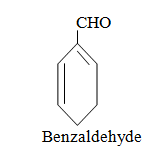
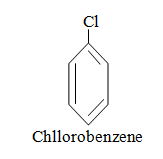

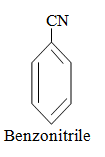
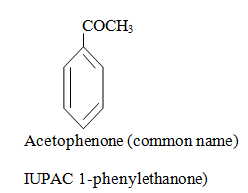
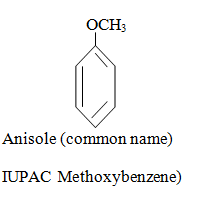
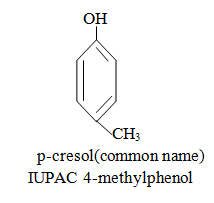







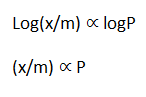
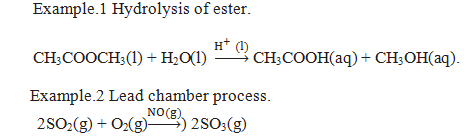
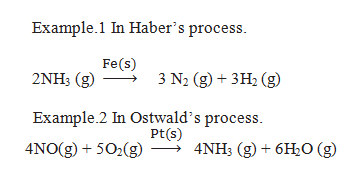
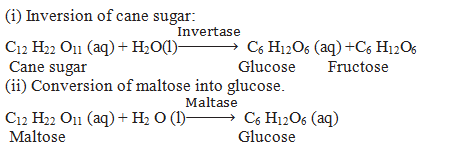

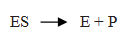
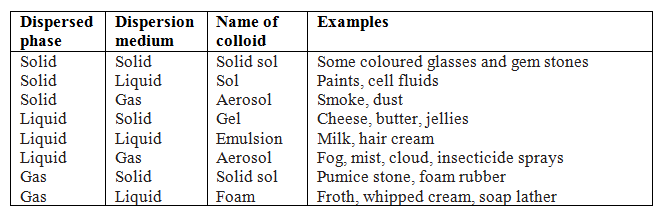
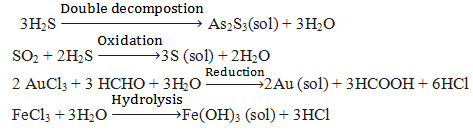


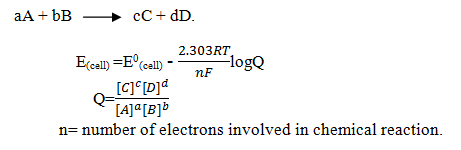

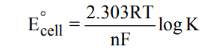
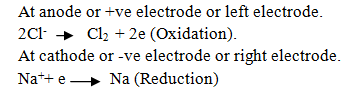

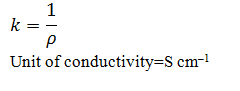
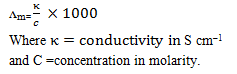

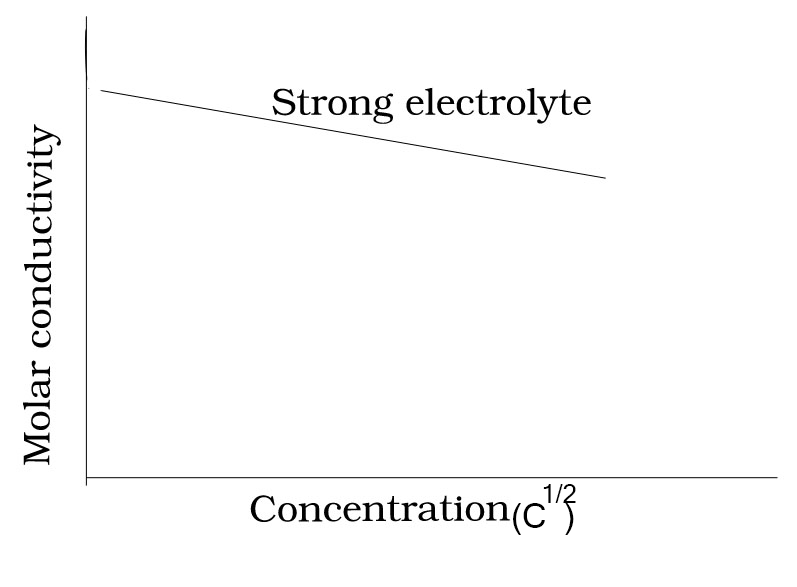









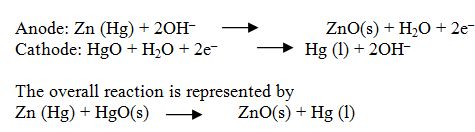

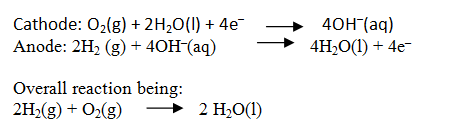

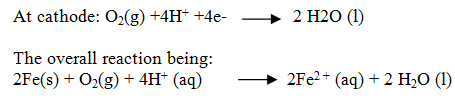
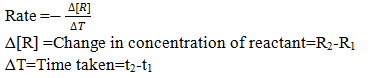

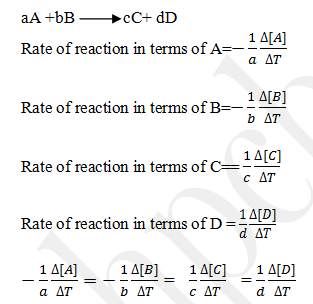
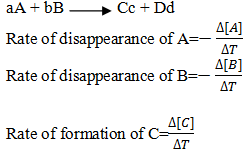
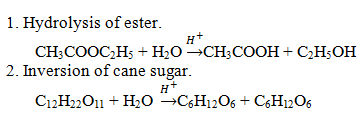

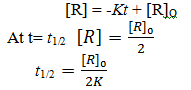
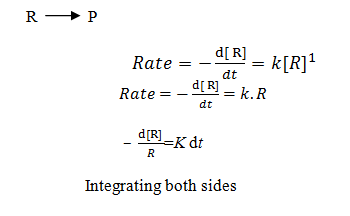

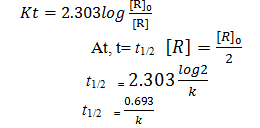

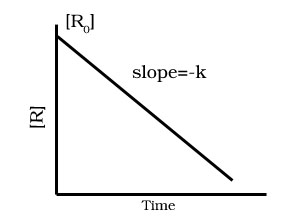

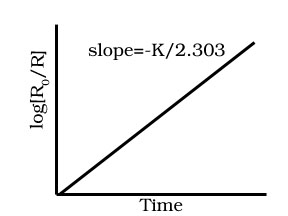
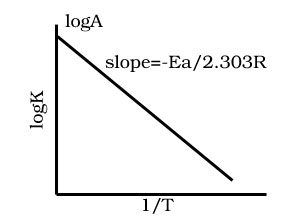
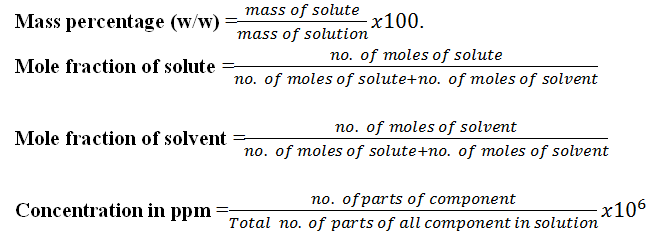


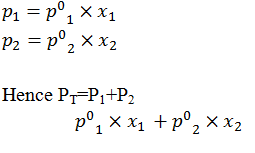
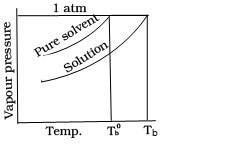
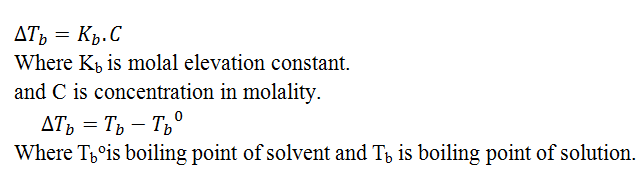
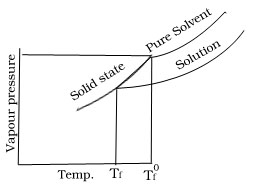

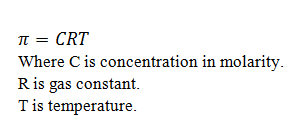
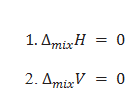
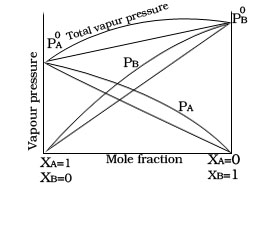
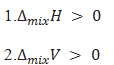
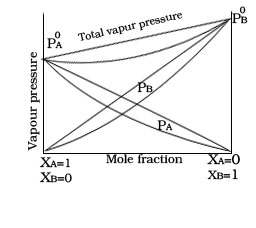
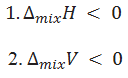
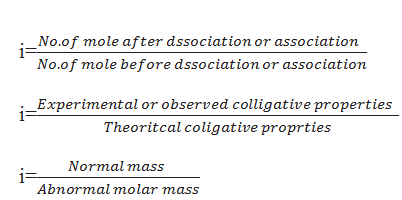

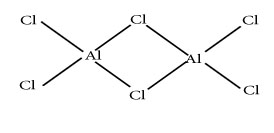



 bond by carbon atoms it show allotrope.
 of graphite is taken as zero why?
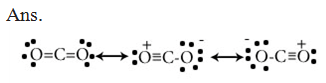
 Sarvan sir- Chemistry For All