
- In adsorption chromatography, the mobile phase can be either a liquid or a gas.
2. The o-and p-nitrophenols can be separate by steam distillation since o- isomer is steam volatile.
3,
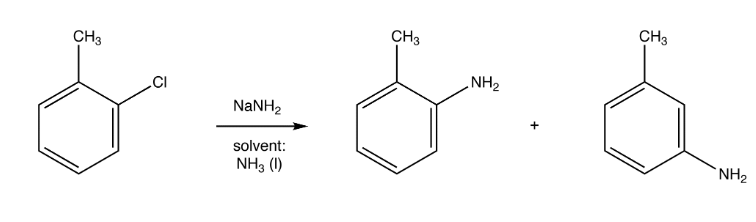
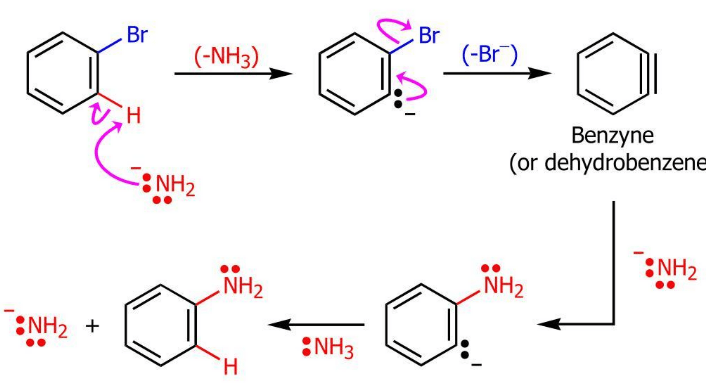
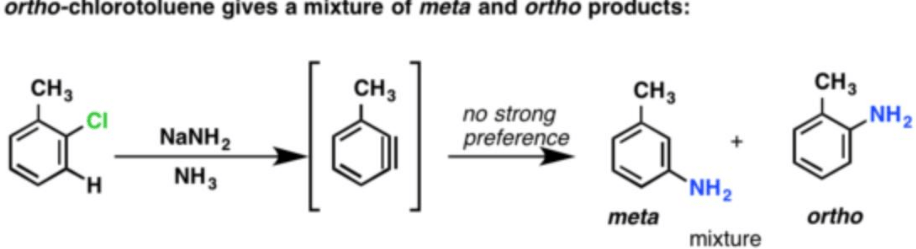
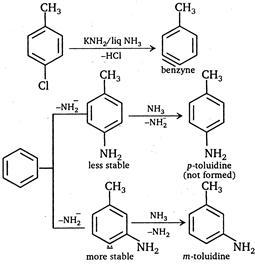
Under suitable conditions (liquid NH₃), chlorobenzene undergoes elimination-addition through a benzyne intermediate.
4. 3-bromopent-1-ene (CH₂=CH-CHBr-CH₂-CH₃) is treated with alcoholic KOH
5.Reaction of formic acid with thionyl chloride
6. Formic acid initially forms formyl chloride (HCOCl), which is highly unstable and decomposes immediately into CO and HCl
7.The reaction of alcohols with carboxylic acids, acid halides and acid anhydrides is generally classified as nucleophilic acyl substitution (NAS). It involves the addition–elimination mechanism.
8.Formic acid does not give the usual decarboxylation reaction because it has only one carbon atom.
9. formaldehyde (HCHO) reacts with excess ammonia (NH₃), it forms hexamethylenetetramine (urotropine) and water.
10.Formic acid (HCOOH) gives a positive Tollens’ test and Fehling test both.
11.rder of nucleophilic substitution reactivity of carboxylic acid derivatives.
12. Reactivity order towards nucleophilic substitution and hydrolysis
Acid chloride> Acid anhydride > Ester > Amide
13.Carboxylic acids do not give the Lucas test with concentrated HCl and anhydrous ZnCl₂

